
The End of the Penny: How America Is Adapting to a Coin-Free Future
A Historic Change That’s Hitting Home
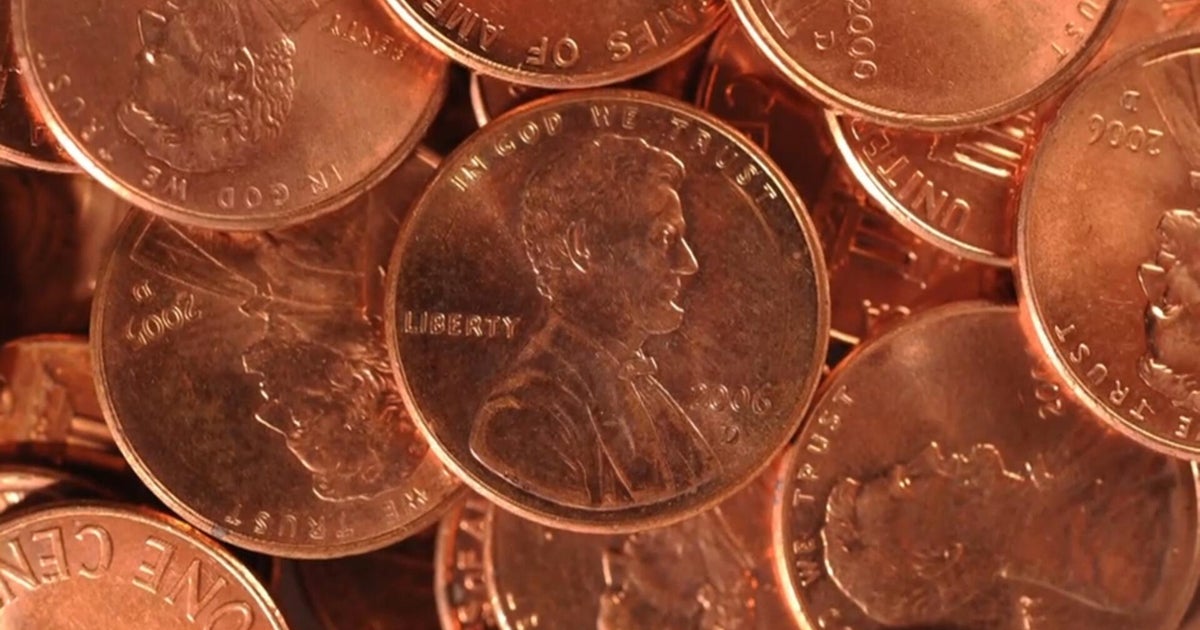
It’s official: the penny is fading into American history. After President Trump announced the end of penny production early last year, citing the absurd economics of spending 3.7 cents to manufacture each one-cent coin, the country has been grappling with what seemed like a small change but has turned into a surprisingly complex problem. By last summer, cash registers across America were running dry of pennies, forcing both businesses and everyday shoppers to face an uncomfortable reality—how do you make exact change without the smallest unit of currency? The Treasury Department says it will keep the roughly 114 billion existing pennies in circulation for as long as possible, and stores must still accept them as payment, but the writing is on the wall. We’re entering a new era, and it’s forcing everyone from major retailers to corner stores to figure out how to handle transactions that don’t end in neat multiples of five cents. Some businesses scrambled desperately to collect whatever pennies they could find, while others quickly adopted new approaches. The solution gaining the most traction is something called symmetrical rounding—a system that sounds technical but is actually pretty straightforward once you understand it.
How Rounding Actually Works in Your Wallet
Symmetrical rounding is designed to be fair to both consumers and businesses by balancing out who benefits from the rounding. Here’s how it works: when you’re paying with cash and your total after taxes ends in one, two, six, or seven cents, the price rounds down to the nearest nickel. So if your coffee costs $1.91 or $1.92, you’d only pay $1.90. On the flip side, if your total ends in three, four, eight, or nine cents, you round up—meaning $1.98 or $1.99 becomes an even $2.00. The key detail here is that this only applies to cash transactions. If you’re paying with a card, you still pay the exact amount down to the cent. This system is intended to create a wash over time—you win some rounds, you lose some rounds, and theoretically, it all evens out. The Treasury Department has assured Americans that prices will be “rounded down just as often as they will be rounded up, so there should be no overall effect on consumer prices.” It sounds reasonable in theory, but as with most changes to how we handle money, the reality is more complicated, and people have strong feelings about whether this system actually works fairly in practice.
States Rush to Create Their Own Rules
With no immediate federal law in place, states have jumped into action, creating what could become exactly what some lawmakers feared: a confusing patchwork of different rules depending on where you live or shop. Representative Lisa McClain from Michigan introduced a federal bill last year that would apply symmetrical rounding nationwide, and it passed out of the House Financial Services Committee. However, it’s still waiting for a full House vote and would need Senate approval before reaching President Trump’s desk. In the meantime, individual states aren’t waiting around. Bills addressing penniless transactions have passed both legislative chambers in Arizona, Florida, Oregon, Tennessee, Virginia, and Washington, all awaiting their governors’ signatures. The approaches vary significantly—some states want to allow businesses to choose whether to round, while others are considering making it mandatory. Indiana’s situation perfectly illustrates the confusion and changing minds around this issue. Governor Mike Braun signed a law this month requiring businesses to round all cash purchases that don’t end in zero or five. But then lawmakers had second thoughts and revised that provision in a second bill making rounding optional instead, which could take effect within days if Braun signs it. Indiana’s legislation also gives businesses flexibility in how they round—they can choose to always round up, always round down, or use the symmetrical system. Tennessee took a different approach entirely, making symmetrical rounding exempt from consumer protection lawsuits but not actually requiring businesses to round at all. According to bill-tracking service Plural, about two dozen states have introduced rounding legislation since late last year, each with its own twist on how to handle the penny problem.
Who Really Wins and Loses?
While the Treasury’s assurance that rounding will balance out sounds comforting, researchers at the Federal Reserve Bank of Richmond discovered something interesting when they dug into actual pricing data. Using a 2023 survey, they found that prices ending in eight or nine cents were especially common—much more so than prices ending in one or two cents. This isn’t surprising to anyone who’s noticed how stores love pricing things at $9.99 or $19.98 to make them seem cheaper. But here’s the problem: if more prices naturally cluster at amounts that round up rather than down, consumers collectively lose while businesses gain. The researchers calculated that this imbalance could amount to millions of dollars shifting from customers to retailers, even though it might only be a penny or two per transaction per person. This discovery has fueled concerns that the elimination of pennies, while saving the government money on production costs, might inadvertently create a system that consistently disadvantages consumers in small but meaningful ways. It’s also worth noting who uses cash most frequently. Despite the rise of credit cards, debit cards, and mobile payment apps, about 8 in 10 American adults reported using cash recently in a 2024 Federal Reserve survey. Cash usage was particularly common among older adults and people in lower-income households—groups that might be least able to absorb even small additional costs and who might not always have the option to pay electronically to avoid rounding altogether.
Real People, Real Frustrations
The mathematical abstractions and policy debates become much more concrete when you talk to people dealing with rounding in their daily lives. Social media has lit up with Americans expressing frustration about feeling cheated, even when the amounts involved are tiny. There’s something psychologically uncomfortable about being asked to pay more than the stated price, even if it’s just two cents—it feels like a principle being violated. Nikki Capozzo-Hennessy, a 50-year-old from Trumbull, Connecticut, who runs a food truck business, represents the mixed feelings many people have. She prefers paying with cash because it makes her more aware of her spending, and she noticed the rounding adjustment on a recent grocery store receipt for a purchase totaling $8.73 with tax. In her case, the store rounded down and she actually gained three cents. Her reaction captures the complexity perfectly: while she thinks it would feel “taxing” to constantly hand over extra pennies, she also recognizes the practicality of having one consistent rule. For her own food truck business, she’s planning to use symmetrical rounding to stay consistent and fair. “At the end of the day it’s three cents, but I can imagine with all the purchases that you make, it can add up,” she acknowledged. Washington state Representative April Berg, who introduced rounding legislation in her state, sympathizes with people frustrated about losing even a penny but argues there’s simply no other practical option now that penny production has stopped. Her bill made sure to preserve everyone’s right to pay exactly what they owe if they have the exact change, but recognizes that increasingly, exact change won’t be possible.
The Bigger Picture and What Comes Next
The Treasury Department estimates that ending penny production will save taxpayers $56 million annually—real money that was essentially being thrown away to manufacture coins worth far less than their production cost. But here’s an ironic twist nobody saw coming: eliminating pennies might actually increase demand for nickels, and nickels are even more expensive to produce than pennies were. In 2024, each nickel cost nearly 14 cents to make, according to the U.S. Mint. If every transaction that once required pennies now requires nickels instead, the government might end up in an even worse financial position. The proposed federal legislation includes a potential solution: allowing the Treasury to change what nickels are made of, switching from the current copper-and-nickel composition to a cheaper zinc-and-nickel blend. This gets at a larger truth about currency—the actual metal matters much less than the agreed-upon value, and adjusting compositions could save substantial money. As America navigates this transition, we’re learning that even the smallest changes to how we exchange money can reveal deep questions about fairness, tradition, and trust. The penny served as America’s smallest unit of account for over two centuries, and its disappearance marks more than just an economic adjustment—it’s a cultural shift. Whether the rounding systems being implemented across the country will feel fair in practice remains to be seen, but one thing is certain: the era of penny-perfect transactions is behind us, and Americans are entering new territory where every cash purchase gets rounded one way or another, for better or worse.