
Bernard LaFayette: The Unsung Hero Who Paved the Way for Voting Rights in America
A Quiet Revolutionary Passes
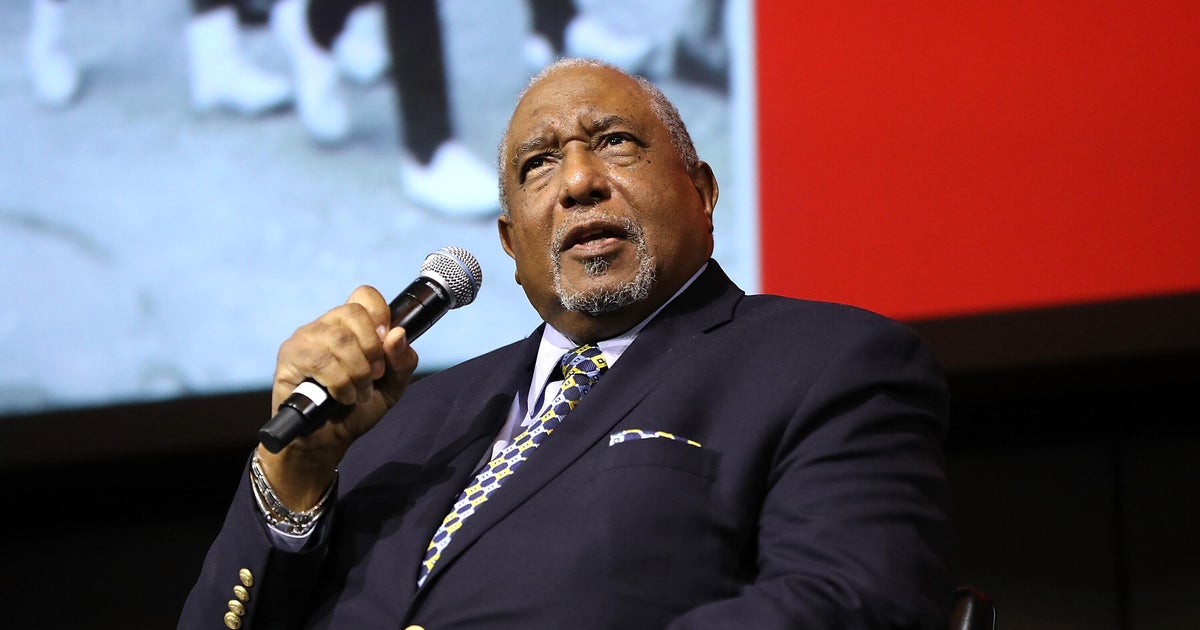
The civil rights movement lost one of its most dedicated yet least celebrated champions when Bernard LaFayette died of a heart attack on Thursday morning at the age of 85. While names like Martin Luther King Jr. and John Lewis have become synonymous with the fight for voting rights, it was LaFayette who did the dangerous, painstaking groundwork that made the historic Selma campaign possible. His son, Bernard LaFayette III, confirmed his father’s passing, marking the end of a life devoted entirely to the principle of nonviolent resistance and social justice. Unlike many of his contemporaries who sought the spotlight, LaFayette worked quietly behind the scenes, building movements from the ground up and empowering local communities to stand up for their rights. His death reminds us that history is often made not by those who deliver the famous speeches, but by those who do the unglamorous, risky work of organizing people one conversation at a time.
The Man Who Refused to Give Up on Selma
When the Student Nonviolent Coordinating Committee (SNCC) evaluated Selma, Alabama, in the early 1960s, they came to a grim conclusion: “the White folks were too mean and the Black folks were too scared.” They crossed the city off their list of potential organizing sites. But Bernard LaFayette saw something others didn’t—potential. In 1963, he accepted the role of director of the Alabama Voter Registration Campaign and moved to Selma with his then-wife Colia Liddell. What followed was two years of patient, courageous work building relationships, nurturing local leadership, and convincing terrified residents that change was actually possible. This wasn’t glamorous work. It meant knocking on doors, holding meetings in living rooms, and gradually building trust in a community that had every reason to be afraid. LaFayette’s approach was methodical and deeply human—he understood that real change doesn’t happen through grand gestures alone, but through the slow cultivation of courage and community solidarity. By the time the famous marches happened in 1965, culminating in the brutal “Bloody Sunday” attack on Edmund Pettus Bridge, LaFayette had already moved on to a new project in Chicago. The momentum he created, however, couldn’t be stopped, and it ultimately led to the passage of the Voting Rights Act of 1965, one of the most important pieces of legislation in American history.
Facing Death with Extraordinary Courage
The dangers LaFayette faced while organizing in Selma were not abstract or theoretical—they were immediate and life-threatening. On the same night that civil rights leader Medgar Evers was murdered in Mississippi in 1963, LaFayette survived his own assassination attempt in what the FBI later determined was a coordinated conspiracy to kill civil rights workers across the South. He was beaten outside his home, and his attacker pointed a gun directly at him. When a neighbor rushed out with a rifle to defend him, LaFayette found himself standing between two armed men in a moment that perfectly encapsulated his philosophy of nonviolence. Rather than allowing violence to beget more violence, he asked his neighbor not to shoot. Then, in an act of remarkable courage and faith in his principles, LaFayette looked his would-be assassin directly in the eyes. He later wrote that he felt “an extraordinary sense of internal strength instead of fear” at that moment, describing nonviolence as a fight “to win that person over, a struggle of the human spirit.” With characteristic honesty, he also acknowledged that his neighbor’s gun may have been what ultimately saved his life that night. This incident reveals the complexity of nonviolent resistance—it’s not passive acceptance of violence, but an active choice to respond with moral courage even when legitimate means of self-defense are available.
The Making of a Movement Leader
LaFayette’s commitment to justice was forged in childhood. Growing up in Tampa, Florida, he experienced the humiliation of segregation firsthand when, at just seven years old, he watched his grandmother fall as she tried to board a segregated trolley. Black passengers had to pay at the front, then walk around to the back entrance to board, but the conductor pulled away before they could get on. Young Bernard was too small to help his grandmother, and the experience cut him deeply. “I felt like a sword cut me in half, and I vowed I would do something about this problem one day,” he wrote in his memoir. His grandmother, recognizing something special in the boy, decided he was destined to become a preacher and arranged for him to attend American Baptist Theological Seminary in Nashville. There he became roommates with John Lewis, beginning a partnership that would help change America. Together, they led the nonviolent civil disobedience campaign that made Nashville the first major Southern city to desegregate its downtown accommodations. In 1960, just weeks after the Supreme Court banned segregation in interstate travel, the two roommates decided to test the ruling during their Christmas break. They sat in the front of a Greyhound bus—Lewis headed to Troy, Alabama, and LaFayette to Tampa, Florida—and refused to move despite the driver’s anger. Former President Barack Obama later spoke about this journey in his eulogy for John Lewis, marveling at the courage it took: “Imagine the courage of these two people…to challenge an entire infrastructure of oppression. Nobody was there to protect them. There were no camera crews to record events.”
Beyond Selma: A Life of Service and Innovation
LaFayette’s commitment to civil rights extended far beyond the historic events in Selma. In 1961, he dropped out of college in the middle of final exams to join the Freedom Rides, becoming one of more than 300 riders arrested and sent to Mississippi’s notorious Parchman Prison after being beaten in Montgomery, Alabama. Later, he brought his organizing skills to Chicago, where he trained Black youth to become leaders and helped establish tenant unions that secured protections still in effect today. When he learned that one of his secretaries had two children suffering from lead poisoning—a problem that was poorly understood at the time—LaFayette organized high school students to conduct door-to-door screenings by collecting urine samples from toddlers. This grassroots effort prodded Chicago to develop the nation’s first mass screening program for lead poisoning, potentially saving countless children from brain damage and other devastating effects. He worked alongside Andrew Young and the Southern Christian Leadership Conference to prepare for Martin Luther King Jr.’s Northern campaign, and by 1968, he served as national coordinator of King’s Poor People’s Campaign. LaFayette was at the Lorraine Motel on the morning of King’s assassination, and King’s last words to him were about the need to “institutionalize and internationalize nonviolence.” LaFayette made this his life’s mission, telling CBS News in 2015: “Their purpose was to silence Martin Luther King, his voice. But we can hear it everywhere we go. And that’s what my life was devoted to and has been and is now.”
A Global Prophet of Peace
After King’s death, LaFayette returned to complete his education, eventually earning a doctorate from Harvard University. But unlike many academics, he never retreated into the ivory tower. Instead, he became what Andrew Young called “a global prophet of nonviolence,” taking his expertise to conflict zones around the world. He worked with violent groups in Latin America, conducted nonviolence workshops with the African National Congress in South Africa during the struggle against apartheid, and traveled to Nigeria during its civil war. He served in numerous leadership positions, including director of the Center for Nonviolence and Peace Studies at the University of Rhode Island and distinguished senior scholar-in-residence at Emory University’s Candler School of Theology. Throughout it all, he maintained his characteristic humility. Mary Lou Finley, a professor who worked with LaFayette in Chicago during the 1960s and later collaborated with him on nonviolence training, observed: “Bernard has always worked quietly behind the scenes. He has avoided the spotlight. In some ways, I think he felt like he could do more if he were doing it quietly.” In his memoir, LaFayette reflected on how the constant threat of death during those early organizing years taught him that life’s value “lies not in longevity, but in what people do to give it significance.” By that measure, Bernard LaFayette lived a life of extraordinary significance, touching thousands if not hundreds of thousands of lives both in America and abroad, as DeMark Liggins, president of the Southern Christian Leadership Conference, noted upon his passing. His legacy is not measured in monuments or fame, but in the countless people he empowered, the movements he built, and the enduring principle that nonviolent resistance can overcome even the most entrenched systems of oppression.