
Global Nations Unite to Release Emergency Oil Reserves Amid Middle East Crisis
Historic Coordinated Response to Energy Supply Disruption
In an unprecedented show of international cooperation, the International Energy Agency (IEA) has announced what could be one of the most significant releases of strategic oil reserves in recent history. The organization, working in close coordination with ministers from the G7 group of advanced industrialized nations, has committed to releasing a staggering 400 million barrels of oil into the global market. This massive intervention comes as the world grapples with severe supply disruptions stemming from the escalating conflict in the Middle East, which has dramatically affected oil production and shipping routes through one of the world’s most critical energy chokepoints.
The United Kingdom has stepped forward as a significant contributor to this effort, pledging 13.5 million barrels from its strategic reserves. This move represents a collective acknowledgment by world leaders that the current energy crisis requires immediate and substantial action to prevent further economic disruption and soaring prices that could devastate households and businesses worldwide. The decision wasn’t made lightly – it followed extensive discussions among member nations who recognized that the threat to global energy security had reached a critical threshold requiring coordinated intervention rather than individual national responses.
Market Reaction Reveals Complex Energy Landscape
Despite the magnitude of this announcement, the immediate market response has been surprisingly muted, revealing just how complex and challenging the current energy situation has become. Brent crude, which serves as the international benchmark for oil pricing, had been trading at alarming highs earlier in the week, reaching above $118 per barrel as markets absorbed the impact of Middle Eastern supply disruptions. When news first emerged that strategic reserves might be released, prices began to ease, settling around $92 per barrel just before the official announcement on Wednesday afternoon. Following the confirmation of the 400-million-barrel release, prices dipped only slightly further to $90.63, a relatively modest reaction that suggests traders remain skeptical about whether this intervention will be sufficient to address the underlying supply challenges.
This limited market response is particularly telling because it indicates that energy markets are looking beyond the short-term injection of supply and focusing on the fundamental problem: the ongoing conflict shows no signs of immediate resolution, and the disruption to normal supply chains could persist for months or even longer. Traders and analysts are weighing whether 400 million barrels, while substantial, can truly compensate for the loss of production and shipping capacity from a region that normally supplies a massive portion of the world’s energy needs. The oil markets have become accustomed to volatility in recent years, experiencing disruptions from the COVID-19 pandemic, the invasion of Ukraine, and now this Middle Eastern crisis, making participants increasingly cautious about predicting when stability might return.
The Crisis Behind the Response: Middle East Turmoil
The decision to release these emergency reserves stems from a severe and worsening situation in the Persian Gulf region, which under normal circumstances serves as one of the world’s most vital energy arteries. Typically, this region exports approximately 15 million barrels of oil and an additional five million barrels of refined oil products every single day, feeding the energy needs of economies across Asia, Europe, and beyond. However, this critical flow has been devastated by Iranian attacks on energy infrastructure, which began in response to US-Israeli military strikes against installations in Tehran that commenced last month.
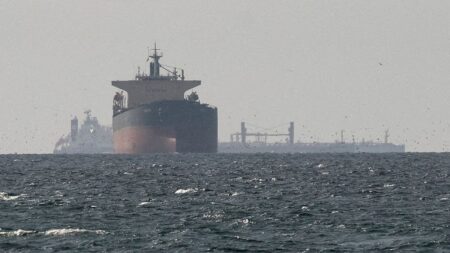
The most consequential impact of this conflict has been the effective closure of the Strait of Hormuz, a narrow waterway off the Iranian coast that, in peaceful times, handles roughly one-fifth of the entire world’s energy shipments. This strategic chokepoint, barely 21 miles wide at its narrowest point, has become far too dangerous for the massive oil tankers that normally navigate its waters dozens of times daily. The threats to shipping – ranging from missile attacks to drone strikes and naval confrontations – have made insurance companies reluctant to cover vessels attempting the passage, and shipping companies unwilling to risk their crews and cargo. As a result, export volumes of both crude oil and refined petroleum products from the region have collapsed to less than 10% of their pre-conflict levels, creating a supply shock that has reverberated through global energy markets and prompted this extraordinary coordinated response.
Strategic Reserves: A Safety Net Decades in the Making
The ability to respond to this crisis with such a substantial release of oil reflects decades of planning and stockpiling by IEA member nations. The 32 countries that comprise the IEA membership collectively maintain emergency stockpiles totaling over 1.2 billion barrels of crude oil and petroleum products, with an additional 600 million barrels held in industry stocks by private companies operating under government agreements. These reserves were established specifically for moments like this – when sudden disruptions to supply threaten economic stability and the everyday lives of citizens who depend on affordable energy for transportation, heating, and the countless products derived from petroleum.
The current action marks only the sixth time since the IEA’s founding in 1974 that members have coordinated a release from these strategic reserves, underscoring the seriousness of the current situation. Previous coordinated releases occurred during the Gulf War in 1991, when Iraqi forces sabotaged Kuwaiti oil fields; in response to Hurricane Katrina in 2005, which devastated oil production and refining capacity along the U.S. Gulf Coast; during the international intervention in Libya in 2011, which took that country’s oil production offline; and twice in 2022 following Russia’s invasion of Ukraine, which disrupted global energy markets and severed many European nations’ access to Russian oil and gas. Each of these releases was considered a measure of last resort, deployed only when market forces alone proved insufficient to maintain stable supply and reasonable prices.
Implementation Questions and Timeline Uncertainties
While the announcement of the 400-million-barrel release has been made, significant questions remain about exactly how and when this oil will actually reach the market. The IEA has stated that the emergency stocks will be made available “over a timeframe that is appropriate to the national circumstances of each member country,” a diplomatic phrase that acknowledges the logistical complexities involved in coordinating releases from stockpiles stored in diverse locations across North America, Europe, Asia, and Oceania. Different countries maintain their reserves in different forms – some as crude oil stored in underground salt caverns, others as refined products kept in above-ground tanks near population centers – and each nation will need to develop its own implementation plan.
The IEA has promised that detailed implementation plans for the policy will be announced in due course, but this lack of immediate specificity has contributed to the muted market reaction. Energy traders operate on concrete information about when supply will arrive and in what form, and the current announcement, while significant in scale, lacks the precise details that would allow for accurate pricing adjustments. Some analysts suggest that this deliberately flexible approach may actually be strategic, allowing member nations to calibrate their releases based on evolving market conditions rather than committing to a rigid schedule that might prove either insufficient or excessive depending on how the Middle East conflict develops. The coming weeks will be critical as individual nations announce their specific contribution schedules and the market gains clarity about when these additional barrels will actually begin flowing through the global energy system, potentially bringing some relief to consumers facing elevated prices at the pump and throughout the economy.