


Nebraska Faces Historic Wildfire Crisis as Three Major Blazes Devastate Heartland Communities
Unprecedented Destruction Across the Prairie State
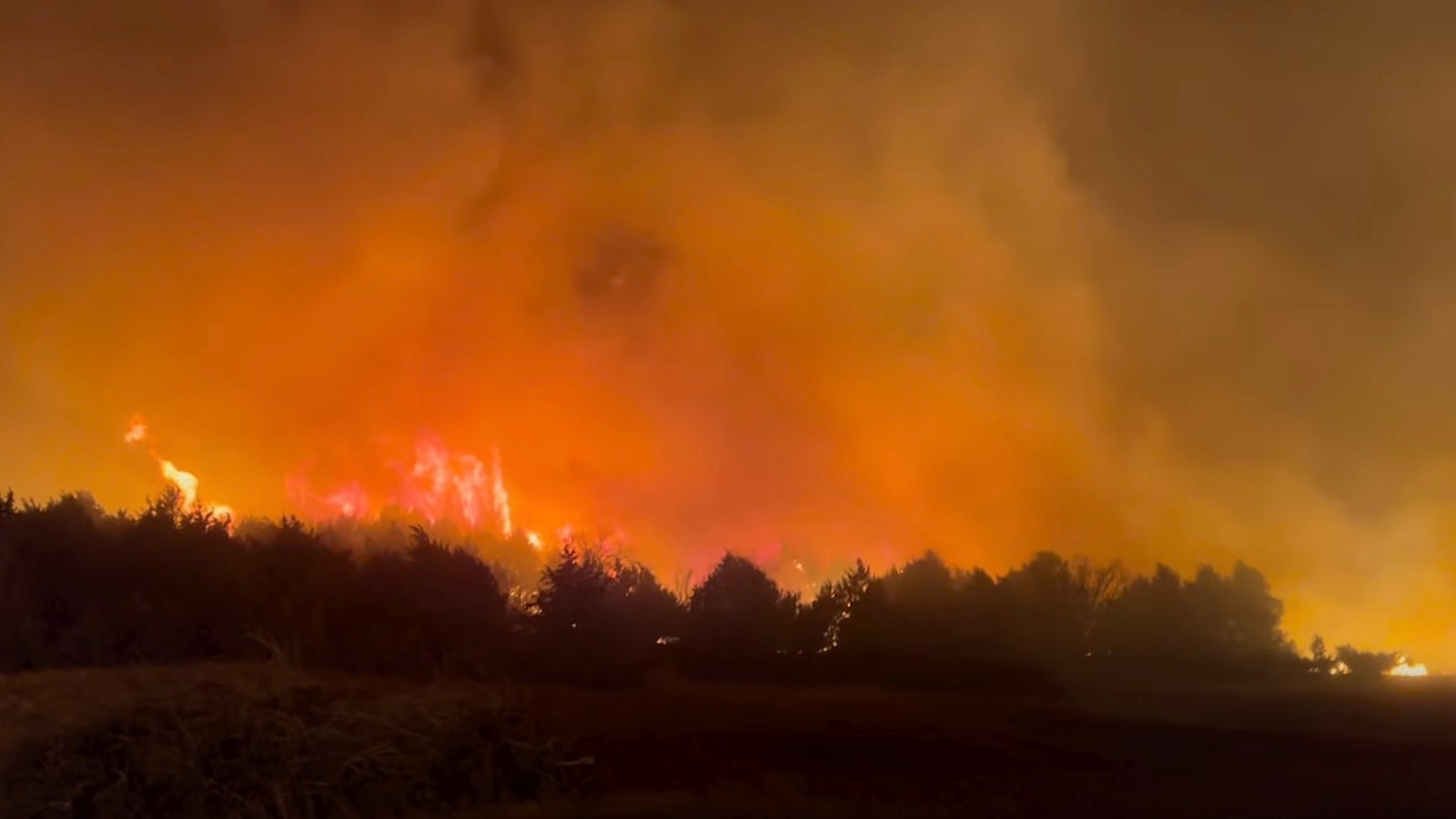
Nebraska is confronting one of the most devastating natural disasters in its history as three massive wildfires continue to rage across the central and western portions of the state, consuming nearly 600,000 acres of prairie land and leaving destruction in their wake. The situation has grown so dire that Governor Jim Pillen has declared a state of emergency, mobilizing every available resource to combat the relentless flames that have already claimed one life and show no signs of slowing down. As of Sunday, firefighters faced the grim reality that all three fires remained completely uncontained, meaning 0% of the blazes had been brought under control despite heroic efforts from local crews, state resources, and now military personnel. The tragedy has united Nebraskans in a fight against nature’s fury, with communities coming together to support those on the front lines and pray for relief from the catastrophic conditions that continue to fuel these historic fires.
The Morrill Fire: Nebraska’s Largest Wildfire on Record
The most devastating of the three blazes, known as the Morrill Fire, has earned the unfortunate distinction of being the largest wildfire in Nebraska’s recorded history. This monster fire has consumed more than 460,000 acres across three counties—Morrill, Arthur, and Keith—leaving behind a blackened landscape that stretches as far as the eye can see. The sheer scale of this fire is difficult to comprehend for those unfamiliar with the vast open spaces of western Nebraska, but to put it in perspective, it has burned an area roughly equivalent to over 700 square miles, larger than the entire city of Houston, Texas. The human toll became tragically real when the fire claimed its first victim on Thursday in Arthur County, a loss that Governor Pillen acknowledged during an emotional press conference on Saturday. The victim’s death serves as a sobering reminder that these aren’t just statistics or numbers on a map—they represent real danger to real people trying to protect their homes, livestock, and livelihoods in these rural communities where neighbors know each other by name and help each other through thick and thin.
Additional Fires Compound the Crisis
While the Morrill Fire has captured headlines due to its record-breaking size, two other significant wildfires are simultaneously threatening communities and stretching emergency resources to their absolute limits. The Cottonwood Fire, burning near the city of Gothenberg in Dawson County, has already consumed approximately 100,000 acres of grassland and agricultural property. This fire alone would be considered a major disaster in most circumstances, but in the context of Nebraska’s current crisis, it represents just one piece of a larger puzzle that emergency managers are desperately trying to solve. The third blaze, known as the Road 203 Fire, is ravaging Blaine and Thomas counties near the small village of Halsey, and has burned through more than 40,000 acres of the Nebraska Sandhills region. These three fires, burning simultaneously across different parts of the state, have created a situation that local fire departments simply cannot handle alone, necessitating an unprecedented response that brings together resources from across Nebraska and potentially from neighboring states as well.
Military Mobilization and Statewide Response
Recognizing the severity of the situation, Governor Pillen has taken decisive action by deploying the Nebraska National Guard to assist overwhelmed local firefighting crews. Two UH-60 Blackhawk helicopters from the Nebraska Army National Guard have been pressed into service, providing aerial support that is crucial for battling fires across such vast expanses of terrain where ground crews simply cannot reach or work effectively. These military-grade helicopters can carry water buckets and provide reconnaissance that helps firefighters understand where the fires are heading and where resources are most needed. The governor has also reached out to the mayors of Nebraska’s two largest cities, Omaha and Lincoln, requesting additional personnel and equipment to bolster the firefighting efforts in the affected rural areas. Both cities have responded positively, with fire departments from each metropolitan area preparing to send crews and equipment westward. Omaha Mayor John Ewing Jr. expressed the solidarity that Nebraskans feel during this crisis, stating that “Omaha stands ready to support our neighbors,” while also ensuring that the city maintains adequate resources to handle any local emergencies that might arise. This careful balancing act—sending help where it’s desperately needed while maintaining readiness at home—exemplifies the challenges that state leaders face during such widespread disasters.
Weather Conditions Threatening to Worsen the Situation
As if the situation weren’t challenging enough, weather forecasters are predicting conditions that could make fighting these fires even more difficult in the coming days. A cross-country storm system that is bringing snow to other parts of the Midwest is expected to create dry and windy conditions precisely where the fires are burning in Nebraska. Governor Pillen acknowledged this concerning forecast at Saturday’s press conference, warning that “the winds are supposed to be extraordinary.” For firefighters, wind represents one of the most dangerous variables when battling wildfires, as strong gusts can rapidly spread flames across firebreaks, send embers flying miles ahead of the main fire to start new blazes, and make it nearly impossible to predict where the fire will move next. These anticipated wind conditions have prompted emergency managers to prepare for the possibility that the fires could grow even larger and potentially threaten additional communities. The dry conditions that have plagued much of Nebraska this spring have left vegetation critically parched, turning prairie grasses into virtual tinderboxes that ignite easily and burn intensely. This combination of dry fuel, strong winds, and vast open spaces creates what fire experts call a “perfect storm” for catastrophic wildfires.
A Call for Prayer and Regional Solidarity
After taking an aerial tour of the devastated areas on Saturday, Governor Pillen made a heartfelt and humble request that reflects both the severity of the crisis and the character of Nebraska’s predominantly rural, faith-oriented communities. “I think it’s important that all Nebraskans pray,” the governor said, acknowledging that while human effort and modern firefighting technology are essential, there are moments when people must also turn to faith and hope for favorable conditions and protection for those in harm’s way. Beyond prayer, the governor has also indicated plans to reach out to neighboring states, including Iowa, to request additional assistance, recognizing that Nebraska’s resources alone may not be sufficient to bring these historic fires under control. This regional approach to disaster response reflects the reality of modern emergency management, where state boundaries become less important than getting help to where it’s needed most. As firefighting crews from across Nebraska and potentially from surrounding states converge on the affected areas, they bring with them not just equipment and expertise, but also a spirit of solidarity that defines the American heartland. These communities may be separated by hundreds of miles and state lines, but they’re united by shared values, similar challenges, and a commitment to helping neighbors in need. The coming days will be critical in determining whether this massive firefighting effort can bring these historic blazes under control before more lives are lost, more property is destroyed, and more of Nebraska’s beautiful prairie landscape is reduced to ash.