
Bill Clinton Testifies About Jeffrey Epstein Connection in Historic Congressional Deposition
A Historic Moment in Congressional Oversight
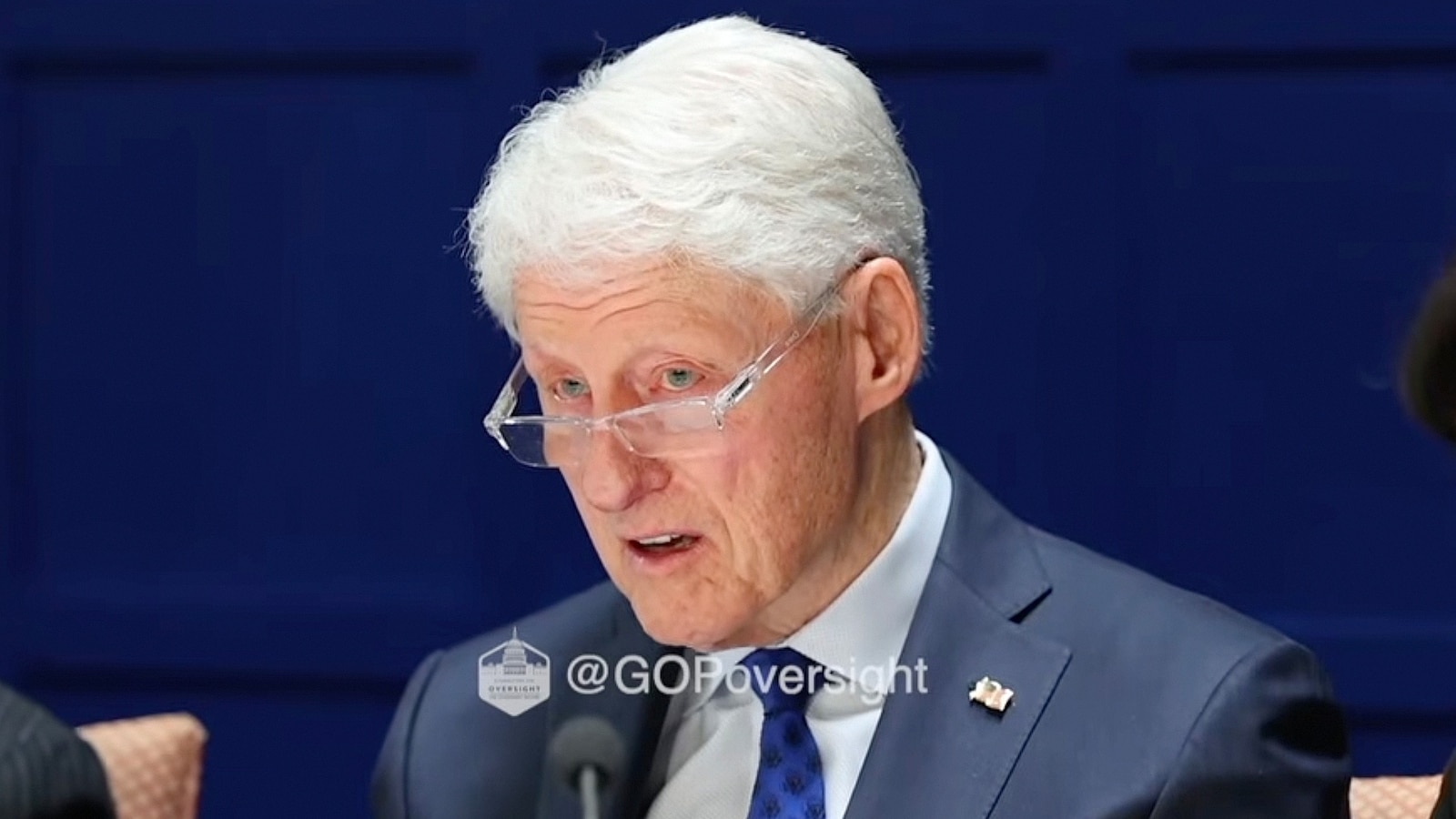
In what marks a significant milestone in American political history, former President Bill Clinton became the first ex-president ever compelled to testify before a congressional committee. The Republican-led House Oversight Committee questioned Clinton last week in his hometown of Chappaqua, New York, focusing on his past association with the late convicted sex offender Jeffrey Epstein. The February 27th deposition, along with a separate session involving former Secretary of State Hillary Clinton, was part of a broader investigation into how federal authorities handled investigations into Epstein and his co-conspirator Ghislaine Maxwell. The committee released video footage of both depositions on Monday, providing the public with a rare glimpse into the Clintons’ knowledge of and interactions with one of the most notorious criminals in recent American history.
During his testimony, Bill Clinton addressed questions about whether he witnessed anything suspicious during his interactions with Epstein. When directly asked if he saw anything unusual that would lead him to believe Epstein was “creepy,” Clinton’s answer was straightforward: “No, I never saw him do anything that I was suspicious.” However, Clinton did acknowledge that he found Epstein to be “odd,” describing him as someone who was always “holding back” in some way. This characterization suggests that while Clinton may not have witnessed criminal behavior, he sensed something unusual about Epstein’s personality or demeanor. The former president emphasized that despite feeling friendly toward Epstein at the time, there was always something indefinable that seemed off about the financier’s behavior and manner.
The Epstein Connection: Private Jets and Humanitarian Missions
The heart of the committee’s interest in Clinton centered on his well-documented use of Jeffrey Epstein’s private aircraft for international travel. Flight logs from Epstein’s Boeing 727 reveal that Clinton and his entourage took four international trips aboard the plane in 2002 and 2003, with destinations including Bangkok, Brunei, Rwanda, Russia, and China. In total, Clinton appeared on 26 flight “legs” listed in Epstein’s plane records, though many of these were components of the same extended international journeys. Clinton explained that these trips were undertaken on behalf of the Clinton Foundation, the nonprofit humanitarian organization he established after leaving the presidency in 2001. He acknowledged that Epstein was present on most of these flights, but described the onboard activities as mundane—his team spent their time preparing for upcoming stops, sleeping, and playing cards.
Clinton also addressed why Epstein was willing to loan his expensive private jet for these humanitarian missions. According to Clinton’s testimony, he directly asked Epstein about his motivations, and the financier explained that he wanted to better understand Clinton’s success as a Democratic politician. “He said I think you did a good job as president and you managed to get reelected and you’re the first Democrat in 60 years to get reelected. I want to know what happened and I want to understand it,” Clinton recalled. The former president suggested that after a while, it became apparent that Epstein had satisfied his curiosity and was simply “going through the motions” without genuine interest in the humanitarian work that Clinton prioritized. Importantly, flight records show no indication that Clinton ever traveled to Epstein’s infamous private island, and Clinton’s last known trip on Epstein’s plane occurred in November 2003—before the first reports of Epstein being under investigation in Florida emerged in 2005.
Hillary Clinton’s Testimony and Criticism of the Committee
Former Secretary of State Hillary Clinton gave her own deposition on February 26th, one day before her husband’s appearance. During her opening statement, she launched a pointed criticism of the committee’s approach, arguing that the investigation was politically motivated rather than genuinely focused on seeking justice for Epstein’s victims. “This institutional failure is designed to protect one political party and one public official rather than to seek truth and justice for the victims and survivors as well as inform the public who want to get to the bottom of this matter,” she stated. Clinton specifically noted that the committee had made “little effort” to call witnesses who appeared most prominently in Epstein-related documents, and when they did summon Les Wexner—a former Epstein associate—not a single Republican committee member attended his deposition.
Hillary Clinton emphasized multiple times that she had no connection whatsoever to Jeffrey Epstein. “I don’t know how many times I had to say I did not know Jeffrey Epstein. I never went to his island. I never went to his homes, I never went to his offices,” she told reporters after her closed-door testimony concluded. During his own deposition, Bill Clinton vigorously defended his wife’s inclusion in the investigation, stating emphatically: “Since Hillary came in yesterday, she had nothing to do with Jeffrey Epstein. Nothing.” He argued that the committee had overreached in compelling her testimony and that her subpoena was “simply not right.” The former president’s protective stance toward his wife highlighted his belief that the investigation had expanded beyond reasonable bounds by including someone with no documented connection to Epstein.
The Path to Testimony: Subpoenas and Contempt Threats
The Clintons’ appearance before the committee didn’t happen without considerable legal wrangling. Both were initially subpoenaed in January to appear under oath for depositions, but they refused to comply, arguing that the subpoenas lacked legal merit. Instead, they proposed a four-hour transcribed interview as an alternative. When the Clintons maintained their refusal to appear under the terms outlined in the subpoenas, the Oversight Committee escalated the matter by passing a contempt resolution. Notably, nine Democrats voted in favor of this resolution, demonstrating bipartisan support for compelling the Clintons’ testimony. The resolution set the stage for a full House vote on holding the former president and secretary of state in contempt of Congress—a serious step that would have carried significant political and potentially legal consequences.
However, at the eleventh hour, just before the contempt resolution was scheduled for a vote in the full House of Representatives, the Clintons reversed course and agreed to sit for depositions. This last-minute agreement postponed further consideration of the contempt vote and allowed both sides to avoid what would have been an unprecedented constitutional confrontation. The Clintons’ eventual cooperation, while avoiding the historical embarrassment of a contempt citation, still resulted in the remarkable circumstance of a former president being compelled to testify before Congress—something that had never occurred in American history. The depositions took place in the Clintons’ hometown of Chappaqua, New York, presumably as part of the negotiated terms that finally brought them to the table.
Denials, Distance, and the Historical Record
Throughout his testimony, Bill Clinton was careful to acknowledge the committee’s legitimate interest in questioning him while also establishing distance from Epstein’s criminal activities. In his opening statement, he said: “Through my brief acquaintance with Jeffrey Epstein, though it ended years before his crimes came to light, and though I never witnessed during our limited interactions any indication of what was going on, I’m here to offer what little I know so I can do my part to prevent something like this from happening again.” Clinton characterized his knowledge of Epstein as limited and his association as “brief,” though the flight logs and public record show multiple international trips and interactions spanning several years. He also warned the committee that he would frequently say “I do not recall” throughout his questioning because the events in question happened “all a long time ago,” a phrase that may remind some observers of Clinton’s testimony during previous investigations.
Clinton was emphatic in his denials: “I saw nothing, and I did nothing wrong,” he stated. Neither Bill nor Hillary Clinton has been accused of any wrongdoing by Epstein survivors or associates, and no public allegations of inappropriate behavior have been made against either of them in connection with Epstein. The public record of Clinton’s association with Epstein first emerged in 2002 when reporters learned of the former president’s humanitarian mission to African nations aboard Epstein’s private jet. At that time, a spokesperson for Clinton told New York Magazine that “Jeffrey is both a highly successful financier and a committed philanthropist with a keen sense of global markets and an in-depth knowledge of 21st century science.” This characterization, made before Epstein’s crimes became public knowledge, reflects how the financier successfully cultivated relationships with powerful figures by presenting himself as a legitimate businessman and philanthropist. Clinton emphasized that he had “no idea of the crimes Epstein was committing” during their association, which ended in 2003—two years before the first investigations into Epstein’s sexual exploitation of minors became public. As this story continues to develop, the historic nature of these depositions and what they reveal about the connections between powerful individuals and Jeffrey Epstein will likely remain subjects of public interest and scrutiny.