




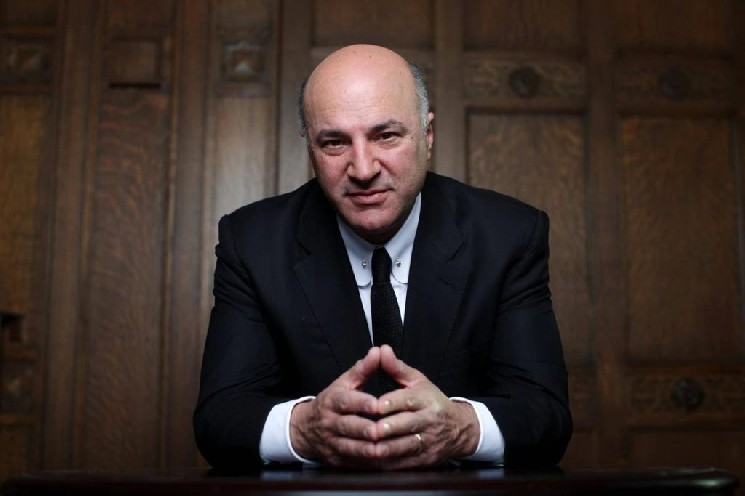

Kevin O’Leary’s Bold Crypto Strategy: Why He’s Betting Everything on Just Two Digital Assets
The Shark Tank Star’s Dramatic Portfolio Transformation
Kevin O’Leary, the straight-talking investor famously known from Shark Tank and as the chairman of O’Leary Ventures, has recently shared some eye-opening insights about his cryptocurrency investment journey that might change how many people think about digital assets. After years of exploring the wild and often unpredictable world of crypto, diving into numerous different tokens and blockchain projects, O’Leary has come to a surprisingly simple conclusion: when it comes to cryptocurrency investments, less is definitely more. In a candid conversation with Stuart Varney on the popular business show Varney & Co., the seasoned investor revealed that he’s made a dramatic shift in his approach to crypto investing, cutting through the noise and complexity to focus on what he believes truly matters in this evolving market.
What makes O’Leary’s perspective particularly interesting is that he’s not just another financial talking head offering opinions from the sidelines. This is someone who has actually put his money where his mouth is, experimenting with the cryptocurrency market firsthand over an extended period. His journey mirrors that of many investors who initially got caught up in the excitement of the crypto boom, investing across numerous different digital assets with the hope of striking gold. However, unlike those who stubbornly stick to failing strategies, O’Leary has demonstrated the wisdom and flexibility to reassess his approach based on real-world results and changing market conditions. His willingness to admit that his previous strategy needed refinement, and to share those lessons publicly, offers valuable insights for both seasoned investors and newcomers trying to navigate the often confusing cryptocurrency landscape.
From Twenty-Seven Coins to Just Two: A Strategic Retreat
The transformation in O’Leary’s cryptocurrency portfolio is nothing short of dramatic. At one point, this veteran investor held positions in twenty-seven different crypto assets, casting a wide net across the digital currency ecosystem. This approach reflected a common strategy among early crypto enthusiasts: diversify broadly across numerous projects to maximize the chances of holding the next big winner. However, O’Leary has now concluded that this scattershot approach is not only unnecessary but potentially counterproductive. He’s made a decisive move to consolidate his holdings, and the result is remarkably streamlined: his crypto portfolio now consists of just two assets—Bitcoin and Ethereum.
This isn’t a decision O’Leary took lightly or made overnight. The restructuring of his portfolio occurred particularly over the past year, driven by several converging factors that fundamentally changed the cryptocurrency investment landscape. One of the most significant influences has been the increasing participation of institutional investors—major financial players like hedge funds, investment banks, and even pension funds—who bring with them more rigorous analysis frameworks and stricter evaluation criteria. These sophisticated investors don’t chase hype or get swept up in the excitement of new token launches; instead, they conduct thorough due diligence and focus on assets with genuine long-term viability, solid fundamentals, and real-world utility. As these institutional players have gained more influence in the market, the evaluation standards for cryptocurrency projects have become considerably more demanding.
Additionally, the regulatory environment surrounding cryptocurrency has been evolving rapidly, with governments and financial authorities worldwide working to establish clearer frameworks for digital assets. This changing regulatory landscape has created new expectations and requirements that many smaller cryptocurrency projects simply cannot meet. O’Leary recognized that the crypto projects most likely to thrive in this maturing market are those with the resources, legitimacy, and infrastructure to navigate complex regulatory requirements while continuing to innovate and grow. This realization played a crucial role in his decision to narrow his focus to the two most established cryptocurrencies in the market.
Bitcoin and Ethereum: The Only Games Worth Playing
So why exactly has O’Leary settled on Bitcoin and Ethereum as the only two cryptocurrencies worth holding? His reasoning is both practical and data-driven. According to the veteran investor, these two digital assets account for approximately 97 percent of the price volatility observed across all other cryptocurrencies in the market—what he bluntly refers to as “junk coins.” In other words, the price movements of the vast majority of smaller cryptocurrencies essentially mirror, follow, or react to the price changes in Bitcoin and Ethereum. If you’re holding dozens of different altcoins thinking you’re diversified, O’Leary suggests you’re actually just holding multiple versions of the same bet, but with added complexity and often with inferior assets that carry additional risks.
Bitcoin, often called digital gold, has established itself as the most recognized and widely adopted cryptocurrency, serving primarily as a store of value and a hedge against inflation in the eyes of many investors. Its limited supply of 21 million coins, combined with its first-mover advantage and unparalleled name recognition, has made it the gateway cryptocurrency that most newcomers learn about first. Institutional investors have increasingly embraced Bitcoin, with some major corporations adding it to their balance sheets and numerous Bitcoin-focused investment products now available to traditional investors.
Ethereum, on the other hand, offers something different but equally valuable: it’s the foundational platform for the vast majority of decentralized applications, smart contracts, and innovative blockchain projects. While Bitcoin is primarily a currency and store of value, Ethereum is more like an operating system for the decentralized internet, enabling everything from decentralized finance (DeFi) applications to non-fungible tokens (NFTs) and beyond. The Ethereum network’s recent technical upgrades, including its transition to a more energy-efficient proof-of-stake consensus mechanism, have strengthened its position as the dominant smart contract platform. For O’Leary, these two assets represent the safest, most liquid, and most institutionally accepted ways to gain exposure to cryptocurrency’s potential without taking on the unnecessary risks associated with lesser-known projects.
The Great Crypto Collapse: Lessons from Market Carnage
O’Leary’s strategic shift wasn’t just based on abstract analysis—it was reinforced by harsh market realities that played out in dramatic fashion. The investor pointed to the market downturn that occurred last October as a watershed moment that validated his evolving thinking about cryptocurrency investments. During that period of market stress, thousands of small-scale cryptocurrency projects simply vanished from the landscape. These weren’t just price declines that affected all cryptocurrencies—these were complete project failures, with tokens losing essentially all their value and development teams abandoning their efforts or running out of funding entirely.
The disappearance of these projects revealed an uncomfortable truth that many crypto enthusiasts prefer not to acknowledge: the vast majority of cryptocurrency projects lack genuine staying power. When market conditions are favorable and money is flowing freely into the crypto space, even mediocre projects with questionable fundamentals can appear successful. However, when the tide goes out—when market conditions tighten, investor enthusiasm wanes, and capital becomes more selective—it becomes painfully clear which projects were built on solid foundations and which were merely riding the wave of general market enthusiasm.
What particularly struck O’Leary was that these failed projects didn’t come back when market conditions began to improve. Unlike Bitcoin and Ethereum, which have repeatedly demonstrated resilience by recovering from multiple market crashes over the years, these smaller projects proved to be permanently damaged or destroyed by adversity. For O’Leary, this pattern reinforced a simple but powerful question: if thousands of cryptocurrency projects can disappear without trace during market downturns, why take the risk of holding them when you can focus exclusively on the two assets that have repeatedly proven their ability to survive and thrive through multiple market cycles? The answer, for him, was clear—there’s no good reason to complicate your crypto strategy with vulnerable assets when stronger alternatives exist.
The Institutional Influence: How Big Money Changed the Game
One of the most significant factors driving O’Leary’s strategic evolution is the fundamental change in who participates in the cryptocurrency market and how they make investment decisions. In the early days of cryptocurrency, the market was dominated by individual retail investors, technology enthusiasts, and crypto believers who were often willing to take enormous risks on speculative projects based on little more than white papers and promises. This created an environment where almost any new cryptocurrency project could attract attention and investment, regardless of its actual merit or viability.
However, the landscape has transformed dramatically as institutional investors have entered the cryptocurrency space in increasing numbers. These institutions—including hedge funds, asset management companies, family offices, and even some pension funds—bring with them investment processes honed over decades in traditional financial markets. They conduct extensive due diligence, require transparent governance structures, demand regulatory compliance, and insist on adequate liquidity before committing capital. They’re not swayed by hype, social media buzz, or promises of revolutionary technology that might materialize someday. Instead, they focus on proven track records, real adoption metrics, and assets that can be held in significant quantities without unacceptable risks.
This institutional influence has created a sorting mechanism in the cryptocurrency market, effectively separating projects with genuine substance from those running on hype and speculation. Bitcoin and Ethereum have emerged as the clear winners in this institutional evaluation process, with both assets seeing growing adoption among professional investors, the development of regulated investment products (like Bitcoin ETFs), and integration into traditional financial infrastructure. For smaller cryptocurrency projects, meeting institutional investment criteria is extraordinarily challenging, requiring resources and capabilities that most simply don’t possess. O’Leary recognizes that as institutional money continues to flow into cryptocurrency, the competitive advantages that Bitcoin and Ethereum enjoy will likely only strengthen, making them even more dominant relative to alternative cryptocurrencies. In his view, fighting this trend by holding numerous smaller crypto assets is not just unnecessary—it’s working against powerful market forces that favor consolidation around the most established digital assets.
What This Means for Regular Investors: Simplicity Over Complexity
For everyday investors trying to figure out their own approach to cryptocurrency, O’Leary’s evolution offers some valuable lessons that extend beyond just picking which coins to buy. Perhaps the most important takeaway is that complexity doesn’t equal sophistication—sometimes the smartest investment strategy is also the simplest one. Many investors feel pressure to demonstrate their knowledge by holding diverse portfolios of numerous cryptocurrencies, researching obscure projects, and constantly searching for the next hidden gem that might deliver exponential returns. O’Leary’s experience suggests that this approach, while potentially exciting, may actually be counterproductive for most people.
By concentrating on just Bitcoin and Ethereum, investors can spend less time monitoring dozens of different projects, reduce the research burden of evaluating new cryptocurrencies, and avoid the stress of wondering whether their smaller holdings might suddenly collapse as thousands of projects did during recent market turbulence. This simplified approach doesn’t mean giving up on cryptocurrency’s potential—quite the opposite. Since these two assets capture the vast majority of market movements anyway, according to O’Leary’s analysis, you’re not missing out on returns by skipping the hundreds of alternative cryptocurrencies. What you are missing out on is the additional risk, complexity, and volatility that comes with holding less established assets.
Of course, it’s important to note that O’Leary himself emphasizes this isn’t investment advice, and indeed, every investor needs to make decisions based on their own financial situation, risk tolerance, and investment goals. Cryptocurrency remains a highly volatile and speculative asset class, and even Bitcoin and Ethereum can experience dramatic price swings that would be unacceptable in more traditional investments. However, for those who have decided that cryptocurrency deserves a place in their investment portfolio, O’Leary’s streamlined approach offers a thoughtful framework: focus on the assets with the longest track records, the deepest liquidity, the strongest institutional support, and the greatest likelihood of long-term survival. In a market filled with thousands of options and constant noise about the next big thing, sometimes the wisest choice is to tune out the distractions and stick with what has actually proven to work.









