





Bitcoin’s Weekend Tumble: How Trump’s Iran Ultimatum Shattered Crypto’s Rally
A Week’s Progress Vanished in 48 Hours
It’s a familiar and frustrating pattern for cryptocurrency investors: what takes days to build can crumble in a single weekend. Bitcoin, the flagship digital currency that leads the market, experienced exactly this kind of whiplash over the past few days. After steadily climbing throughout the previous week, Bitcoin surrendered all those hard-won gains in one dramatic weekend slide. By Sunday morning, the cryptocurrency had tumbled to $69,192, representing a 2.2% drop in just 24 hours and a 3.1% decline for the week overall. This wasn’t a gradual erosion of value or a technical correction based on market fundamentals—it was a sharp, headline-driven sell-off triggered by escalating geopolitical tensions in the Middle East.
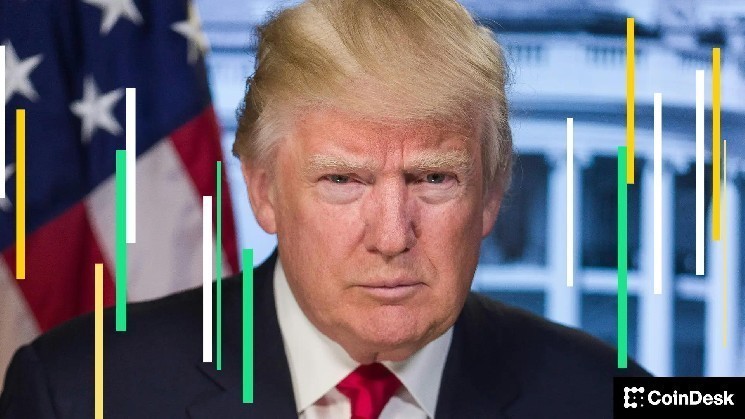
The catalyst for this sudden reversal came late Saturday when U.S. President Donald Trump issued a stark 48-hour ultimatum to Iran. The demand was simple but severe: reopen the strategically critical Strait of Hormuz to commercial shipping, or face devastating attacks on the country’s power plants. Trump’s language left little room for diplomatic interpretation, as he threatened to “hit and obliterate” Iran’s power infrastructure, starting with the largest facilities, if the strait remained closed to commercial vessels. This ultimatum sent shockwaves through financial markets worldwide, but cryptocurrency markets—which trade 24/7 without the safety valve of closing bells—bore the immediate brunt of investor panic. The speed and severity of Bitcoin’s decline illustrated just how sensitive digital asset markets remain to geopolitical instability, particularly when it threatens global energy supplies and economic stability.
From De-escalation to Devastation Threats
What made this weekend’s developments particularly jarring for traders was the dramatic about-face in tone from the U.S. administration. Just one day earlier, on Friday, President Trump had struck a notably different chord, publicly stating he was considering “winding down” military operations in the region. This dovish pivot had fueled optimism across risk assets, including cryptocurrencies, as investors interpreted it as a signal that tensions might be easing. The market had spent the previous week building confidence around the prospect of de-escalation, with Bitcoin enjoying eight consecutive days of gains that pushed it as high as $75,912. Traders had positioned themselves accordingly, loading up on long positions in anticipation that the geopolitical clouds were clearing.
Then came the weekend whipsaw. Going from talk of winding down operations to threatening strikes on civilian infrastructure in less than 24 hours caught the market completely off-guard. This kind of rapid policy reversal is particularly devastating in cryptocurrency markets, where leverage is common and positions can be liquidated automatically when prices move against traders. The shift from optimism to alarm happened so quickly that many investors found themselves on the wrong side of the trade before they could react. This volatility underscores one of the persistent challenges in crypto investing: the market’s extreme sensitivity to news flow, combined with round-the-clock trading, means that sentiment can shift violently at any moment, often during weekends when traditional financial advisors and institutional support are offline.
A Bloodbath in Leveraged Positions
The liquidation data from this weekend tells a stark story about how lopsidedly positioned the market had become. According to data from CoinGlass, a cryptocurrency analytics platform, the market saw $299 million in total liquidations over the 24-hour period following Trump’s ultimatum. These liquidations affected 84,239 individual traders—a substantial number that illustrates how widespread the bullish positioning had been. But the most revealing aspect of this data is the ratio: of those $299 million in liquidations, long positions accounted for $254 million, representing roughly 85% of the total. This overwhelming proportion confirms that the market had leaned heavily bullish heading into the weekend, with traders betting on continued upward momentum based on the previous week’s rally and Friday’s de-escalation signals.
Bitcoin longs alone absorbed $122 million in liquidations, while Ethereum longs lost $95.7 million. The largest single liquidation was a massive $10 million BTC-USDT swap on the OKX exchange—a staggering individual loss that highlights the risks of leveraged trading in volatile conditions. These figures represent more than just numbers on a screen; they represent real financial losses for tens of thousands of traders who had believed the narrative of continued gains. The heavily one-sided nature of these liquidations created a cascading effect: as prices fell and long positions were automatically closed, those forced sales pushed prices even lower, triggering additional liquidations in a painful downward spiral. This dynamic is unique to highly leveraged markets like cryptocurrency, where optimism can quickly transform into a self-reinforcing liquidation cascade that accelerates losses far beyond what the initial news might have justified.
The Broader Crypto Market Follows Bitcoin Down
As is typically the case in cryptocurrency markets, Bitcoin’s troubles didn’t remain isolated. Major tokens fell in near-perfect lockstep with the market leader, underscoring the high correlation that still exists across digital assets during periods of stress. Ethereum, the second-largest cryptocurrency by market capitalization, dropped 1.8% to $2,114. XRP, often favored by those seeking alternatives to Bitcoin and Ethereum, lost 2.5% to fall to $1.41. Binance Coin (BNB), the native token of the world’s largest cryptocurrency exchange, slid 1.4% to $633. Solana, which has been positioned as a potential “Ethereum killer” and has attracted significant developer activity, fell 2.1% to $88.55. Even dogecoin, the meme-inspired cryptocurrency that often trades on its own unique dynamics, couldn’t escape the sell-off, losing 2.7% to drop to $0.092.
When examining the weekly performance, the picture grew even grimmer. The only major cryptocurrencies showing gains over the seven-day period were Ethereum at a modest 0.8% and Solana at 0.7%—barely in positive territory. Everything else painted the charts red over the weekly timeframe. This broad-based weakness demonstrates that the weekend’s geopolitical shock affected the entire cryptocurrency ecosystem, not just Bitcoin. It also suggests that despite years of market maturation and the emergence of different use cases and value propositions for various cryptocurrencies, the sector still largely moves as one during crisis moments. The correlation to Bitcoin remains strong, particularly on the downside, which presents ongoing challenges for those seeking genuine diversification within the cryptocurrency space.
A Monday Deadline and Mounting Uncertainty
As Sunday turned to Monday, traders faced a ticking clock. Trump’s 48-hour ultimatum means the deadline arrives Monday evening, creating a specific moment of high anxiety for markets. If Iran doesn’t comply with the demand to reopen the Strait of Hormuz—and there has been no indication from Tehran that it intends to do so—the market faces the prospect of direct U.S. strikes on Iranian power infrastructure. This would mark a significant escalation in the conflict, representing the first direct targeting of civilian energy systems. The humanitarian implications are severe, but from a market perspective, such strikes would likely trigger further volatility and potentially push cryptocurrency prices even lower as investors flee to traditional safe-haven assets.
The stakes extend beyond the immediate military confrontation. The Strait of Hormuz remains effectively closed to most commercial traffic, a situation that continues to disrupt roughly 20% of the world’s oil and gas flows. This isn’t a minor shipping inconvenience—it’s a major chokepoint for global energy supplies, with ripple effects throughout the world economy. Higher energy prices affect everything from transportation costs to manufacturing, potentially feeding inflation at a time when central banks are trying to maintain stable prices. For cryptocurrency markets, which have shown increasing correlation with broader risk assets in recent years, continued disruption in the Strait of Hormuz represents an ongoing headwind that could prevent any sustained recovery in prices.
When Fundamentals Meet Geopolitics
Last week’s rally that pushed Bitcoin to $75,912 now appears to have been built on a foundation of ceasefire speculation that evaporated over the weekend like morning fog. The timing is particularly frustrating for crypto bulls because the fundamental backdrop had actually improved during the week. The Federal Reserve held interest rates steady on Wednesday and adopted a dovish tone in its accompanying statement, suggesting that policymakers might be nearing the end of their hiking cycle. Under normal circumstances, this kind of Fed positioning should support risk assets like cryptocurrencies, as stable or falling interest rates reduce the opportunity cost of holding non-yielding assets like Bitcoin and make speculative investments more attractive.
But these aren’t normal circumstances. The persistent threat of war headlines and the potential for further escalation in the Middle East has traders hesitant to make outsized directional bets in either direction. The weekend’s price action demonstrated why that caution is warranted: geopolitical developments can overwhelm even favorable monetary policy in determining short-term price movements. For now, cryptocurrency markets remain hostage to headlines from the Middle East, with technical analysis and fundamental factors taking a back seat to the question of whether the region will see further military escalation. Until there’s clarity on the geopolitical front—or at least a reduction in the pace of surprising policy reversals—cryptocurrency investors may find themselves on an exhausting roller coaster of weekend gaps and weekday recoveries, with each news cycle bringing the potential for dramatic moves in either direction. The path forward depends less on blockchain technology or adoption metrics than on decisions made in Washington and Tehran, a reality that highlights both the mainstream integration and ongoing vulnerability of cryptocurrency markets.









