



Bitcoin’s Pricing Gap: Why the World’s Leading Cryptocurrency Is Trading Below Its “Fair Value”
A Historic Disconnect Between Bitcoin and Global Money Supply
Something unusual is happening in the cryptocurrency markets that has caught the attention of financial analysts and investors alike. Bitcoin, the world’s most prominent digital currency, is currently trading at what experts are calling a significant discount compared to where it “should” be based on global economic indicators. According to a comprehensive analysis from CF Benchmarks, a well-respected index provider owned by the cryptocurrency exchange Kraken, Bitcoin’s current price doesn’t match up with what broader economic trends would suggest it should be worth.
The numbers tell a striking story. Since the middle of 2025, the global M2 money supply—essentially a measure of all the cash and easily accessible money floating around the world’s economies—has grown by approximately 12%. You’d typically expect Bitcoin to ride this wave upward, as more money in the system often means more investment flowing into assets like cryptocurrencies. Instead, Bitcoin has moved in the opposite direction, dropping roughly 35% during this same timeframe. Using sophisticated modeling that examines the relationship between money supply and Bitcoin’s value, CF Benchmarks suggests that Bitcoin’s “fair value” should be somewhere around $136,000. Yet as of now, it’s trading near $70,000—nearly half of what the model indicates it should be worth. This represents one of the largest gaps ever recorded between Bitcoin’s actual price and what global liquidity trends would predict, leaving many investors and analysts scratching their heads about what’s causing this disconnect and when it might correct itself.
Understanding Why This Gap Matters
To understand why this pricing gap is significant, it helps to look at Bitcoin’s historical behavior. Over the past decade-plus of Bitcoin’s existence, there’s been a fairly consistent relationship between the cryptocurrency and global money supply. When governments and central banks around the world increase the money supply—whether through stimulus programs, quantitative easing, or other monetary policies—that additional liquidity tends to find its way into various investment assets. Stocks, real estate, commodities, and yes, cryptocurrencies, often benefit from these periods of monetary expansion. Bitcoin, in particular, has historically been quite sensitive to these changes, often responding even more dramatically than traditional stock markets.
“The key takeaway from more than a decade of data is that divergences between M2 and Bitcoin have historically been temporary,” Gabe Selby, Head of Research at CF Benchmarks, explained. In other words, when Bitcoin’s price has strayed from what global liquidity trends would suggest in the past, it hasn’t stayed disconnected for long. Eventually, the price has adjusted to realign with broader monetary conditions. This historical pattern is what makes the current situation so intriguing—it suggests that either Bitcoin is currently undervalued and due for a significant price increase, or something fundamental has changed about the relationship between cryptocurrency prices and global money supply. Most analysts lean toward the former interpretation, believing that Bitcoin will eventually “catch up” to where liquidity trends suggest it should be, though the timing remains uncertain.
The Federal Reserve’s Role in Keeping Bitcoin Grounded
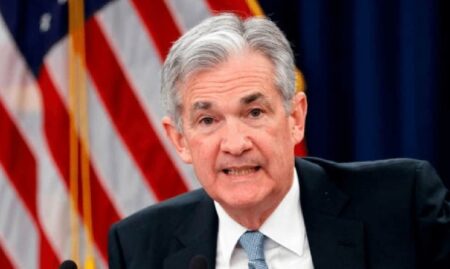
While money supply has been growing globally, the United States Federal Reserve—arguably the most influential central bank in the world—has been pulling in the opposite direction, and this appears to be a major factor in Bitcoin’s underperformance. Following the massive monetary expansion during the COVID-19 pandemic, when the Fed’s balance sheet ballooned to nearly $9 trillion as it purchased bonds and injected liquidity into the financial system, the central bank has been working to reverse course. It has now reduced its balance sheet to approximately $6.7 trillion and has maintained relatively high interest rates compared to the near-zero rates we saw during the pandemic years.
This tightening of financial conditions in the world’s largest economy has had a cooling effect on investment flows, particularly into riskier assets. When interest rates are high, safer investments like government bonds and savings accounts become more attractive, drawing capital away from volatile assets like cryptocurrencies and growth stocks. Additionally, the Federal Reserve’s reduction of its balance sheet effectively removes money from the financial system, counteracting some of the liquidity expansion happening elsewhere in the world. This dynamic has left Bitcoin more closely tied to real interest rates and overall risk sentiment rather than responding to headline money supply growth figures. In essence, while there’s more money sloshing around globally, the tight grip of U.S. monetary policy is preventing much of it from flowing freely into markets, and Bitcoin is feeling that constraint acutely.
Energy Prices Add Another Layer of Complexity
As if navigating Federal Reserve policy wasn’t complicated enough, rising energy prices have added another significant headwind for both the broader economy and cryptocurrency markets. Since late February, gasoline prices in the United States have increased by approximately 81 cents per gallon—a jump that might not sound dramatic but adds up quickly for American households. Economists estimate this increase could cost the average household around $740 over the course of a year, a substantial hit to discretionary income that might otherwise have been saved or invested.
The timing of these energy price increases has been particularly unfortunate. Earlier this year, the White House had projected that Americans would receive tax refunds averaging about $1,000 more than in previous years, thanks to President Donald Trump’s Working Families Tax Cuts Act. This additional money returning to households was expected to provide a boost to both spending and potentially investment. However, the rise in gasoline prices threatens to consume much of that benefit, leaving families with less extra cash than anticipated. Beyond domestic gasoline prices, global markets have been closely watching potential disruptions to the Strait of Hormuz, a critical waterway through which a significant portion of the world’s oil supply flows. Ongoing tensions and conflict between the United States and Iran have raised concerns about supply disruptions, causing oil prices to spike—briefly topping $100 per barrel before settling back to around $92. These elevated energy costs create inflationary pressure throughout the economy, as transportation and production costs increase across virtually all sectors. For potential cryptocurrency investors, higher everyday expenses mean less money available to put into higher-risk investments like Bitcoin, constraining one potential source of demand that might otherwise help close the valuation gap.
The Path Forward: When Might Bitcoin Catch Up?
Despite these current headwinds, most experts remain fundamentally optimistic about Bitcoin’s prospects over the medium to long term. The historical pattern has been clear: when Bitcoin deviates significantly from global liquidity trends, it tends to eventually realign, typically over a period of several quarters. The catalysts that could trigger such a catch-up movement are fairly well understood, even if their timing remains uncertain. A shift in Federal Reserve policy would be the most significant potential trigger—if the central bank begins cutting interest rates or slows its balance sheet reduction, financial conditions would ease, making risk assets like Bitcoin more attractive again.
Additionally, if the geopolitical situation in the Middle East stabilizes and energy prices moderate, that would remove a significant source of economic uncertainty and free up household capital for investment. The broader question facing the cryptocurrency market is whether we’re simply in a temporary period of adjustment or if something more fundamental has changed. Since the pandemic, the global economy has been navigating a complex landscape of post-stimulus inflation, geopolitical conflicts, and central bank policy normalization. Inflation has proven “stickier” than many economists initially predicted, leading to prolonged periods of higher interest rates. This environment has created significant uncertainty among market participants about the direction of risk assets in general. Cryptocurrencies, which have largely moved in lockstep with technology-heavy indices like the Nasdaq, have been caught in this uncertain environment, with investor sentiment swinging between optimism about long-term potential and concern about short-term headwinds.
New Sources of Structural Demand Could Change the Game
One potentially significant difference between the current situation and past Bitcoin cycles is the emergence of new, more institutionalized sources of demand that didn’t exist before. Gabe Selby from CF Benchmarks pointed to two particularly important developments: “An uptick in demand through the TradFi vehicles that helped drive Bitcoin to all-time highs, namely the U.S.-listed spot Bitcoin ETFs and corporate treasuries, would provide more direct, mechanical support for a trend reversal. Ongoing buying from these cohorts represents a source of structural demand that did not exist in prior cycles.”
The approval and launch of spot Bitcoin ETFs in the United States represented a watershed moment for cryptocurrency adoption, allowing traditional investors to gain Bitcoin exposure through familiar, regulated investment vehicles without the complexities of directly purchasing and storing cryptocurrency. Similarly, the trend of corporations adding Bitcoin to their balance sheets—pioneered by companies like MicroStrategy and followed by others—creates a source of institutional demand that operates somewhat independently of retail investor sentiment. These structural changes to the Bitcoin market mean that when conditions do improve, the response could potentially be stronger and more sustained than in previous cycles. Rather than relying primarily on retail investor enthusiasm, Bitcoin now has multiple channels through which institutional capital can flow. If Federal Reserve policy shifts toward easing, if energy prices stabilize, and if these institutional investment channels continue to mature, the stage could be set for Bitcoin to not only close its current valuation gap but potentially exceed previous highs. For now, though, the cryptocurrency remains in a holding pattern, trading at what analysts view as a significant discount to fair value while waiting for the macro environment to become more favorable. For investors, this presents both a potential opportunity—if the analysis is correct that Bitcoin is undervalued relative to liquidity trends—and a reminder that cryptocurrency markets remain deeply interconnected with broader economic forces, from Federal Reserve policy to Middle Eastern geopolitics.