


Financial Experts Debate Bitcoin, Gold, and Oil Markets Amid Rising Global Uncertainty
The Storm Clouds Gathering Over Global Markets
In a world where uncertainty has become the only certainty, financial experts are sounding alarm bells about the future of major investment markets. As tensions simmer in the Middle East and economic instability ripples across continents, leading voices in the financial sector recently gathered on “The Wolf Of All Streets” channel to discuss what lies ahead for investors navigating these turbulent waters. The conversation centered around three critical assets that often serve as economic barometers: Bitcoin, gold, and oil. What emerged from this discussion wasn’t just a routine market analysis but rather a stark warning about the fundamental shifts occurring in the global economic landscape.
The timing of this discussion couldn’t be more relevant. We’re living through a period where traditional economic models seem to be breaking down, geopolitical tensions are reshaping trade relationships, and governments worldwide are grappling with unprecedented levels of debt. For everyday investors trying to protect their savings and build wealth, understanding these macro trends isn’t just academic—it’s essential for financial survival. The experts who convened for this discussion brought different perspectives, but they all agreed on one thing: we’re entering uncharted territory, and the rules that governed markets for decades may no longer apply.
The Money Printing Machine Won’t Stop
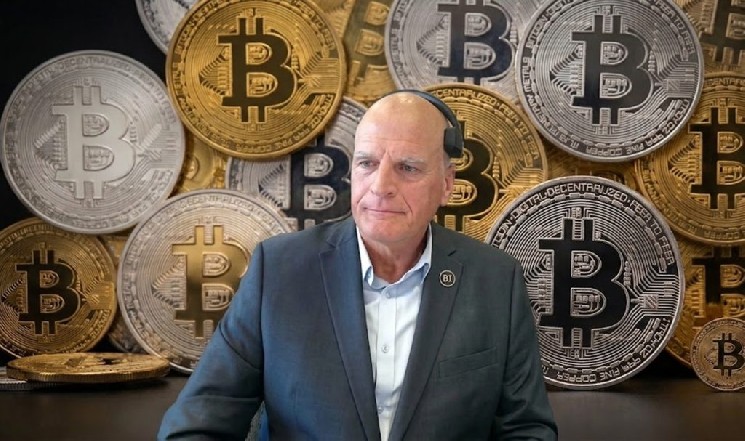
Dave Weisberger, former CEO of CoinRoutes, brought a refreshingly blunt perspective to the conversation that cut through the usual financial jargon. His central thesis is both simple and profound: regardless of what else happens in the economy, governments will continue printing money at unprecedented rates because they have no other choice. With debt levels spiraling out of control across developed nations, the printing press has become the weapon of choice for political leaders who need to keep the system afloat without making the politically painful decisions that genuine fiscal responsibility would require.
Weisberger explained that this continuous money creation will inevitably drive up the nominal value of assets priced in fiat currencies like the dollar, euro, and yen. In plain English, this means that while your investments might show bigger numbers over time, you’re not necessarily getting wealthier—you’re just keeping pace with currency devaluation. It’s like running on a treadmill that keeps speeding up; you have to run faster just to stay in the same place. This phenomenon, often called “inflation,” affects everything from the house you want to buy to the groceries you purchase each week. For investors, it creates a challenging environment where traditional safe havens like government bonds might actually lose purchasing power over time, even if they generate positive nominal returns.
This perspective on inevitable money printing isn’t conspiracy theory or doomsaying—it’s based on observable policy decisions and mathematical realities. When governments owe more than they can realistically repay through taxation or economic growth, they face limited options: default on their obligations (politically catastrophic), dramatically cut spending (also politically unpalatable), raise taxes significantly (which can stifle economic growth), or dilute the currency by creating more of it. History shows that governments consistently choose the last option because it’s the path of least immediate resistance, even though it creates long-term problems that future leaders will have to address.
Bitcoin: Digital Gold for a Debt-Soaked World
Building on his money-printing thesis, Weisberger argued that Bitcoin was designed precisely for the economic environment we’re now experiencing. When the mysterious Satoshi Nakamoto created Bitcoin in 2009, it was in the immediate aftermath of the 2008 financial crisis—a crisis that governments responded to with massive money creation and bailouts. Bitcoin’s fixed supply of 21 million coins represents the antithesis of the infinite printing capacity that central banks possess. It’s a digital asset that can’t be manipulated by political pressure or economic expedience.
Weisberger expressed his belief that Bitcoin has established a solid foundation around the $60,000 price level. For those unfamiliar with Bitcoin’s price history, this represents an enormous increase from just a few years ago, yet Weisberger sees this not as a peak but as a base camp for potentially higher climbs ahead. His reasoning connects back to the money printing thesis: as more currency gets created, assets with fixed or limited supply should appreciate in nominal terms. Bitcoin, with its mathematically enforced scarcity, becomes an attractive store of value in an environment where fiat currencies are being deliberately devalued. This isn’t just theoretical—we’ve seen Bitcoin gain significant institutional adoption as major companies, investment funds, and even some governments have begun viewing it as a legitimate asset class worth holding in their portfolios.
The case for Bitcoin isn’t without complications, of course. The cryptocurrency remains volatile, faces regulatory uncertainty in many jurisdictions, and still hasn’t fully proven itself through a complete economic cycle including a major recession. However, Weisberger’s argument is that these concerns, while valid, miss the bigger picture: in a world where governments are structurally committed to currency debasement, having exposure to assets outside the traditional fiat system isn’t radical—it’s prudent risk management.
The Approaching Debt Crisis That Can’t Be Stopped
Analyst James Lavish brought sobering numbers to the discussion that highlight just how precarious America’s fiscal situation has become. According to Lavish, the US Treasury faces approximately $9.7 trillion in debt that’s maturing this year alone. When you add in the budget deficits the government continues to run—spending more than it collects in taxes—that figure swells to roughly $12 trillion. These aren’t abstract numbers on a spreadsheet; they represent real obligations that must be refinanced or repaid, and the interest on this debt is becoming a major expense in its own right.
Lavish pointed out a particularly concerning dynamic: every half-point increase in interest rates adds an extra $100 billion to the government’s annual debt interest payments. To put that in perspective, that’s more than the entire budget of many government departments. As interest rates fluctuate, the government finds itself increasingly squeezed, with a growing portion of tax revenue simply going toward paying interest rather than funding actual government services or programs. Lavish’s stark warning—”This train cannot be stopped”—reflects the mathematical reality that once debt reaches certain levels relative to the economy’s size, it becomes increasingly difficult to manage without dramatic interventions.
This debt dynamic creates what economists call a “debt spiral” or “debt trap.” As debt grows, interest payments increase, requiring more borrowing, which increases debt further, leading to even higher interest payments, and so on. Breaking this cycle typically requires either exceptional economic growth (which generates more tax revenue without raising rates), significant spending cuts, substantial tax increases, or some form of debt restructuring. None of these options are easy, and all carry significant political and economic risks. Lavish’s implication is clear: investors need to prepare for a period where government debt dynamics increasingly influence market behavior and asset prices.
A Contrarian Warning: The Bull Run Might Be Over
Not everyone at the discussion shared the same optimistic outlook for Bitcoin and precious metals. Mike McGlone, Bloomberg’s Senior Commodities Strategist, provided a contrarian perspective that serves as an important counterbalance to the bullish narratives. McGlone argued that the spectacular gains in Bitcoin and gold over recent years might actually be warning signs rather than reasons for celebration. His concern centers on oil prices and their potential to trigger what he calls a “demand collapse”—a scenario where energy costs rise so high that economic activity significantly slows down, potentially tipping the global economy into recession.
McGlone’s analysis suggests that the recent strength in cryptocurrencies and gold wasn’t just about investors seeking alternatives to fiat currency; it was also investors positioning for economic trouble ahead. In this view, these assets were rising because smart money was already anticipating the problems that Weisberger and Lavish described. However, McGlone warns that we may be approaching a point where risk assets of all types—including Bitcoin—get sold off as economic conditions deteriorate. He also expressed concern about stock market valuations, particularly the S&P 500, which he believes has become excessively overpriced relative to the underlying economic fundamentals.
The “demand collapse” scenario McGlone describes would unfold something like this: oil prices surge due to geopolitical tensions (like conflicts in the Middle East) or supply constraints; these higher energy costs feed through the entire economy, making everything from transportation to manufacturing more expensive; consumers and businesses respond by cutting back on spending and investment; this reduced economic activity leads to recession; and in a recession, almost all asset classes tend to decline as investors move to cash and the safest government bonds. This pessimistic scenario represents an important reminder that while certain narratives about money printing and Bitcoin might prove correct over the long term, the short to medium term could still see significant volatility and losses.
Navigating Uncertain Waters: What This Means for Regular Investors
For those of us trying to make sense of these competing perspectives and decide how to protect and grow our wealth, the discussion highlights several important considerations. First, there’s broad agreement among these experts that we’re in an unusual economic period where traditional assumptions may not hold. The days of simply putting money in a savings account or government bonds and expecting to maintain purchasing power appear to be over, at least for the foreseeable future. The question isn’t whether change is coming—it’s what form that change will take and how to position yourself for it.
The debate between Weisberger’s bullish stance on Bitcoin and McGlone’s warnings about a potential broad market decline illustrates the genuine uncertainty investors face. Both perspectives are rooted in reasonable analysis of current conditions; they simply emphasize different aspects and timelines. Weisberger focuses on the long-term structural forces (government money printing, currency debasement) that should support assets like Bitcoin, while McGlone emphasizes the shorter-term cyclical risks (recession, demand collapse) that could temporarily overwhelm those structural trends. For individual investors, this suggests the importance of diversification—not putting all your eggs in one basket—and having a clear understanding of your own time horizon and risk tolerance.
The discussion also underscores the importance of financial education in today’s environment. Understanding concepts like currency debasement, debt dynamics, and how different assets respond to various economic conditions isn’t optional anymore if you want to make informed decisions about your financial future. While this conversation among financial experts might seem intimidating with its talk of trillions in debt and competing market forecasts, the underlying message is actually empowering: by understanding these forces, you can make more informed decisions rather than being swept along by events you don’t understand. Whether you ultimately lean toward Bitcoin, gold, traditional stocks, or a balanced mix of various assets, the key is making conscious decisions based on your own research and circumstances rather than simply following the crowd or sticking with the status quo because it’s familiar.