


The Musk vs. OpenAI Battle: A High-Stakes Legal Drama That Could Reshape the Future of AI
The Foundations of a Silicon Valley Showdown
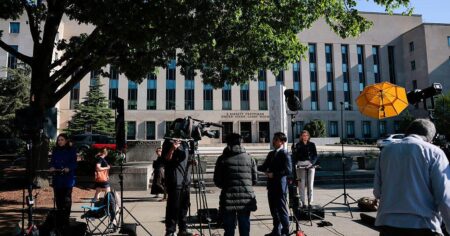
A courtroom in Oakland, California has become the unlikely stage for one of the most significant legal battles in the tech industry’s history. Starting this week, jury selection begins in a case that pits two of the most influential and controversial figures in artificial intelligence against each other: Tesla CEO Elon Musk and OpenAI CEO Sam Altman. At the heart of this dispute is a fundamental question that could determine the future of AI development: should revolutionary technology prioritize profits or the greater good of humanity?
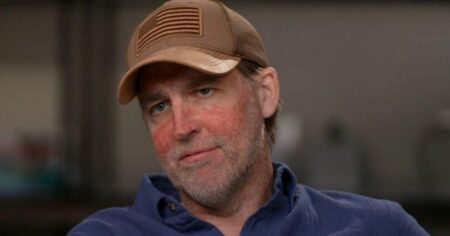
Elon Musk, the 54-year-old billionaire entrepreneur, filed his lawsuit in 2024 against OpenAI, the company he co-founded with Sam Altman back in 2015. His accusations are serious and far-reaching: Musk claims that Altman, along with OpenAI President Greg Brockman, betrayed the company’s original mission. When OpenAI was established nearly a decade ago, it positioned itself as a nonprofit research laboratory dedicated to developing artificial intelligence that would benefit all of humanity. However, Musk alleges that as the organization grew—eventually launching the wildly popular ChatGPT in 2022—it abandoned its altruistic principles in favor of corporate profits. The transformation of OpenAI from a nonprofit into a for-profit enterprise valued at an staggering $852 billion has become the centerpiece of Musk’s legal complaint. He’s seeking an unspecified amount of money to fund OpenAI’s charitable operations and, perhaps most dramatically, wants Altman removed from the company’s board of directors entirely.
The Dramatic Courtroom Setting and Key Players
Opening statements in this highly anticipated trial could begin as soon as Tuesday, with Judge Yvonne Gonzalez Rogers presiding over the proceedings. In an interesting twist on traditional courtroom procedure, the jury will serve in an advisory capacity rather than making the final decision—Judge Rogers herself will ultimately determine the outcome. This setup ensures that complex questions about corporate governance, fiduciary duty, and the ethical development of transformative technology will be decided by someone with expertise in navigating these complicated legal waters.
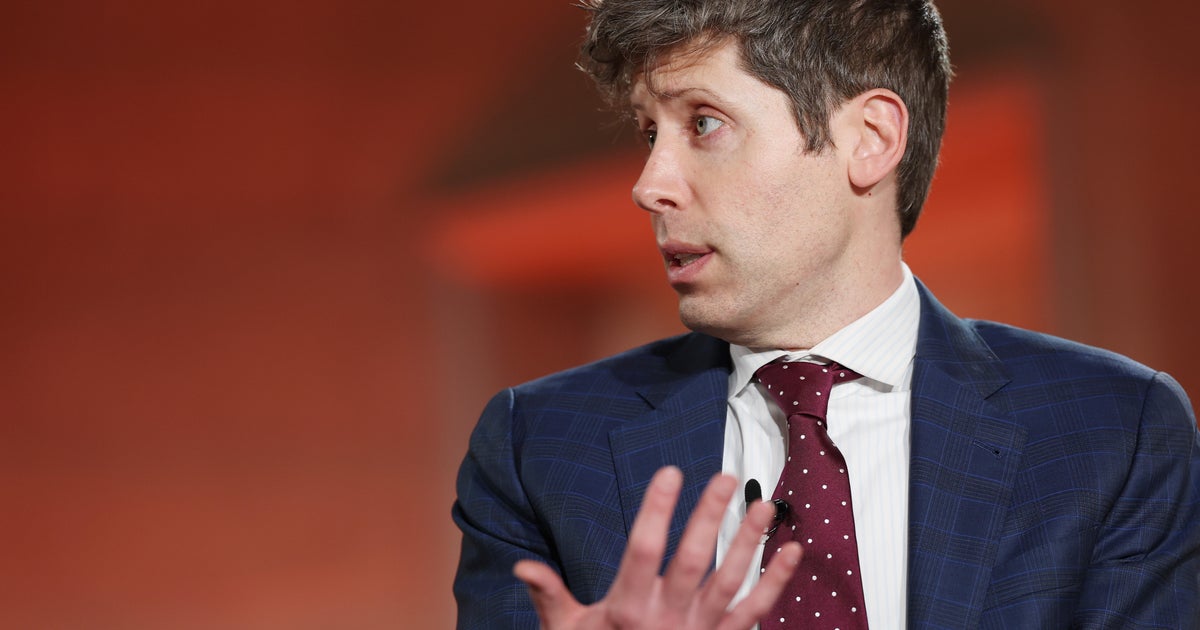
The trial promises to deliver what legal observers are calling “riveting theater,” featuring contrasting testimony from Musk and the 41-year-old Altman. These two men represent different visions for artificial intelligence’s future, and their personal falling-out has become one of Silicon Valley’s most bitter feuds. OpenAI has maintained a mostly tight-lipped approach in the days leading up to the trial, declining to comment on Friday. However, the company did break its silence on Monday with a pointed post on X (the social media platform formerly known as Twitter, which Musk owns). In that statement, OpenAI characterized Musk’s lawsuit as a “baseless and jealous bid to derail a competitor,” suggesting that financial rivalry rather than ethical concerns motivates his legal action. This characterization isn’t without merit—Musk’s own AI venture, xAI, operates the Grok chatbot, which launched in 2023 and directly competes with OpenAI’s products. The company also expressed anticipation about finally having “the chance to question Mr. Musk under oath before a jury of Californians about this attempt to undermine our work to ensure that artificial general intelligence benefits all of humanity.” Musk’s legal team, for their part, has remained silent, not responding to requests for comment before the trial began.
The Money Trail and the Great Falling Out
Understanding how this relationship deteriorated requires following the money and the power dynamics that shifted over several crucial years. Musk served as co-chair of OpenAI from its founding in 2015 until 2018, when he stepped down from that leadership role. However, he didn’t immediately sever ties—he continued providing financial support to the organization until 2020. According to legal filings, Musk’s total contributions to OpenAI reached $44 million, a substantial investment that reflected his initial commitment to the project’s stated mission.
The break came as OpenAI began transforming its structure from a pure nonprofit into a hybrid model with for-profit components. This shift fundamentally changed the organization’s nature and priorities, at least in Musk’s view. As the Tesla founder grew increasingly unhappy with OpenAI’s direction, he pulled his funding completely, creating a financial void that needed filling. Into that void stepped Microsoft, which became OpenAI’s largest investor and strategic partner. This partnership proved transformative for OpenAI, providing the computational resources and capital necessary to develop ChatGPT and other advanced AI systems. However, it also marked the complete breakdown of the relationship between Musk and his former collaborators.
Julia Powles, a technology law professor at UCLA, offered insight into what she calls the “core dispute” at the heart of this case. Speaking with CBS News, Powles explained that the battle is fundamentally about control and profit from transformative technology. “Both are arguing in this case that they have the public good at heart, that’s essentially the core dispute,” she noted. However, she added a pointed observation: “But what I think the evidentiary record shows is that both like to tell you what you want to hear.” This suggests that the high-minded rhetoric about benefiting humanity from both sides may obscure more straightforward motivations related to competitive advantage and financial gain in the rapidly expanding AI marketplace.
The Broader Implications for Artificial Intelligence Development
This trial arrives at an extraordinarily consequential moment in the evolution of artificial intelligence. The technology is advancing at breakneck speed, with new capabilities emerging that seemed like science fiction just a few years ago. AI systems can now write sophisticated text, generate realistic images and videos, analyze complex data patterns, and increasingly perform tasks that were once the exclusive domain of human intelligence. This rapid advancement brings tremendous promise—potentially revolutionizing medicine, education, scientific research, and countless other fields. However, it also raises profound concerns about the impact on employment as automation replaces human workers, the concentration of power in the hands of a few tech giants, the potential for misuse of the technology, and even existential questions about humanity’s relationship with increasingly powerful artificial intelligence systems.
Dan Ives, an analyst at Wedbush Securities, suggested in a note on Monday that the trial’s outcome could significantly affect what he calls the “AI arms race.” OpenAI currently stands as one of the dominant players in the field, but it faces increasing competition from rivals including Musk’s own xAI with its Grok chatbot and Anthropic, which operates the Claude AI assistant. The competitive dynamics are further complicated by OpenAI’s expected initial public offering later this year, which would transform it once again—this time into a publicly traded company with all the shareholder obligations and profit pressures that status entails. Ives also noted that the case could reshape the corporate governance structure of AI research organizations more broadly, potentially establishing legal precedents about how companies can transition from nonprofit to for-profit structures and what obligations they owe to their founding missions.
What’s at Stake Beyond Money and Control
While the financial figures involved in this case are staggering—with OpenAI’s $852 billion valuation representing one of the most valuable private companies in existence—the stakes extend far beyond money. This trial will essentially put on public display fundamental questions about who gets to shape humanity’s AI future and according to what principles. Should the development of potentially transformative technology be guided primarily by market forces and investor returns, or should there be safeguards to ensure it serves broader societal interests? When a company is founded with an explicit mission to benefit humanity, what legal and ethical obligations does it retain as it evolves and grows? Can the competitive pressures of a rapidly advancing field coexist with commitments to open research and equitable access?
The trial taking place in Oakland also promises to be a spectacle of Silicon Valley personalities and egos. Ives captured this dynamic when he wrote, “We believe any major damage to OpenAI and Altman will be more scrapes and bruises than real consequences to the company and his role as CEO. That said, it’s Elon and never doubt him in these spots.” This observation reflects both the resilience of established tech companies and the unpredictable nature of Musk himself, who has a history of pursuing unconventional strategies that sometimes succeed spectacularly.
The Road Ahead: Uncertainty and Transformation
As jury selection begins and the trial moves forward, the tech industry and the broader public will be watching closely. The testimony and evidence presented will likely reveal previously private communications, strategic decisions, and internal debates about the direction of one of the world’s most important AI organizations. Regardless of the ultimate legal outcome—whether Judge Rogers sides with Musk’s claims of betrayed principles or with OpenAI’s defense of its evolution—the case has already succeeded in forcing a public conversation about the governance of artificial intelligence.
The contrast between Musk and Altman represents more than just a personal feud between former collaborators. It embodies different philosophies about innovation, competition, and responsibility in the development of powerful technologies. Musk, despite his own vast business empire and profit-seeking ventures, positions himself as a defender of OpenAI’s original nonprofit mission. Altman and OpenAI argue that their transformation has been necessary to achieve their goals and that they remain committed to ensuring AI benefits humanity, even within a for-profit structure backed by Microsoft’s billions. The jury—and ultimately Judge Rogers—will have to weigh these competing narratives and determine whether OpenAI’s transformation constituted a legal breach of its founding agreements or simply the natural evolution of an ambitious organization in a competitive field. Whatever the decision, this trial will be remembered as a defining moment when society grappled publicly with questions about artificial intelligence that will shape our collective future for generations to come.