


MARA Holdings Launches Foundation to Safeguard Bitcoin’s Future
A New Chapter in Corporate Bitcoin Stewardship
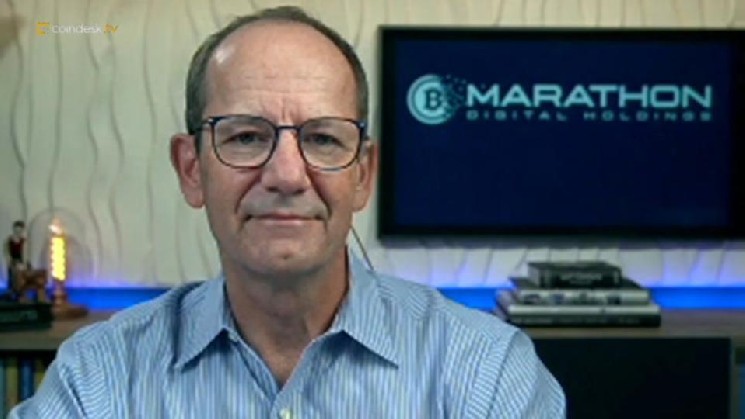
In a significant announcement that signals a maturing approach to corporate involvement in cryptocurrency, MARA Holdings CEO Fred Thiel took the stage at the Bitcoin Conference in Las Vegas this Monday to unveil the MARA Foundation. This new initiative represents far more than a typical corporate social responsibility program—it’s a comprehensive effort to ensure the long-term health and viability of the bitcoin network itself. While MARA Holdings has built its reputation through bitcoin mining and has recently expanded into AI mining operations, this foundation marks a philosophical shift toward viewing the company’s role as more than just a profit-driven participant in the ecosystem. Instead, MARA is positioning itself as a steward of the network’s future, acknowledging that the success of bitcoin requires active maintenance, development, and advocacy rather than passive participation. Thiel’s announcement comes at a crucial time when the cryptocurrency industry faces mounting challenges ranging from regulatory scrutiny to technological threats, and when questions about bitcoin’s long-term sustainability have moved from the fringes of discussion to mainstream concern among investors, users, and policymakers alike.
Understanding the Philosophy: Bitcoin as a Public Utility
At the heart of Thiel’s announcement was a compelling framing of bitcoin that moves beyond the typical financial asset narrative. “Bitcoin is the most important decentralized system ever created, but its future is not guaranteed,” Thiel stated, immediately establishing that even something as seemingly robust as the world’s leading cryptocurrency cannot be taken for granted. He went further, describing bitcoin as “a public utility that nobody owns, but everybody depends on,” a characterization that draws parallels to essential infrastructure like roads, water systems, or the internet itself. This framing is significant because it positions bitcoin not as a speculative investment vehicle or even simply as digital money, but as foundational infrastructure for a global financial system. Thiel also addressed a common misconception about decentralization, clarifying that “decentralization doesn’t mean it runs on itself, it means responsibility is distributed.” This distinction is crucial—many people assume that because bitcoin is decentralized and operates through a distributed network of nodes and miners, it somehow maintains itself automatically. In reality, as Thiel points out, decentralization means that the responsibility for maintaining, improving, and protecting the network falls on the shoulders of its entire community rather than a single central authority. This philosophical foundation sets the stage for understanding why a major corporation like MARA would invest resources in supporting the broader ecosystem rather than focusing solely on its mining operations.
Core Priorities: Security, Research, and Long-Term Sustainability
The MARA Foundation’s agenda encompasses several critical areas that address both immediate concerns and long-term existential questions about bitcoin’s viability. One of the primary focuses is maintaining bitcoin’s core properties as “sound, durable money”—characteristics that have made it attractive as a store of value and medium of exchange. A particularly pressing concern is the network’s security budget, which refers to the economic incentives that keep miners securing the blockchain. Currently, miners are rewarded primarily through block subsidies—newly created bitcoin awarded for mining each block—but these rewards are programmed to decrease over time through periodic “halvings.” Eventually, transaction fees must become the primary incentive for miners to continue securing the network, which raises questions about whether a fee market alone can sustain sufficient mining activity to keep the network secure. The foundation plans to support research and development of a sustainable transaction-fee market, ensuring that even as block subsidies diminish, there remains adequate economic incentive for miners to maintain network security. Additionally, the foundation will fund research into emerging threats, with quantum computing specifically mentioned as a potential future risk. Quantum computers, which leverage quantum mechanical phenomena to perform certain calculations exponentially faster than classical computers, could theoretically break the cryptographic algorithms that currently secure bitcoin transactions. While practical quantum computers capable of threatening bitcoin are likely still years or decades away, preparing for this possibility now is an example of the forward-thinking approach the foundation aims to embody.
Supporting Infrastructure and Financial Sovereignty
Beyond addressing security concerns, the MARA Foundation plans to invest in the practical infrastructure that makes bitcoin usable and accessible to people around the world. This includes funding open-source development across multiple critical areas: scaling solutions that allow the network to handle more transactions, improvements to mining technology and protocols, and user-facing infrastructure that makes bitcoin easier and safer to use. Scaling has been a persistent challenge for bitcoin, with ongoing debates about how to increase transaction throughput without compromising decentralization. By supporting open-source development in this area, MARA is contributing to solutions that benefit the entire ecosystem rather than just proprietary technologies that would advantage the company alone. The foundation also plans to expand access to self-custody solutions, which allow individuals to control their own bitcoin without relying on third-party custodians like exchanges. This commitment reflects a core principle of the bitcoin movement: that individuals should have direct control over their own wealth without intermediaries who can freeze accounts, impose restrictions, or fail catastrophically as we’ve seen with various centralized cryptocurrency exchanges. The promotion of financial sovereignty—the ability of individuals and communities to control their own financial destiny—extends this principle globally. In many parts of the world, people lack access to stable banking infrastructure or live under authoritarian regimes that restrict financial freedom. Bitcoin offers an alternative, and by supporting its development and accessibility, the MARA Foundation is positioning itself as an advocate for financial inclusion and individual economic rights on a global scale.
Education and Policy: Building Understanding and Reasonable Regulation
Recognizing that technology alone cannot ensure bitcoin’s success, the MARA Foundation plans substantial investment in education and policy engagement. The educational component will include technical training programs that help developers, users, and businesses understand bitcoin’s technical underpinnings and how to build on and use the network securely. Multilingual resources will ensure that information about bitcoin isn’t confined to English-speaking communities, acknowledging that bitcoin’s potential impact is truly global and that barriers of language shouldn’t prevent people from understanding and using this technology. Beyond technical education, there’s a clear recognition that policymakers and regulators around the world are grappling with how to approach cryptocurrency, often with limited understanding of the technology and its implications. The foundation’s policy engagement efforts will involve outreach to regulators, providing education and research to inform policy decisions. This approach represents a mature understanding that the cryptocurrency industry cannot simply ignore or oppose regulation—instead, by engaging proactively and educating policymakers, there’s an opportunity to help shape reasonable, informed regulatory frameworks that protect consumers without unnecessarily stifling innovation. This two-pronged educational approach—technical training for users and builders, and policy education for regulators—recognizes that bitcoin’s success depends not just on technological excellence but on broader social acceptance, understanding, and integration into legal and regulatory frameworks worldwide.
Community-Driven Launch and the Path Forward
To inaugurate the foundation’s work, MARA announced it would award $100,000 to one of three nonprofit organizations, with the recipient to be chosen through community voting. This approach is more than just a publicity gesture—it embodies Thiel’s call for shared responsibility across the bitcoin ecosystem and demonstrates the foundation’s commitment to community involvement in its decision-making. By allowing the community to direct this initial funding, MARA is acknowledging that it doesn’t have all the answers and that the collective wisdom of bitcoin users, developers, and advocates should help guide philanthropic efforts. This launch initiative also serves a practical purpose: it engages the community immediately, generating awareness of the foundation while identifying organizations already doing valuable work that deserve support. The MARA Foundation represents a significant evolution in how major cryptocurrency companies view their role in the ecosystem. Rather than simply extracting value through mining operations, MARA is committing resources to support the infrastructure, research, education, and policy work that will determine whether bitcoin can fulfill its potential as a global, decentralized monetary system. As the cryptocurrency industry matures and major corporations increasingly participate in and profit from these networks, questions about corporate responsibility and stewardship become more pressing. The MARA Foundation offers one model for how a major player can contribute to the long-term health of the ecosystem that sustains its business, acknowledging that bitcoin’s success is not inevitable but rather depends on active, ongoing work by committed participants. Whether this foundation successfully addresses the challenges it has identified—from the security budget to quantum threats to regulatory uncertainty—remains to be seen, but its launch represents a recognition that the future of bitcoin requires more than just running mining equipment; it requires thoughtful investment in the network’s fundamental resilience and the broader social, educational, and political conditions that will determine whether this “most important decentralized system ever created” can truly transform global finance.