


Security Concerns Emerge Following White House Correspondents’ Dinner Shooting Incident
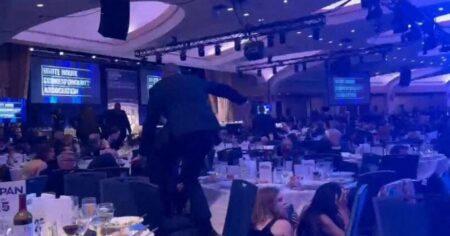
The glittering annual White House Correspondents’ Dinner turned into a scene of chaos and fear on Saturday night when gunshots erupted outside the Washington Hilton Hotel. What should have been an evening of celebration and political satire instead became a stark reminder of the ever-present security threats facing our nation’s leaders. With 2,500 guests in attendance, including President Trump and numerous high-ranking administration officials, the incident has sparked serious questions about whether the security measures in place were adequate to protect those inside. As details continue to emerge, security experts and attendees alike are expressing concern about what they witnessed—or more troublingly, what they didn’t witness—in terms of protective protocols that evening.
Alarming Security Gaps Revealed by Insider Account
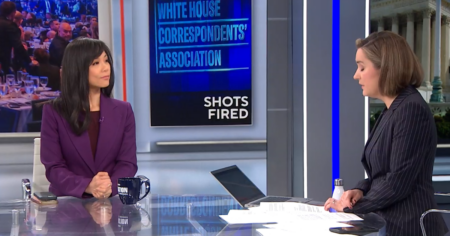
Aaron MacLean, a CBS News national security analyst and military veteran who attended the dinner for the first time this year, has raised deeply concerning observations about the security measures—or lack thereof—at the prestigious event. Speaking candidly on “CBS Mornings” Monday, MacLean revealed a shocking detail: his identification was never checked throughout the entire evening. Even more troubling, he explained that gaining entry to the hotel required nothing more than showing a screenshot of an invitation on his phone. For an event attended by the President of the United States and the highest levels of government leadership, such lax security protocols seem almost incomprehensible. MacLean’s experience suggests that the security perimeter may have had significant vulnerabilities that could have been exploited by someone with malicious intent. His professional background in military operations gives his observations particular weight, as he understands the rigorous security measures that should be standard practice when protecting high-value targets.
The security analyst didn’t mince words when assessing the broader implications of what transpired. MacLean emphasized that while the Secret Service ultimately prevented tragedy, the incident reveals systemic issues with training and procedures that cannot be ignored. “You can’t just look at something like this and pat yourself on the back that this unserious person didn’t succeed,” he warned, pointing out that self-congratulation would be dangerously premature. His concerns extended to the response time once the shooting began, noting that it took approximately ten to twenty seconds before agents moved to protect the president and remove him from the stage. While this might seem fast in ordinary circumstances, MacLean questioned whether such a timeframe is acceptable when the President’s life hangs in the balance. He posed a chilling hypothetical: what if instead of one poorly prepared individual, the attack had involved four or five well-trained operatives with a coordinated plan? The implications of such a scenario are deeply unsettling.
Inside the Ballroom: A Slow Response to Imminent Danger
MacLean’s observations from inside the dinner venue paint an equally concerning picture of the security posture surrounding President Trump during the event. He described the visible Secret Service agents as being positioned at a considerable distance from the president, rather than maintaining the close protective formation one might expect in a public setting with thousands of attendees. While additional agents were stationed behind a curtain near the stage, their concealed position meant that precious seconds were lost when the shooting began and they needed to spring into action. Perhaps most surprisingly, MacLean reported that it took approximately two full minutes after the shots were fired before anyone came to evacuate Defense Secretary Pete Hegseth, who was seated with MacLean at the time. The Defense Secretary, to his credit, remained composed and alert, carefully assessing the unfolding situation in the ballroom rather than panicking. However, the delay in securing such a high-ranking Cabinet member raises questions about prioritization and coordination during the emergency response.
The contrast between the danger outside and the delayed response inside highlights potential communication gaps or protocol failures. In a properly coordinated security operation, the moment shots were detected outside, all protectees inside should have been immediately secured and evacuated according to predetermined plans. The fact that minutes passed with high-ranking officials still in the ballroom suggests either a failure in communication between exterior and interior security teams, or a lack of clear protocols for such scenarios. Fortunately, President Trump and First Lady Melania Trump were safely evacuated, and while one Secret Service agent was injured by gunfire, he has since been released from the hospital. The fact that no attendees were seriously injured is certainly fortunate, but as MacLean emphasized, relying on luck rather than rigorous security measures is not an acceptable strategy for protecting the nation’s leadership.
The Attacker: A Dangerous Individual Who Exploited System Weaknesses
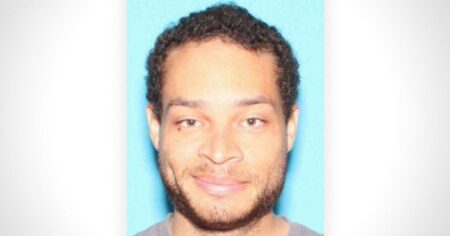
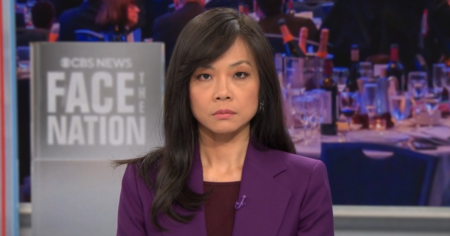
Law enforcement quickly apprehended the suspect, identified as 31-year-old Cole Thomas Allen from Torrance, California. The arsenal he carried was deeply alarming: a shotgun, a handgun, and multiple knives—enough weaponry to cause massive casualties if he had managed to breach the inner security perimeter. Acting Attorney General Todd Blanche revealed on CBS’s “Face the Nation” that investigators believe Allen was specifically targeting Trump administration officials, making this not a random act of violence but a targeted assassination attempt. What makes the security failure even more concerning is how Allen managed to position himself for the attack. Authorities discovered that he had been staying as a guest at the Washington Hilton Hotel itself, which gave him intimate knowledge of the building’s layout and access to areas that external attackers would never reach. He used an interior stairwell to bypass the heavily monitored public areas of the hotel, essentially working around the security measures from the inside.
MacLean’s assessment of Allen was blunt: “This gunman was clearly mentally unstable, his tactical plan was a bit of a joke.” However, he was quick to add the critical caveat: “That doesn’t mean he couldn’t have done harm.” This distinction is vital to understanding the security implications. The fact that Allen’s planning was unsophisticated and his mental state was compromised doesn’t diminish the very real danger he posed. In fact, it raises an even more troubling question: if someone this disorganized and unstable could get as far as he did, what might a more competent and determined attacker accomplish? MacLean credited the individual bravery of the Secret Service agents who confronted Allen with preventing what could have been a massacre, saying “We’re very lucky and there was a lot of individual valor on the part of the agents involved that stopped him.” While their courage is commendable, a security system should not depend primarily on individual heroism but rather on layered defensive measures that prevent threats from getting close enough to require such desperate intervention.
Official Responses and the Road Ahead
In the immediate aftermath of the shooting, Secret Service Deputy Director Matthew Quinn attempted to project confidence, posting a statement that read: “Tonight, a coward attempted to create a national tragedy. He underestimated the protective capabilities of the U.S. Secret Service and was stopped at first contact.” While the statement emphasizes the successful outcome, critics might argue it glosses over the concerning vulnerabilities that allowed the situation to develop in the first place. The phrase “stopped at first contact” technically accurate, but it doesn’t address the questions about how someone with clear malicious intent managed to position himself at a security checkpoint with multiple weapons. The FBI has now launched a comprehensive criminal investigation into the attack, examining not only Allen’s motives and potential connections but presumably also reviewing the security failures that enabled him to get as close as he did. Allen appeared in federal court on Monday for arraignment, where he will face serious federal charges related to the attempted attack.
The incident serves as a wake-up call for the Secret Service and all agencies responsible for protecting government officials. In an era of heightened political tensions and increasingly sophisticated threats, security protocols must be constantly evaluated and updated. The combination of lax identification checks, exploitable building access points, and delayed response times revealed by this incident represents a systemic failure that demands immediate attention. Moving forward, we can expect thorough reviews of security procedures for high-profile events, particularly those held at commercial venues like hotels where controlling access is inherently more challenging than at dedicated government facilities. The safety of our elected leaders and top officials is not a partisan issue—it’s a fundamental requirement for the functioning of our democracy. While we can be grateful that this particular attack was thwarted and that casualties were minimal, we cannot allow relief to replace the hard work of ensuring that such vulnerabilities are identified and corrected before the next threat emerges.