
Chaos Erupts at Women’s Basketball Tournament as Brawl Leaves Referee Injured
A Shocking Scene in Pensacola
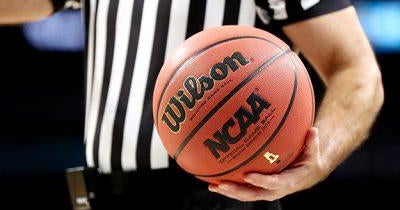
What should have been an exciting women’s basketball tournament game between South Alabama and Coastal Carolina turned into a nightmare scenario on Wednesday afternoon in Pensacola, Florida. During the Sun Belt Tournament matchup, a violent altercation broke out on the court that resulted in eight players being ejected, one player receiving an extended suspension, and perhaps most disturbingly, a referee being knocked to the ground and requiring immediate medical attention. The incident has sparked conversations about sportsmanship, player accountability, and the safety of officials who put themselves in harm’s way to maintain order during competitive games. With less than six minutes remaining in what had been a competitive fourth quarter, the situation spiraled out of control in a matter of seconds, transforming an athletic competition into a scene requiring intervention from medical professionals and law enforcement.
How the Fight Started and Escalated
The altercation began under the basket between South Alabama’s Cordasia Harris and Coastal Carolina’s Tracey Hueston in the closing minutes of the game. According to video footage of the incident, Harris appeared to make contact with Hueston from behind—a bump that seemed relatively minor in the context of physical basketball play. However, Hueston’s reaction was anything but measured. She immediately turned around and began pushing and throwing punches at Harris, who responded by pushing back. What might have remained a contained conflict between two players quickly escalated as teammates from both benches rushed onto the court. In the chaos that followed, referee Marla Gearhar attempted to separate the fighting players and restore order. Tragically, as she worked to push Hueston away from Harris, Gearhar was struck in the head or neck area, causing her to collapse to the floor where she lay motionless. The sight of an official lying unconscious on the hardwood while the brawl continued around her represents one of the most disturbing moments in recent women’s college basketball history.
The Aftermath and Injuries
As order was gradually restored on the court, the full scope of the incident became clear. Referee Gearhar remained on her back on the floor, unable to move under her own power, while staff members, medical professionals, and even a sheriff’s deputy rushed to the scene. The presence of law enforcement underscored the seriousness of the situation—this had transcended the boundaries of athletic competition and entered territory that required official intervention. Medical personnel immediately attended to Gearhar at courtside, evaluating her condition while players, coaches, and spectators watched with concern. Fortunately, after being examined by medical staff at the arena, Gearhar was eventually released, though the conference announcement provided few details about her specific injuries or the extent of the trauma she suffered. The image of a referee lying motionless after trying to do her job serves as a stark reminder of the risks officials face and the responsibility players have to maintain composure even in the heat of competition.
Suspensions and Consequences
The conference and individual schools moved quickly to issue punishments for those involved in the melee. Tracey Hueston, identified as the primary instigator who appeared to throw the first punches and whose actions led to the referee being injured, received the harshest penalty—a suspension for the remainder of the 2026 postseason. This significant punishment will prevent her from participating in any further tournament games, effectively ending her season and sending a clear message about unacceptable conduct. Coastal Carolina coach Kevin Pederson addressed the situation after the game, attempting to provide context for his player’s actions while acknowledging their inexcusability. “I know Tracey Hueston regrets that,” Pederson stated. “She’s an incredible model citizen off the floor and she knows she can’t act that way.” His comments reflect the difficult position coaches find themselves in when talented players make catastrophic decisions in moments of poor judgment. Meanwhile, three South Alabama players—Cordasia Harris, Amyah Sutton, and Daniela Gonzalez—received one-game suspensions for their participation in the fight. In total, eight players were ejected from the game, receiving technical fouls that immediately ended their participation in what had been a competitive contest.
Institutional Responses and Controversy
Both universities issued statements addressing the incident, though their tones differed significantly. South Alabama coach Yolisha Jackson expressed regret and took responsibility for her program’s involvement in the altercation. “Well, first of all, our program, we never want to be put in that situation and we never want to act out like that, so we don’t condone that, what happened today,” Jackson told reporters. “It’s a very unfortunate situation for two talented basketball teams that have played in Pensacola in the tournament.” Her words reflected genuine remorse and an understanding that the incident had overshadowed what should have been a celebration of women’s athletics. However, South Alabama Athletics Director Joel Erdmann took a more defensive stance, suggesting that while the incident was “extremely unfortunate and unacceptable,” he disagreed with aspects of how officials had classified his players’ actions. “After an extensive internal review, I do not believe the actions of all three of our student-athletes rose to the level of being classified as fighting as defined by the NCAA rule book,” Erdmann stated, adding that “this judgment has negatively impacted the tournament experience of our suspended student-athletes and stripped them of limited opportunities to compete in the postseason.” His comments sparked debate about whether administrators should focus on supporting officials and promoting accountability or advocating for their athletes even in clearly problematic situations.
Moving Forward and Lessons Learned
Despite the chaos and controversy, South Alabama won the game 80-70 and advanced to face Texas State in the next round of the tournament. However, they would do so without the services of Sutton, Gonzalez, and Harris, who remained suspended for that Thursday matchup. The incident raises important questions about the culture of competitive athletics, the pressures facing young athletes, and the mechanisms in place to protect everyone involved in sporting events—from players to coaches to officials. Referee Marla Gearhar became an unintended victim while simply trying to perform her job duties, highlighting the vulnerable position officials occupy when attempting to maintain order during volatile situations. Moving forward, conferences and universities must examine what led to this breakdown and implement measures to prevent similar incidents. This includes reinforcing expectations for sportsmanship, providing conflict resolution training, ensuring adequate security at games, and creating consequences severe enough to deter future violence. For Tracey Hueston, whose postseason ended due to a few seconds of poor decision-making, the incident serves as a costly lesson about the importance of emotional control. For all involved, the brawl in Pensacola represents a moment they’ll likely want to forget but must remember as a cautionary tale about how quickly competition can turn dangerous when emotions override judgment and respect for the game.