
Trump Announces Death of Iranian Supreme Leader Ali Khamenei
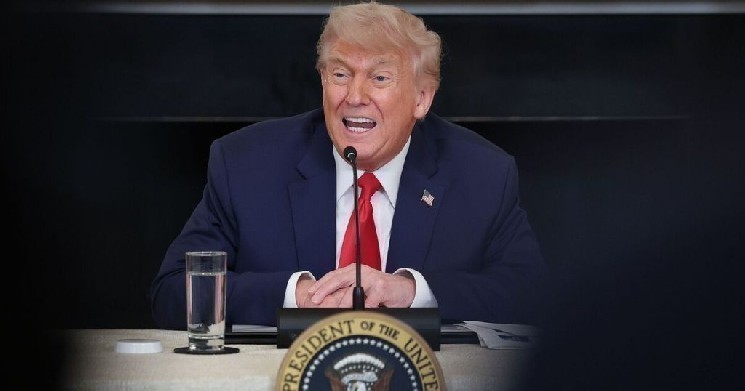
In a stunning development that has sent shockwaves through the international community, US President Donald Trump has officially confirmed the death of Iran’s Supreme Leader, Ayatollah Ali Khamenei. The announcement, delivered through Trump’s Truth Social platform, marks a dramatic escalation in tensions between the United States and Iran, potentially reshaping the entire geopolitical landscape of the Middle East. Trump’s confirmation of Khamenei’s death comes amid what appears to be an ongoing military operation, the full scope and implications of which are still unfolding. The President’s characteristically blunt announcement has raised numerous questions about how this event transpired, what role American intelligence and military assets played, and what this means for the future of Iran and regional stability.
Trump’s Stark Declaration and Call for Iranian Liberation
President Trump pulled no punches in his announcement, framing Khamenei’s death as a pivotal moment for the Iranian people. “Khamenei is dead, now is Iran’s greatest chance to reclaim its country,” Trump declared in his post. This statement reflects a long-standing American foreign policy perspective that views the Islamic Republic’s leadership as oppressive to the Iranian population, particularly given the numerous protests and civil unrest that have erupted in Iran over recent years. Trump positioned this development not merely as a military achievement but as an opportunity for fundamental political transformation within Iran. By directly addressing the Iranian people and suggesting they now have a chance to “reclaim” their nation, Trump appears to be encouraging regime change, a controversial stance that inevitably raises questions about sovereignty, international law, and America’s role in determining the political futures of other nations.
“Justice Being Served” – Trump’s Moral Framing
In his Truth Social post, President Trump went beyond simply announcing the death, instead framing it in moral and historical terms. He described the event as “justice being served” and characterized Khamenei as “one of the worst people in history.” This harsh assessment reflects decades of American grievances against the Iranian regime, including the 1979 hostage crisis, Iran’s support for militant groups throughout the Middle East, its nuclear program, attacks on American forces and interests in Iraq and elsewhere, and its role in regional conflicts from Yemen to Syria. Trump emphasized that Khamenei’s death represents justice not only for the Iranian people, who have lived under authoritarian rule since the 1979 Islamic Revolution, but also for American citizens and countless others worldwide who have been affected by Iranian-backed operations and policies. This framing places the event within a broader narrative of accountability for what the US views as decades of destabilizing actions, human rights violations, and support for terrorism.
The Operation: US Intelligence, Technology, and Israeli Cooperation
Perhaps most significantly, President Trump provided some details about how this operation was executed, though many specifics remain unclear. According to Trump, the operation was made possible through American intelligence capabilities and what he termed “high-tech surveillance systems,” conducted in close cooperation with Israel. This acknowledgment of Israeli involvement is particularly noteworthy given the long-standing covert conflict between Israel and Iran, which has included assassinations of Iranian nuclear scientists, cyberattacks, and strikes on Iranian positions in Syria. The mention of advanced surveillance technology suggests that American intelligence assets, possibly including satellite surveillance, signals intelligence, or other sophisticated monitoring capabilities, played a crucial role in locating and tracking Khamenei. The United States has invested billions in developing cutting-edge intelligence and precision strike capabilities precisely for such high-value operations. The cooperation with Israel mentioned by Trump reflects the close intelligence-sharing relationship between the two nations and their shared strategic interest in countering Iranian influence in the region.
Claims About Iran’s Military and Security Forces
In a particularly striking portion of his announcement, President Trump made claims about the state of Iran’s military and security apparatus that, if accurate, would suggest significant internal fracturing within the Islamic Republic. Trump alleged that he had received intelligence indicating that the Iranian Revolutionary Guard Corps (IRGC) and other security forces “no longer want to fight.” He further claimed that these forces were seeking immunity from the United States, a statement that suggests either negotiation attempts or intelligence indicating potential defections or surrender. Trump’s response to these reported immunity requests was characteristically hardline: “They may have immunity now, but later they will only get death.” This ominous statement appears designed to maintain pressure on Iranian military forces while simultaneously leaving some opening for those willing to cooperate with American objectives. Trump went on to suggest that IRGC and police forces should participate in rebuilding Iran by “joining forces with Iranian patriots,” a phrase that seems to envision a post-regime transition scenario in which current security personnel might align with opposition forces to establish a new government.
Ongoing Military Operations and Future Intentions
Trump’s announcement was not merely retrospective but also forward-looking, containing warnings about continued military action. The President claimed that Iran had been largely “destroyed and devastated” in what he described as a single day of operations, a statement that raises serious questions about the scale and intensity of American military strikes. Trump stated explicitly that “heavy, precision bombardments would continue throughout the week or until targets were reached,” indicating that the operation to kill Khamenei was part of a broader military campaign rather than an isolated strike. This commitment to sustained military pressure suggests an American strategy aimed not just at eliminating specific leaders but at systematically degrading Iran’s military infrastructure, command and control systems, and possibly its nuclear facilities. The reference to “precision bombardments” indicates the use of advanced guided munitions designed to strike specific targets while theoretically minimizing collateral damage. However, any military campaign of the scope Trump describes inevitably raises humanitarian concerns, questions about civilian casualties, and the potential for broader regional conflict involving Iran’s allies and proxy forces throughout the Middle East.
Implications and Unanswered Questions
As the dust settles on this extraordinary announcement, numerous critical questions remain unanswered. First and foremost, independent confirmation of Khamenei’s death has not yet emerged from other sources, and Iran’s response to Trump’s claims remains to be seen. The international community will be watching closely to understand the legal justification for what amounts to the targeted killing of another nation’s head of state, an action with few modern precedents. The potential for Iranian retaliation, either directly or through proxy forces in Lebanon, Iraq, Yemen, Syria, and elsewhere, represents a significant concern, as does the possibility of attacks on American forces, facilities, or allies in the region. The succession question within Iran is also critical—if Khamenei is indeed dead, who will assume leadership, and will this trigger internal power struggles that could either lead to reform or further entrenchment of hardline positions? There are also questions about how America’s allies, particularly in Europe, will respond to what appears to be unilateral American military action, and whether this will strain transatlantic relationships. Finally, the humanitarian situation in Iran, the safety of Iranian civilians caught in ongoing bombardments, and the long-term stability of the region all hang in the balance as this situation continues to develop.