


Cardano Faces Critical Price Test as Hoskinson Warns of Extended Market Downturn
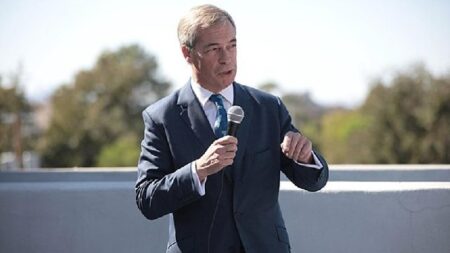
The cryptocurrency market has been experiencing significant turbulence, and Cardano (ADA) finds itself at a crucial crossroads. Currently trading around $0.2812, the digital asset has slipped 0.11% over the past day while testing a critical ascending trendline that could determine its near-term direction. What makes this moment particularly noteworthy isn’t just the technical price action, but the sobering assessment from Cardano’s founder, Charles Hoskinson, who recently shared a candid and somewhat grim outlook for the cryptocurrency sector. Speaking at Consensus Hong Kong, Hoskinson didn’t mince words when he warned the crypto community to brace for “90-180 days” of continued struggle. His assessment strikes at something deeper than typical market cycles—he pointed to what he calls retail exhaustion and a fundamentally broken narrative that has left everyday investors disillusioned despite the industry achieving many of its regulatory and institutional goals.
Hoskinson’s Stark Warning: Three to Six Months of Grinding Pain
Charles Hoskinson’s remarks at Consensus Hong Kong have sent ripples through the cryptocurrency community, not because they’re alarmist, but because they’re brutally honest. In his conversation with CoinDesk, the Cardano founder acknowledged what many in the industry have been reluctant to say out loud: the crypto market faces another three to six months of grinding downward pressure, and this downturn feels different. “This one particularly stings because we expected a really strong cycle in 2025 and we didn’t quite get it,” Hoskinson explained. “We just got to get through the next 90-180 days. It’s going to be tough.” What makes his assessment particularly interesting is that he doesn’t blame a lack of positive developments or catalysts. In fact, Hoskinson pointed out that the cryptocurrency industry has received virtually everything it asked for over the past year or two—BlackRock and other institutional players launching Bitcoin ETFs, governments exploring and establishing Bitcoin reserves, and increasingly favorable regulatory frameworks in major jurisdictions. On paper, these should be the ingredients for a bull market. Yet retail investors, the lifeblood of crypto enthusiasm, remain on the sidelines. Years of broken promises have left them exhausted and skeptical. The NFT mania that promised digital art revolution, the Luna/Terra collapse that wiped out billions, the spectacular FTX implosion that shook confidence to its core, relentless SEC crackdowns, and the endless memecoin cycles—each phase promised that relief and recovery were just six months away. Using a vivid travel metaphor, Hoskinson captured the current mood: “We got to the town and the hotel was closed, the restaurants closed. People are deeply frustrated.” The narrative that kept retail investors engaged and hopeful has simply stopped working, transforming the current market correction from a mere price pullback into a genuine crisis of confidence and morale.
Declining Conviction: What the Data Reveals
Beyond Hoskinson’s qualitative assessment, the quantitative data paints a concerning picture of weakening conviction among Cardano traders. According to data from Coinglass, Cardano’s open interest—the total number of outstanding derivative contracts—dropped a sharp 9.51% to $446.98 million, representing one of the most significant single-day declines in recent weeks. Simultaneously, trading volume fell 6.13% to $839.68 million. When these two metrics decline together, it tells a specific story: traders aren’t rotating positions or accumulating at lower prices; they’re simply closing their positions and stepping away. This pattern signals a loss of conviction rather than strategic repositioning. Interestingly, the long/short ratios reveal an extreme bullish skew that appears disconnected from the price action. On Binance, the data shows accounts holding no shorts on 1-hour timeframes, with $566.72 million positioned in long bets. OKX displays a 1.77 long/short ratio, indicating that despite the negative price movement, leverage remains positioned for recovery. Top trader positioning shows $226.74 million in longs versus just $12.53 million in shorts on 12-hour timeframes. This disconnect between heavily skewed long positioning and falling open interest suggests something important: long liquidations are occurring as the price tests support levels. When leverage is stacked predominantly on one side while open interest declines, it typically indicates forced closures—traders being liquidated out of positions—rather than voluntary exits. This dynamic can create cascading effects if critical support levels break, as liquidations trigger sell orders that push prices lower, triggering more liquidations in a feedback loop.
Critical Technical Levels: The Ascending Trendline Test
From a technical analysis perspective, Cardano finds itself at a make-or-break moment. The daily chart shows ADA testing an ascending trendline that has provided reliable support since the December lows. This trendline represents the backbone of the modest recovery structure that’s been in place for several months. The positioning of the exponential moving averages (EMAs) tells a bearish story: the 20-day EMA sits at $0.2912, the 50-day at $0.3331, the 100-day at $0.4025, and the 200-day at $0.5036. All four EMAs are stacked in descending order, creating what traders call a “resistance ceiling”—each average represents a layer of overhead resistance that must be reclaimed before any sustainable uptrend can develop. The recent price journey has been punishing for ADA holders. Cardano dropped from above $0.44 in early January to a low near $0.24 on February 11, marking a brutal 45% correction. The recent bounce to $0.28 represents a 17% recovery from those lows, but the structure remains corrective rather than impulsive, suggesting weakness rather than strength. The current price action is testing the ascending trendline that represents the last line of defense before a potential retest of the February lows. If this trendline breaks, the next support zones come into focus: the $0.25 psychological level and the $0.2340 Parabolic SAR zone. Conversely, a close above $0.2912 would flip the 20-day EMA from resistance to support and signal the first genuine sign that the downtrend may be exhausting, though current momentum indicators point toward continued weakness rather than an imminent recovery.
Intraday Action: Defending the Line in the Sand
Zooming into the shorter timeframes, the 1-hour chart reveals the battle being fought in real-time. Cardano has been bouncing off the ascending trendline support near $0.2800, with buyers attempting to defend this level. The Supertrend indicator sits at $0.2895, acting as immediate resistance that has capped recent recovery attempts. The Relative Strength Index (RSI) holds at 42.28, approaching oversold territory but not yet showing the reversal signals that would indicate capitulation and a potential bottom. The intraday structure shows higher lows forming from the $0.24 base, which is technically constructive, but each test of the ascending trendline brings increased risk of breakdown. Support levels tend to weaken with repeated testing—think of it like repeatedly bending a piece of metal until it fatigues and eventually snaps. Sellers have consistently rejected price advances above $0.2895, preventing any meaningful recovery attempt from gaining traction. This creates a narrowing range between support and resistance, often a precursor to a decisive move in one direction or the other. If buyers can push price cleanly above $0.2895, it would flip the Supertrend indicator from bearish to bullish and place the $0.30 psychological resistance level back in realistic range. However, a breakdown below the ascending trendline would likely trigger another leg down toward $0.27, and potentially accelerate toward $0.25 if selling pressure intensifies and stops are triggered.
What Lies Ahead: Two Distinct Scenarios
Looking forward, Cardano holders face two distinctly different potential paths, each with clear technical signposts. The bullish scenario requires ADA to successfully defend the ascending trendline support and reclaim the $0.2912 level on a daily closing basis. This would flip the 20-day EMA from resistance to support and place the psychologically important $0.30 level back within striking distance. Successfully reclaiming $0.30 would signal that the corrective phase may be ending and that buyers are regaining control of the near-term trend. From there, the 50-day EMA at $0.3331 would become the next target, and reclaiming that level would represent a meaningful structural shift in the trend. The bearish scenario, which appears more aligned with current momentum and Hoskinson’s 90-180 day warning, involves a breakdown below the ascending trendline. This would expose the $0.25 psychological support level, with further downside potential toward the $0.2340 Parabolic SAR zone if selling accelerates. Should Hoskinson’s predicted extended period of pain play out as expected, Cardano could retest or even break the February lows near $0.24. Losing the trendline support would confirm that a deeper correction lies ahead, potentially taking ADA back to levels not seen since the early stages of the previous recovery cycle.
Final Thoughts: Navigating Uncertainty with Eyes Wide Open
The current situation with Cardano encapsulates the broader challenges facing the cryptocurrency market. Despite achieving many of the institutional and regulatory milestones that were supposed to usher in the next bull market, retail enthusiasm remains notably absent. Hoskinson’s candid assessment acknowledges this reality and sets expectations for an extended period of consolidation and potential decline. For Cardano specifically, the immediate focus is on whether the ascending trendline support holds or breaks. This technical level has taken on increased significance as it represents the structure supporting the modest recovery from February lows. A break would not only have immediate price implications but would also confirm the continuation of the broader corrective pattern. For investors and traders, the message is clear: prepare for potential volatility and further downside, manage risk appropriately, and recognize that even achieving positive fundamental developments doesn’t guarantee immediate price appreciation. The market sometimes needs time to digest gains, shake out weak hands, and rebuild the foundation of conviction necessary for a sustainable uptrend. Whether you’re bullish or bearish on Cardano’s long-term prospects, the next 90-180 days are likely to test patience and resolve as the market works through what Hoskinson describes as a broken narrative and exhausted retail base.