


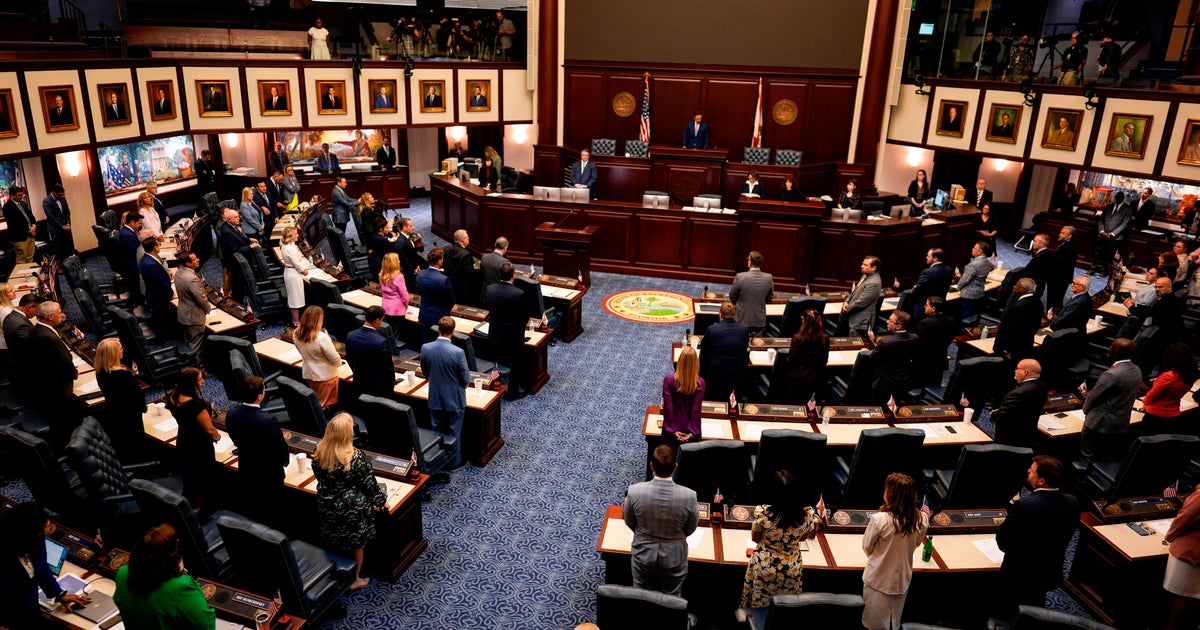

Florida Legislature Approves Controversial Congressional Redistricting Plan
A Power Play for Republican Control
The political landscape in Florida took a dramatic turn this week as the state legislature passed a controversial congressional redistricting plan championed by Governor Ron DeSantis. The new map, which now awaits the governor’s signature, represents a bold strategic move designed to secure Republican dominance in the Sunshine State for years to come. According to the proposal, Republicans stand to gain four additional congressional seats, potentially strengthening the party’s position as it gears up for the critical 2026 midterm elections. The timing of this legislative action is particularly significant, coming just hours after a pivotal Supreme Court decision that weakened protections under the Voting Rights Act, creating a more permissive environment for redistricting efforts that could disadvantage minority voters. Currently, Florida’s congressional delegation consists of 20 Republicans and seven Democrats, with one Democratic-leaning seat sitting vacant following Representative Sheila Cherfilus-McCormick’s resignation earlier this month. The new map aims to fundamentally reshape this balance by eliminating or significantly reducing Democratic-leaning districts in key urban areas including Tampa, Orlando, and portions of the state’s southeast coast, areas that have traditionally served as Democratic strongholds in an increasingly red state.
A Rushed Legislative Process Amid Supreme Court Shifts
The legislative proceedings surrounding this redistricting plan unfolded with remarkable speed and minimal debate, raising concerns among critics about transparency and democratic process. The proposal moved swiftly through House and Senate committees during a special session on Tuesday, with floor votes occurring as early as Wednesday. The Senate approved the measure with a 21-17 vote, with four Republicans and one independent breaking ranks to vote alongside all Democrats in opposition. The House vote followed strict party lines, with Republican members choosing not to engage in substantive debate during the approximately 90-minute session. The compressed timeline and limited discussion stood in stark contrast to the magnitude of the decision being made, which will determine political representation for millions of Florida residents for the next decade. The urgency appeared deliberately timed to capitalize on the Supreme Court’s Wednesday ruling that narrowed a crucial section of the Voting Rights Act, a decision that could have nationwide ramifications for how congressional districts with majority Black or Latino populations are drawn. At least one of the districts targeted in DeSantis’ redistricting plan was a majority Hispanic district in central Florida, highlighting the potential impact on minority representation that critics have been warning about.
Democratic Resistance and Dramatic Protests
Democratic lawmakers mounted a spirited but ultimately unsuccessful resistance to the redistricting plan, employing both procedural tactics and dramatic gestures to draw attention to their concerns. State Representative Angie Nixon, who is currently challenging Republican U.S. Senator Ashley Moody, made headlines by attempting to interrupt the proceedings with a pink bullhorn in a last-ditch effort to halt the final vote. Though her protest proved ineffective in stopping the legislation’s passage, it symbolized the frustration and sense of powerlessness felt by Democrats watching what they consider a fundamental undermining of fair representation. During the debate, Democratic Minority Leader Fentrice Driskell requested a two-hour recess to allow legislators time to review and digest the implications of the Supreme Court’s decision, which had been handed down just hours earlier. Her request was denied, forcing lawmakers to vote on a consequential redistricting plan without adequate time to consider how the changing legal landscape might affect their constituents. The rushed nature of the proceedings and the refusal to allow for meaningful deliberation underscored what Democrats characterized as a predetermined outcome orchestrated by the governor and his legislative allies, prioritizing partisan advantage over democratic principles and minority voting rights.
Legal Arguments and Constitutional Questions
The legal foundation for DeSantis’ redistricting plan rests on a controversial interpretation of both the recent Supreme Court ruling and Florida’s own constitutional provisions regarding fair redistricting. Governor DeSantis took to social media to argue that the Supreme Court’s decision “invalidates” provisions of the Florida Constitution that require consideration of race in redistricting, specifically citing language that prohibits drawing districts “with the intent or result of denying or abridging the equal opportunity of racial or language minorities to participate in the political process or to diminish their ability to elect representatives of their choice.” This interpretation represents a significant departure from previous understandings of Florida’s Fair Districts Amendment, a 2010 constitutional provision that explicitly bans partisan gerrymandering. In a letter to legislators, DeSantis’ general counsel David Axelman drew parallels between Louisiana’s situation in the Supreme Court case and Florida’s circumstances, arguing that any intentional compliance with racial considerations in redistricting would constitute an acknowledgment that race played a role in drawing district lines—something the court’s ruling appears to discourage. During committee hearings, attorney Mohammed Jazil notably declined to answer whether the proposed maps complied with Florida’s Fair Districts provisions, a telling omission that suggests potential vulnerabilities in the legal justification for the plan.
The Fair Districts Amendment Under Threat
The controversy surrounding this redistricting effort centers significantly on whether it violates Florida’s Fair Districts Amendment, a landmark reform passed by voters in 2010 with the explicit purpose of preventing the type of partisan gerrymandering that has historically distorted representation. The amendment represented a direct response to decades of manipulative redistricting practices and was intended to ensure that district lines would be drawn based on geographic and community considerations rather than partisan advantage. Critics of DeSantis’ plan argue that it flagrantly disregards these voter-approved protections, using the Supreme Court’s recent ruling as a convenient pretext to resurrect the kind of aggressive partisan redistricting that Florida voters specifically rejected. The proposed map’s targeting of Democratic strongholds in Tampa, Orlando, and the southeast coast appears designed to dilute Democratic voting power by either eliminating these districts entirely or redrawing boundaries to include more Republican-leaning voters, thereby making it nearly impossible for Democrats to maintain their current level of representation. By framing racial considerations in redistricting as legally problematic rather than legally required under certain circumstances, proponents of the plan have created a justification for ignoring both the spirit and letter of the Fair Districts Amendment, potentially opening the door to more extreme partisan gerrymandering across the state.
Uncertain Legal Challenges and Political Implications
Any legal challenges to the newly approved redistricting plan face a steeply uphill battle, primarily because of the composition of Florida’s Supreme Court. Governor DeSantis has appointed six of the seven justices currently serving on the state’s highest court, creating a judicial environment that is unlikely to be receptive to arguments against his redistricting proposal. This judicial advantage represents perhaps the most significant insurance policy for the survival of the new map, as opponents have few realistic pathways to overturn it through Florida’s court system. The political implications of this redistricting effort extend far beyond Florida’s borders, potentially serving as a template for Republican-controlled legislatures in other states seeking to maximize partisan advantage in congressional representation. If successful, Florida’s example could encourage similar aggressive redistricting efforts nationwide, fundamentally reshaping the congressional landscape in ways that entrench partisan control regardless of shifts in voter preferences. The 2026 midterm elections will serve as the first test of these new district lines, and the results could determine whether Republicans maintain or expand their congressional majority. For Democrats, the loss of four potentially competitive seats in Florida represents a significant setback in their efforts to regain control of the House of Representatives, forcing them to find alternative paths to victory in other states. The controversy also raises broader questions about the fragility of voting rights protections and the extent to which partisan actors can manipulate the redistricting process to serve their interests, even in states where voters have explicitly demanded fair and nonpartisan district drawing.