


Federal Reserve Chair Jerome Powell’s Historic Decision Amid Economic Uncertainty
Powell’s Unprecedented Choice to Stay On
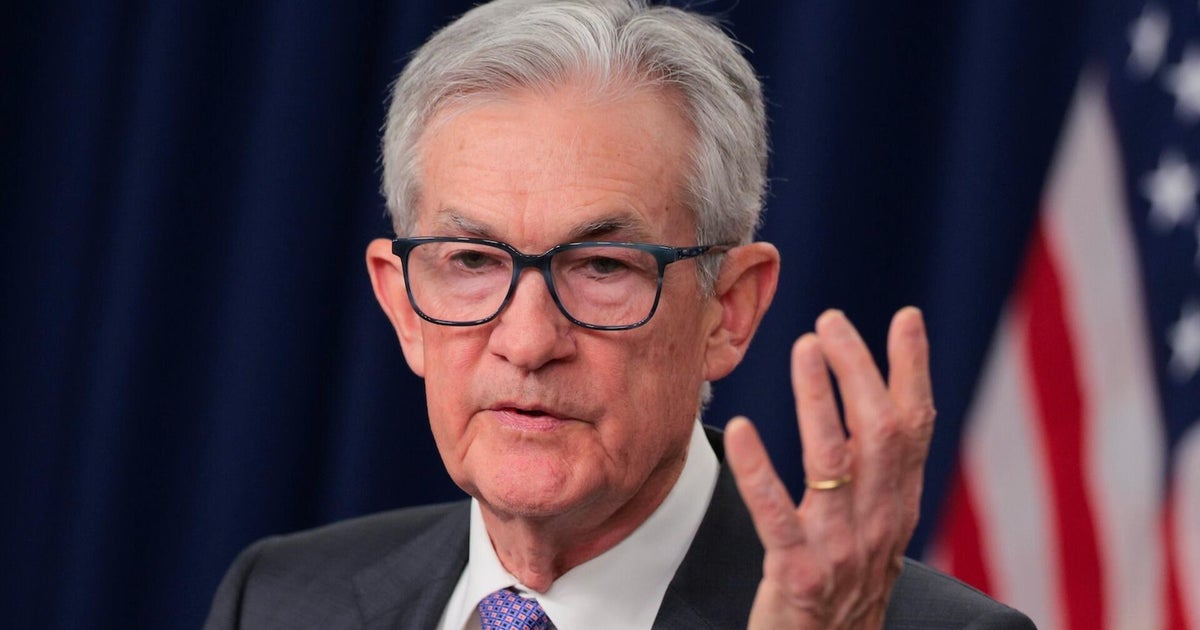
In a move that hasn’t been seen in over seven decades, Federal Reserve Chair Jerome Powell announced Wednesday that he intends to remain as a board governor even after his chairmanship term concludes in May. This decision comes at a critical juncture for the American economy, as the central bank once again maintained its benchmark interest rate while grappling with rising inflation linked to the ongoing conflict involving Iran. Powell’s announcement represents the first time since 1948 that a Fed chair has chosen to continue serving as a board governor after their term expires, signaling the extraordinary circumstances surrounding both the economy and the Federal Reserve itself.
The timing of Powell’s decision is particularly noteworthy given the recent conclusion of a Justice Department investigation into his oversight of renovations at the Fed’s Washington headquarters. Powell had previously indicated he would remain in his position until this probe was fully resolved, describing the inquiry as politically motivated. With U.S. Attorney for the District of Columbia Jeanine Pirro announcing on April 24 that her office would end the investigation, Powell confirmed during Wednesday’s press conference that he was “waiting for the investigation to be well and truly over with transparency and finality.” This unprecedented decision underscores Powell’s deep commitment to the institution during a period of intense political pressure and economic uncertainty.
Defending the Fed’s Independence
Powell’s choice to remain as a board governor goes far beyond personal career considerations—it represents a bold stand in defense of the Federal Reserve’s independence from political interference. During his press conference, Powell expressed serious concerns about the central bank’s ability to maintain its autonomy amid mounting political challenges. Chief among these is President Trump’s attempt to remove Federal Reserve Governor Lisa Cook, a case that now awaits a Supreme Court ruling on whether the president has the authority to dismiss Federal Reserve officials. “The institution is battered — we have had to go to the courts,” Powell stated bluntly, adding that “it’s not over.”
According to Powell, the Fed’s ability to set policy without political pressure is absolutely essential to fulfilling its dual mandate of maintaining low inflation and full employment. He emphasized that monetary policy decisions should be made solely to benefit the general public, free from political considerations. “You want people to make monetary policy and set interest rates to benefit the general public, and focus only on that and ignore political considerations,” Powell explained. “This isn’t bipartisan — it’s nonpartisan.” Financial analyst Stephen Kates of Bankrate characterized Powell’s decision as “a bold departure from the norm of chairs exiting after their chairmanship term ends,” noting that it signals Powell’s steadfast commitment to preserving Fed independence through continued service, even when facing significant political and legal pressure head-on.
President Trump, who has been vocal in his criticism of Powell for months, particularly regarding the Fed’s reluctance to implement steep interest rate cuts, responded to the announcement with characteristic mockery. “Jerome ‘Too Late’ Powell wants to stay at the Fed because he can’t get a job anywhere else — Nobody wants him,” Trump wrote on Truth Social. This public sparring between the President and the Fed Chair highlights the very political pressures that Powell is working to shield the institution from.
The Fed’s Rate Decision and Economic Outlook
Alongside Powell’s personal announcement, the Federal Reserve maintained its federal funds rate—the rate banks charge each other for short-term loans—in its current range of 3.5% to 3.75%. This decision met market expectations, with the CME FedWatch tool having predicted a 100% probability that officials would keep rates steady. The Federal Open Market Committee (FOMC), the Fed’s rate-setting panel, cited the developments in the Middle East as creating “a high level of uncertainty about the economic outlook.” The central bank also identified “elevated” inflation as being connected to “the recent increase in global energy prices.”
This decision leaves Kevin Warsh, President Trump’s nominee to replace Powell as chair, inheriting a Federal Reserve facing multiple pressures. These range from Trump’s repeated demands for lower interest rates to an inflation reading that jumped last month to its highest level in almost two years. Because interest rate cuts can potentially spur inflation, many economists now predict the Fed will postpone any reductions until later in 2026 or possibly even 2027. As Atsi Sheth, chief credit officer at Moody’s Ratings, noted: “The FOMC met expectations and held rates steady today. As the effects of the Middle East conflict become more pronounced, the case for maintaining policy rates rests on rising inflation risks, while risks to U.S. growth appear contained for now.”
In its statement, the FOMC reiterated its commitment to achieving a 2% annual inflation rate, though the Consumer Price Index stood at 3.3% in March—well above that target. Powell emphasized that the current benchmark rate provides the central bank with flexibility to respond if economic conditions change, though he was quick to add that “nobody is calling for a hike right now.” He expressed confidence that “we feel we’re in a good place to move in either direction,” depending on how economic conditions evolve in the coming months.
Internal Debate and Dissenting Voices
The Fed’s latest decision wasn’t without internal controversy. Four FOMC members dissented from the statement, revealing the complexity of the current economic situation. Fed Governor Stephen Miran voted in favor of a 0.25 percentage-point cut, while three other members supported maintaining the current rate but opposed language in the statement that suggested a bias toward lowering rates in the future. Brian Coulton, chief economist at Fitch Ratings, noted that “it is notable that the press release still refers to the Committee ‘considering the extent and timing of additional adjustments’ to rates and hence maintains a bias towards further cuts ahead.” He added that “this wording was clearly a topic of much debate given the oil price shock, with three members deciding not to support the inclusion of an easing bias in the statement.”
When questioned about these dissents, Powell viewed them as a natural consequence of the challenging economic landscape. “We’re in an unusually difficult situation,” he explained. “We’ve had four supply shocks — the pandemic, the invasion of Ukraine, the tariffs and now Iran and the oil spike.” He went on to describe the particular difficulty these shocks present for central bankers: “Every supply shock has the capability of driving inflation up and unemployment up. The central bank has a really hard time deciding what the right thing is to do.” This candid assessment reveals the tightrope the Fed is walking as it tries to balance controlling inflation without tipping the economy into recession.
Energy Prices and Consumer Impact
The conflict involving Iran that began on February 28 has had dramatic effects on global energy markets, with consequences rippling through the American economy. Global energy costs have spiked significantly, pushing the average U.S. price for a gallon of gasoline to $4.23 on Wednesday—approximately $1.25 more than before the conflict began. Economists now forecast that April’s inflation rate could jump to 3.9% annually due to these higher oil and gas prices, according to FactSet data. This represents a troubling reversal from the progress the Fed had made in bringing inflation down from its pandemic-era high of 9.1% in June 2022 to 2.7% by December 2025, when the Fed last cut rates.
Higher energy costs are already affecting consumer behavior in concerning ways. Oxford Economics noted in an April 28 report that many U.S. consumers are holding off on purchasing big-ticket items due to the increased costs. “We expect higher oil prices will hit consumers’ real disposable income growth and weigh on spending on durable goods and discretionary services the most,” the investment advisory firm stated. This potential pullback in consumer spending poses significant risks for the broader economy, given that consumer purchases account for 70 cents of every dollar in gross domestic product. Powell acknowledged that while the U.S. economy remains resilient so far, the Fed is closely monitoring whether consumers will significantly reduce spending due to higher gas and energy prices, as such a reduction could have cascading effects throughout the economy.
Labor Market Concerns and Future Outlook
Beyond inflation and energy prices, the Federal Reserve is keeping a close watch on the labor market, which has shown signs of cooling amid economic uncertainty, uneven payroll gains, and the emerging impact of artificial intelligence. Some companies have announced large-scale layoffs citing AI implementation, though economists say the technology doesn’t yet appear to be causing widespread job losses across the economy. Nevertheless, signs of a weakening job market could persuade some Fed officials to reduce borrowing costs for consumers and businesses as a way to stimulate economic activity and prevent unemployment from rising.
Powell has recently characterized the employment market as relatively balanced, though he has acknowledged that young college graduates are facing particular obstacles in finding work—a concern for the next generation entering the workforce. As Ameriprise chief market strategist Anthony Saglimbene noted in an April 27 research note, “Any refinement in how the Fed describes labor market conditions, particularly wage pressures and hiring demand, could carry implications for expectations around future rate policy.” The delicate balance the Fed must strike involves keeping interest rates high enough to control inflation while not keeping them so high that they trigger significant job losses or push the economy into recession. With Powell choosing to remain as a board governor beyond his chairmanship, he will continue to be a voice in these critical decisions that will shape the American economy for years to come, defending the institution’s independence even as it navigates one of the most challenging economic environments in recent history.