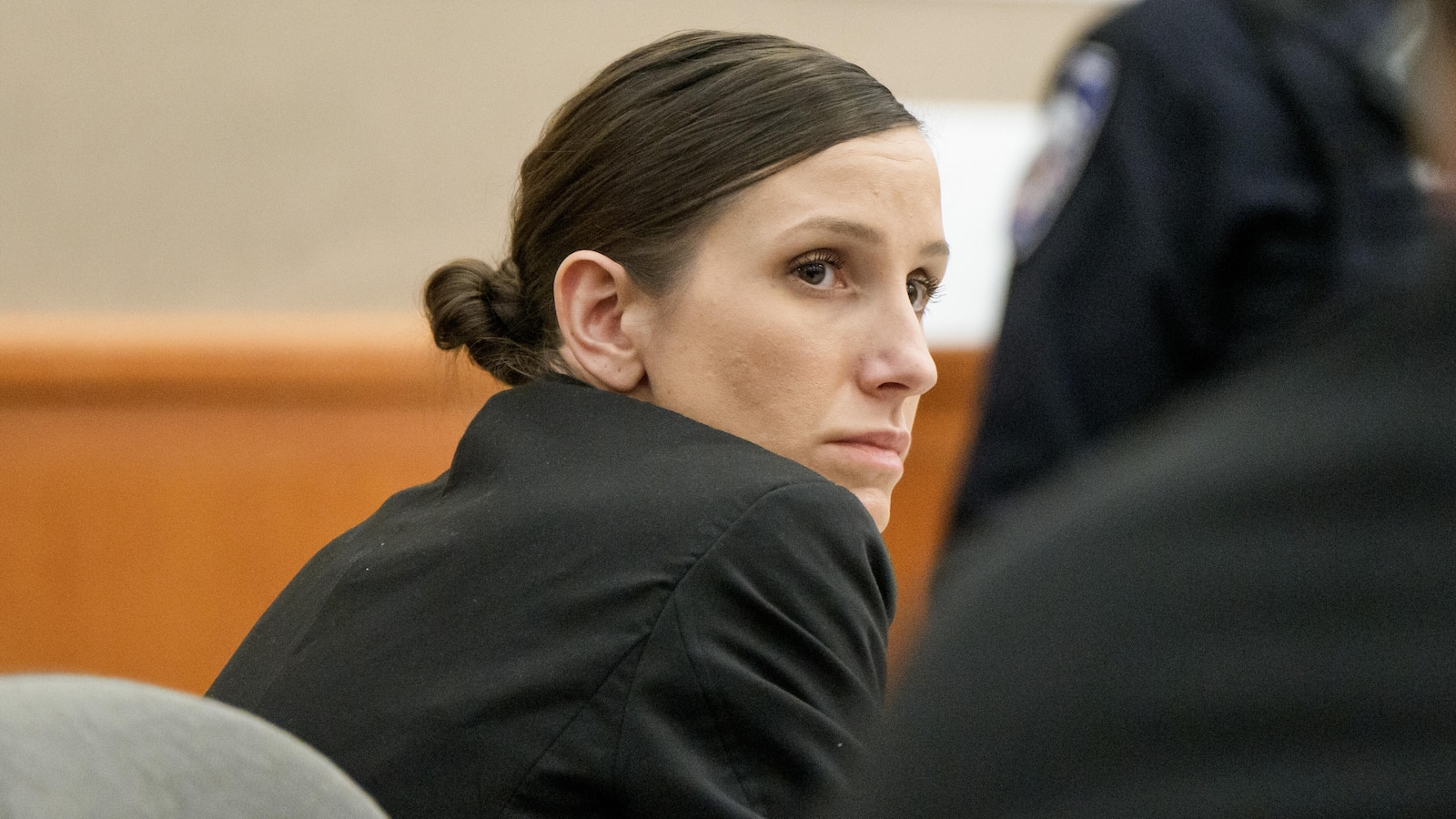

The Kouri Richins Murder Trial: A Dark Tale of Alleged Greed and Deception
A Case That Shocked Park City
The quiet affluence of Park City, Utah, was shattered by a case that reads like a crime novel, but the tragedy at its heart is all too real. Kouri Richins, a 35-year-old mother and real estate agent, stands accused of murdering her husband Eric by slipping him a lethal dose of fentanyl in March 2022. What makes this case particularly chilling is what came after: Richins published a children’s book about grief, ostensibly to help her sons cope with their father’s death, all while promoting it on local media. Now, as the trial reaches its conclusion with closing arguments set for Monday, the prosecution and defense are preparing their final pitches to the jury. The trial, originally scheduled to last five weeks, was dramatically shortened when Richins’ defense team rested their case without calling a single witness, not even the defendant herself. This unexpected move signaled their confidence that prosecutors hadn’t met the burden of proof needed for a conviction on the serious charges, including aggravated murder, which carries a potential sentence of 25 years to life in prison.
The Prosecution’s Case: A Pattern of Calculated Killing
Prosecutors have painted a damning portrait of Kouri Richins as a calculating killer motivated by greed and a desire to start fresh with a new lover. According to their case, she administered five times the lethal dose of fentanyl to her husband through a cocktail she prepared for him at their home near Park City. But the alleged murder plot didn’t stop there. Prosecutors claim this wasn’t even her first attempt—weeks earlier, on Valentine’s Day 2022, she allegedly tried to poison Eric with a fentanyl-laced sandwich that caused him to black out, though he survived that incident. The evidence presented paints Richins as someone deeply in debt, desperate for money, and willing to do anything to get it. She was reportedly $4.5 million in the red and mistakenly believed that if her husband died, she would inherit his estate worth more than $4 million. To maximize her financial gain, prosecutors allege she secretly opened multiple life insurance policies on Eric without his knowledge, totaling approximately $2 million in benefits.
The prosecution’s case leaned heavily on digital evidence that suggested premeditation and consciousness of guilt. Investigators found disturbing search queries on Richins’ phone, including searches for “what is a lethal.dose.of.fetanayl” (misspelled), “luxury prisons for the rich America,” and “if someone is poisned what does it go down on the death certificate as.” These searches suggest not only planning but also concern about getting caught. Text messages between Richins and Robert Josh Grossman, a man she was allegedly having an affair with, revealed her fantasies about leaving her husband, gaining millions through divorce, and eventually marrying Grossman. These communications helped prosecutors establish motive—she wanted Eric’s money and a new life with another man. The timing of her children’s book publication, coming shortly before her arrest in May 2023, was presented as part of an elaborate cover-up, with prosecutors arguing she was trying to establish herself as a grieving widow rather than a calculating killer.
The Defense Strategy: Attacking the Credibility of Key Witnesses
The defense team’s approach has been to systematically dismantle the prosecution’s case by highlighting what they see as major holes and questionable witnesses. Their most significant target has been Carmen Lauber, the family’s housekeeper who became the prosecution’s star witness by claiming she sold fentanyl to Richins on multiple occasions. Defense attorney Wendy Lewis argued that Lauber had every reason to lie and was essentially coerced into testifying against Richins. Lauber’s testimony was particularly problematic because in her initial interviews with police, she explicitly stated she had never dealt fentanyl. It was only after investigators told her that Eric Richins died from a fentanyl overdose that her story changed. This shift in testimony raised serious questions about reliability and truthfulness.
The defense also highlighted Lauber’s legal vulnerability at the time of her cooperation. She was already enrolled in a drug court program as an alternative to incarceration on other charges and had violated some conditions of that program. Video footage shown in court captured law enforcement officers warning Lauber that they could revoke her drug court deal and that she faced a lengthy prison sentence if she didn’t cooperate. One officer in the video even said, “Give us the details that will ensure Kouri gets convicted of murder”—a statement that defense attorneys argued showed improper pressure. Lauber was ultimately granted immunity for her cooperation, which the defense suggested gave her enormous incentive to tell prosecutors whatever they wanted to hear. While Lauber testified that she felt compelled to “step up and take accountability,” the defense painted her as an unreliable witness whose testimony was manufactured under duress rather than based on truth.
The Children’s Book and the Question of Motive
One of the most disturbing elements of this case is the children’s book Richins published titled “Are You with Me?” which she claimed was meant to help her three sons process their grief over losing their father. She actively promoted the book on local television and radio stations, presenting herself as a devoted mother helping her children through tragedy. However, prosecutors viewed this very differently—as a calculated attempt to cement her public image as a grieving widow and deflect suspicion. Detective Jeff O’Driscoll, the lead investigator, revealed that Richins didn’t even write the book herself but paid a ghostwriting company to create it for her, suggesting the project was more about image management than genuine grief work with her children.
An interesting twist came when investigators received an anonymous package shortly after Richins’ arrest. The package contained a copy of the book and a note that read: “There are two sides to every story. This is a true Kouri, a devoted wife and adoring mother. Thought you should know.” Investigators later traced the package to Richins’ mother through Amazon records, suggesting the family was attempting to influence public opinion or the investigation. This revelation added another layer to the prosecution’s narrative that Richins was engaged in an elaborate cover-up. The defense, however, has maintained that the book was a legitimate grief resource and that Richins’ public promotion of it was nothing more than a mother trying to help her children while also dealing with her own grief and the practical need to generate income after her husband’s death.
Contradictory Narratives and a Jail Cell Letter
Perhaps the most compelling piece of evidence prosecutors presented was a six-page letter found in Richins’ jail cell that they claim was an attempt to fabricate testimony for her family members. In the letter, Richins allegedly instructs her brother to tell her former attorney that Eric had confided in him about obtaining fentanyl from Mexico and “gets high every night.” This would support a defense theory that Eric was responsible for his own death through recreational drug use. The prosecution argued this letter showed consciousness of guilt and an active attempt to manufacture a false narrative. The defense, however, offered a completely different interpretation: they claimed the letter was actually a fictional story Richins had been working on while incarcerated, not instructions for false testimony.
This competing interpretation of the letter exemplifies the broader challenge facing the jury—determining which narrative is true when the same evidence can be read in vastly different ways. The defense has consistently argued that Eric Richins struggled with painkiller addiction and had asked his wife to obtain opioids for him, which would explain why she might have been in contact with someone who could provide such drugs. However, this defense theory runs into a significant problem: body camera footage from the night of Eric’s death shows Kouri telling police that her husband had no history of illicit drug use. This contradiction weakens the defense’s attempt to portray Eric as someone who regularly used drugs and might have accidentally overdosed. The prosecution has used this statement to argue that Richins is fabricating the addiction story after the fact to create reasonable doubt.
The Final Showdown and What’s at Stake
As both sides prepare for closing arguments, the stakes couldn’t be higher for Kouri Richins, who faces charges including aggravated murder, insurance fraud, attempted murder for the alleged Valentine’s Day poisoning, and other felonies. She has pleaded not guilty to all charges, maintaining her innocence throughout. The defense’s decision to rest without calling any witnesses—including Richins herself—was a calculated gamble based on their assessment that the prosecution hadn’t met its burden of proof. By waiving her right to testify, Richins avoided the risk of damaging cross-examination, but she also lost the opportunity to tell her story directly to the jury and explain away the circumstantial evidence against her.
In their closing arguments, prosecutors will emphasize the mountain of circumstantial evidence: the internet searches about lethal fentanyl doses and luxury prisons, the text messages about leaving her husband and gaining millions, the secret life insurance policies, the alleged affair with Grossman, and the testimony from Lauber about selling her fentanyl. They’ll argue that when all these pieces are put together, they form an undeniable picture of premeditated murder for financial gain. The defense, meanwhile, will focus on reasonable doubt. They’ll highlight the questionable credibility of Carmen Lauber, the possibility that Eric Richins had a drug problem his wife was trying to help him with, the alternative explanations for the evidence presented, and the lack of any direct proof that Kouri administered the fatal dose. They’ll argue that suspicion, no matter how strong, isn’t the same as proof beyond a reasonable doubt. For the jury, the task ahead is extraordinarily difficult: sorting through complex financial records, conflicting testimonies, digital evidence, and competing narratives to determine whether Kouri Richins is a grieving widow wrongly accused or a calculating killer who tried to profit from her husband’s death. The verdict, when it comes, will bring either justice or injustice—depending on which story proves to be true.