
Tragic Death Raises Questions: Officer’s Anxiety Attack Delays Ambulance for Shooting Victim
The Shooting and Its Immediate Aftermath
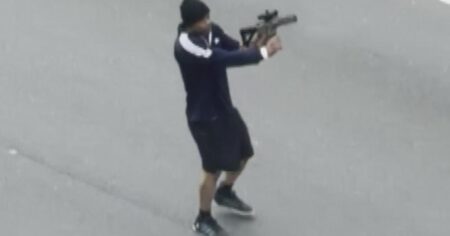
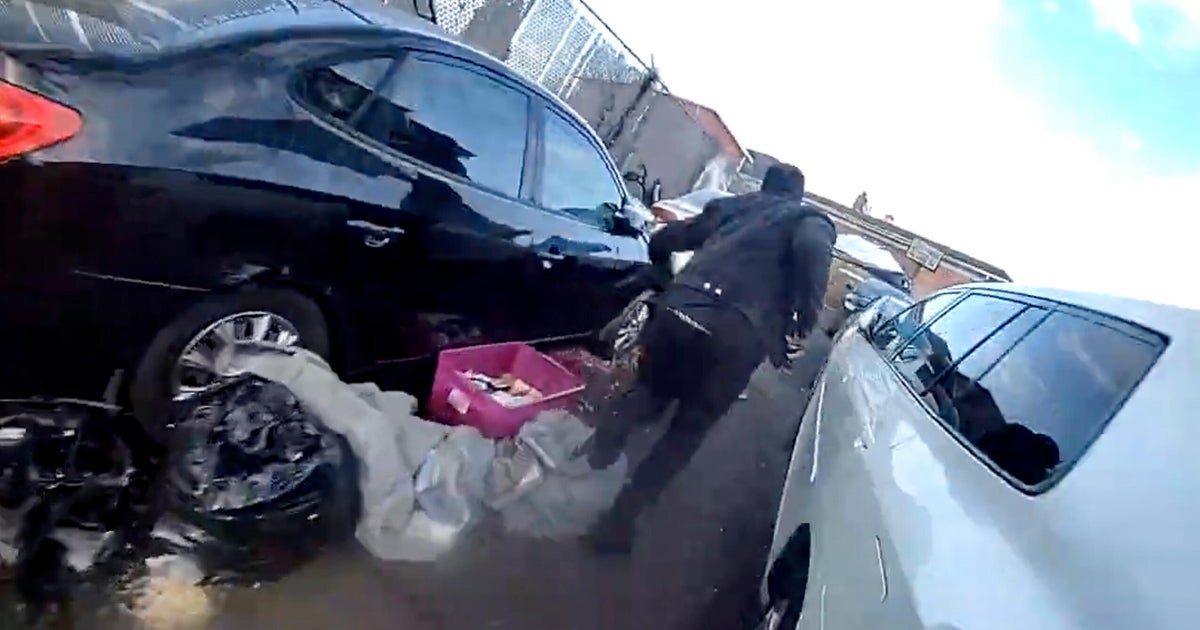
A deeply troubling incident in Bridgeport, Connecticut, has left a family grieving and a community demanding answers about what happened after police shot 39-year-old Dyshan Best. On March 31 of last year, Best was shot in the back while running from officers during what began as a response to a reported brawl involving approximately 30 people, some allegedly armed with guns. According to a state investigation released this week by Inspector General Eliot Prescott, the shooting itself was deemed justified because Best was holding a gun and pointed it backward at Officer Yoon Heo during a foot chase, creating what investigators determined was a reasonable fear for the officer’s safety. Body camera footage reportedly shows Best pulling out a 9mm handgun as he ran through a lot filled with disabled cars, and Heo firing twice, hitting Best once. The bullet caused devastating internal injuries, damaging Best’s liver and right kidney. While the investigation concluded the shooting was within legal bounds, what happened in the critical minutes after Best fell wounded has raised serious questions about police protocol, medical priorities, and whether a man’s life could have been saved.
The Ambulance Controversy That Has Sparked Outrage
The most disturbing revelation from the inspector general’s report involves what happened when emergency medical services arrived on scene. The first ambulance reached the shooting location at 6:02 p.m., approximately 14 minutes after Best was shot and lay bleeding with life-threatening internal injuries. However, according to the investigation, this ambulance didn’t transport Best to the hospital. Instead, at the urging of other officers at the scene, paramedics took Officer Erin Perrotta, a white officer who had been involved in the initial foot chase but was not the shooter. The American Medical Response (AMR) report documented that the call’s nature was listed as “Stab/Gunshot/Penetrating Trauma,” yet officers on scene reportedly told the ambulance crew to “hurry up and take their partner.” According to the documentation, police rushed the crew off the scene without providing proper information. Perrotta reportedly jumped into the ambulance herself and was secured with straps. Most remarkably, paramedics noted that Perrotta declined treatment during transport, telling them, “I am fine, I just needed to get out of here.” Meanwhile, Dyshan Best, the actual gunshot victim with severe internal bleeding, remained at the scene waiting for a second ambulance that wouldn’t arrive for another ten minutes.
The Fatal Delay and Questions About Survival
The second ambulance finally arrived at the scene at approximately 6:12 p.m., a full ten minutes after the first ambulance had left with Officer Perrotta. Hospital records indicate that Best arrived for treatment at 6:22 p.m.—roughly 14 minutes after Perrotta had been brought to the hospital despite having no physical injuries requiring immediate medical intervention. Best spent just over an hour receiving emergency treatment for his gunshot wound before dying at 7:41 p.m. The inspector general’s report notably did not address whether the ten-minute delay in getting Best to the hospital contributed to his death—a glaring omission that has left the victim’s family and community advocates searching for answers. Medical experts generally agree that in cases of severe internal bleeding from gunshot wounds, every minute matters critically. The “golden hour” concept in emergency medicine emphasizes that survival rates decrease significantly when treatment is delayed, particularly with injuries to major organs like the liver and kidney. While we may never know with certainty whether Best would have survived if he’d been in that first ambulance, the question haunts everyone familiar with this case: Did prioritizing an officer’s anxiety attack over a dying man’s gunshot wounds cost Dyshan Best his life?
The Officer’s Condition and the Decision-Making Process
According to the investigation, Officer Perrotta was described by colleagues as “visibly hysterical (crying and breathing rapidly)” with blood all over her uniform at the scene. The blood, it should be noted, was not her own—she had no physical injuries. Another officer characterized her condition as a “mild anxiety attack.” While the psychological trauma of being involved in such an intense and violent situation is real and shouldn’t be dismissed entirely, the decision to transport an officer having an anxiety attack in the ambulance designated for “Stab/Gunshot/Penetrating Trauma” while leaving the actual shooting victim bleeding at the scene raises profound questions about judgment, priorities, and possibly implicit bias. The report indicates that officers at the scene made the decision to put Perrotta in the first ambulance, essentially overriding the emergency medical system’s triage protocols. In any standard emergency medical situation, triage principles dictate that the most seriously injured person receives treatment first. A gunshot victim with internal bleeding would universally be classified as the highest priority—a “red” or immediate category patient. Someone experiencing anxiety or psychological distress without physical injuries would be considered much lower priority. The fact that this standard protocol was apparently abandoned raises serious questions about the culture within the Bridgeport Police Department and whether officers receive adequate training in emergency medical situations.
Family Grief and the Search for Justice
Tatiana Barrett, one of Best’s nieces, has become a spokesperson for the family’s grief and their pursuit of answers. Speaking to The Associated Press, she expressed the heartbreak and anger that has consumed Best’s loved ones since learning the details contained in the inspector general’s report. “Honestly it’s heartbreaking hearing all these details,” Barrett said. “We were looking for justice. In our community, we don’t know what justice looks like. We want justice for my uncle. We truly believe he was murdered.” The family’s position is clear: they believe Dyshan Best could have survived his injuries if he had been placed in that first ambulance and received medical treatment ten minutes sooner. Barrett described her uncle as a truck driver who had returned to his hometown of Bridgeport to attend a friend’s funeral—a man going about his life who ended up in a confrontation that cost him everything. The family’s attorney, Darnell Crosland, initially disputed that Best had a gun at all, suggesting he was holding a vape pen instead, though the inspector general’s report states that body camera footage clearly shows a pistol in Best’s hand and that a handgun was recovered near his body at the scene. Regardless of the circumstances that led to the shooting itself, the family’s grief has been compounded by the revelation that their loved one may have bled to death while waiting for a second ambulance because the first one was used to transport an officer who declined medical treatment.
Systemic Questions and the Path Forward
This tragedy has exposed uncomfortable questions about police culture, racial bias in emergency response, and accountability in law enforcement. Officer Perrotta is currently on administrative leave for an unrelated matter, according to local news reports, and the Bridgeport Police Department’s Internal Affairs Division is reportedly conducting its own investigation. However, a police spokesperson declined to comment on the ambulance decision when asked by media. As of the report’s release, neither Mayor Joe Ganim’s office, Inspector General Prescott’s office, the city police union, nor the family’s attorney had provided additional public comment. The silence from officials is deafening to a community that wants to understand how such a decision could have been made and what will be done to ensure it never happens again. This case highlights the intersection of several critical issues in modern policing: the use of force, emergency medical response protocols, officer wellness versus public safety, and the persistent questions about whether race influences split-second decisions in life-or-death situations. The image of a Black man bleeding from a gunshot wound waiting for medical care while a white officer with no physical injuries is rushed to the hospital in the ambulance meant for trauma victims is one that resonates painfully with communities that have long felt that their lives are valued less than those of police officers. Whether Dyshan Best would have survived with faster medical intervention remains unknown, but his family and community deserve a thorough, transparent investigation into why established emergency medical protocols were apparently abandoned that day in Bridgeport.