


DCTRL Vancouver: The End of an Era as Legendary Bitcoin Hackerspace Relocates After 12 Years
A Beloved Community Hub Faces Change
After more than a decade of serving as a cornerstone of Vancouver’s Bitcoin community, DCTRL—one of the world’s longest-running cryptocurrency hackerspaces—is closing the doors to its iconic downtown basement location. The closure comes not from lack of interest or community support, but due to changing zoning laws that will see a new building rise in place of the current site. For those who have been part of the Bitcoin movement since its early days, DCTRL represents more than just a physical space—it’s a living archive of cryptocurrency history, a gathering place for innovators, and a testament to the community-driven spirit that has always defined Bitcoin culture. The good news is that this isn’t goodbye forever. Active community members are already working on finding a new home and reimagining what the next chapter of DCTRL will look like. The space has seen record attendance in recent months, proving that the appetite for in-person Bitcoin community spaces remains strong even in our increasingly digital world.
Where It All Began: The World’s First Bitcoin ATM
The story of DCTRL can’t be told without going back to October 2013, to a coffee shop called Waves Cafe on Howe Street in Vancouver. A group of four Bitcoin pioneers known as the Bitcoiniacs—who ran a Bitcoin brokerage that’s still operating today—decided to do something that had never been done before: install a Bitcoin ATM that would allow everyday people to purchase cryptocurrency with cash. The timing couldn’t have been better. Bitcoin had recently climbed from just a few dollars to nearly $150, and after consolidating around $100, was preparing for its historic run toward $1,000 per coin. The energy in the Bitcoin community was electric—this was the end of Bitcoin’s longest bear market, and the rising price felt like validation that this new form of money was here to stay. Freddie Heartline, who would become a co-founding member of DCTRL, remembers the ATM launch event vividly: “The first Bitcoin ATM in the world was a massive event. Oh man, the vibes were incredible. It literally felt like a really good rave. But it was smarter. Way smarter.” That event made national and international headlines, representing a milestone in Bitcoin’s journey toward mainstream adoption. Tens of thousands of Canadian dollars worth of Bitcoin were sold that day and in the following weeks, likely creating a few millionaires in the process and inspiring numerous copycat projects and Bitcoin ATM manufacturing companies.
From Coffee Shop Conversations to a Legendary Hackerspace
The enthusiasm and community spirit from the Bitcoin ATM launch didn’t just fade away—it evolved into something more permanent. Cameron Gray, another Bitcoin enthusiast who had been volunteering at the Bitcoiniacs event and was friends with Heartline, had a simple but transformative idea. As Heartline recalls, “Cam was absolutely an essential part of founding Decentral. He literally turned to me one day—as he was operating the bitcoin ATM at Waves—after I complained about the lighting at the coffee shop—and said ‘we should open a space.’ And that was it.” That casual conversation led to the creation of what would initially be called “Decentral Vancouver” (later shortened to DCTRL), housed in a basement location in downtown Vancouver. The space was grimy and humid at first, but it had character and potential. Over the years, it transformed from that rough basement into a proper hub for Bitcoin engineers, founders, enthusiasts, and eventually, industry legends. The decor improved, leaks were patched, walls were decorated with Bitcoin art, and the space filled up with all kinds of hardware modified to interact with Bitcoin. But starting a community space during a lifestyle project is one thing—sustaining it through Bitcoin’s notorious volatility is another challenge entirely. When Bitcoin crashed from over $1,000 back down to $300, bills still needed to be paid. Heartline’s solution was both creative and dedicated: he literally moved onto the rooftop of the building, setting up a tent so that the space could continue operating during the bear market. This kind of commitment became characteristic of DCTRL’s story.
The Legendary Bepsi Machine and Growing Community
As DCTRL began hosting regular meetups, word spread beyond just the Bitcoin community. The Vancouver Startup Weekend community discovered the space, and soon those events were being held at DCTRL as well, bringing in the broader local tech startup scene. One regular visitor named Greg would make a contribution that became one of DCTRL’s most beloved symbols. He donated $500 with one condition: it had to be used for something creative. Heartline found a Pepsi vending machine on Craigslist, and with help from Greg, Cameron Gray, and Mike Olaff, they wrestled the incredibly heavy machine down the basement stairs—nearly crushing Gray in the process. But this wasn’t going to be just any vending machine. The team reverse-engineered and hacked it, rebranding it as the “Bepsi” (a playful nod to Bitcoin). They rigged it to accept Bitcoin payments, creating a satisfying real-world use case: sending an on-chain transaction and hearing a soda drop seconds later. The Bepsi became a cornerstone of DCTRL culture and a testing ground for cutting-edge Bitcoin technology. Over the years, it was updated to support virtually every Bitcoin protocol, including Lightning Network, Taproot Assets, Spark, and Arcade OS. The community even issued a “Bepsi token”—one token equaling one soda from the machine, creating what Heartline jokingly called “a stable coin pegged to the price of a pop can.” A digital version allowed fans from around the world to make donations. The Bepsi’s fame grew to the point that in recent years, Vancouver Mayor Ken Sim visited DCTRL to buy a soda using a Lightning payment, paying homage to this unique piece of Vancouver hacker culture.
A Who’s Who of Cryptocurrency History
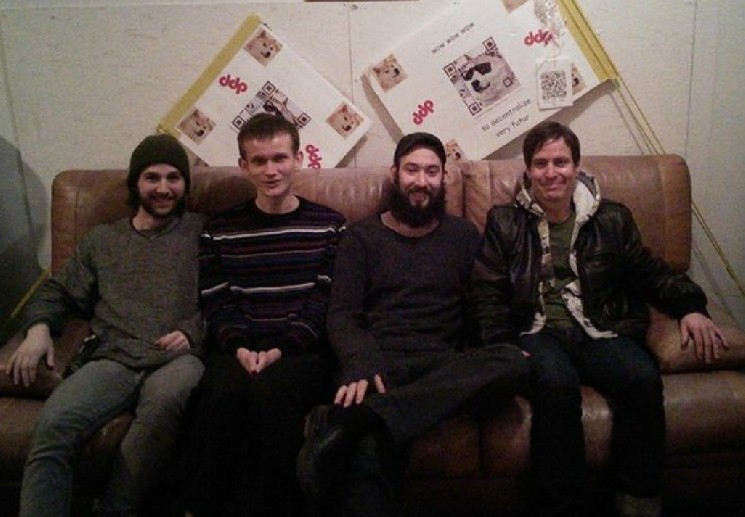
Throughout its twelve-year run, DCTRL became a pilgrimage site for some of the most influential figures in cryptocurrency. Vitalik Buterin, who would go on to found Ethereum but was then a writer for Bitcoin Magazine, visited the space in its early days—a moment captured in a photograph still hanging on the wall showing Buterin with Gray, Heartline, and another active member named Kyle. The founders of CaVirtex, Canada’s first Bitcoin exchange (later acquired by Kraken), were also photographed there. This exchange had been selling Bitcoin to Canadians since before the first bull run that peaked at $30 per coin, playing a crucial role in onboarding many prominent Canadian Bitcoiners. The space hosted virtual appearances and talks from Bitcoin celebrities including Roger Ver (before the contentious fork wars), Andreas Antonopoulos, and analyst Willy Woo. Erik Voorhees, famous for creating ShapeShift, one of the first major crypto-to-crypto instant exchanges, gave a fireside chat at DCTRL during a local meetup. Even one of cryptocurrency’s most infamous figures passed through DCTRL’s doors: Gerald Cotten of QuadrigaCX. Cotten was a regular in the Canadian Bitcoin scene around 2014, known as a charming and smooth-talking entrepreneur. Years later, his exchange would collapse in bankruptcy after Cotten allegedly died suddenly in India, supposedly taking the keys to millions of dollars in user funds with him—a story many affected users remain skeptical about to this day. DCTRL also weathered Bitcoin’s internal conflicts, particularly the contentious “fork wars” over block size. Cameron Gray, one of the primary co-founders, took the “big block” side of the debate, leading to intense discussions and ultimately a falling out with parts of the local and broader Bitcoin community. Despite these tensions, Gray remains highly respected for his contributions to DCTRL’s social scene. During this difficult period, DCTRL served as a forum for debate, even hosting Peter Rizun of Bitcoin Unlimited for discussions with community members.
Looking Toward the Future
Over its remarkable 12-year run, DCTRL hosted hundreds of events, registered over 1,500 community members, and published 69 recorded talks on YouTube covering all aspects of Bitcoin and cryptocurrency. Remarkably, throughout this entire time, the hub was operated entirely by volunteers and sustained through public donations and, of course, the beloved Bepsi machine. As the current location faces rezoning by the city government and a new building prepares to rise in its place, active members and hosts have begun organizing a transition to a new location alongside an update to the brand. According to DJ, one of the active members who prefers to remain pseudonymous, the hub has actually seen record attendance in recent months—a promising sign for the future. The physical location may be changing, but the spirit and community of DCTRL remain stronger than ever. For a space that began with a casual conversation at a coffee shop, DCTRL has left an indelible mark on Bitcoin history. It represents the grassroots, community-driven nature of the cryptocurrency movement—a place where ideas were freely shared, hardware was hacked together, and legends were made. As the community prepares for its next chapter, those interested in being part of DCTRL’s future can learn more at their website. The basement may be closing, but the legacy continues.