



A Growing Crisis: Deaths in Immigration Detention Under Scrutiny
A Brother’s Heartbreaking Task
Last week, Presner Nelson faced one of the most difficult moments of his life. He walked through a shopping mall with a devastating purpose: finding a suit for his brother Emmanuel Damas to wear in his casket. Emmanuel had died in federal immigration custody in March after spending approximately two weeks complaining of a severe toothache that his family believes should have been easily treatable. “This was the first time I had to do this in my life — it was not easy,” Nelson shared with reporters, his voice heavy with grief and frustration.
Emmanuel Damas was a Haitian immigrant who, according to his brother, had entered the United States legally and had a pending application for Temporary Protected Status when he was taken into custody. His death has become emblematic of a growing crisis within America’s immigration detention system—one that has seen an alarming spike in detainee deaths during the current administration’s aggressive immigration enforcement policies. As the government pursues what officials describe as an immigration crackdown, families like the Nelsons are left mourning loved ones while demanding answers about how such preventable tragedies could occur in government facilities.
An Unprecedented Death Rate in Detention Facilities
The numbers tell a sobering story. According to an analysis of Immigration and Customs Enforcement (ICE) data and figures provided to Congress, the first 14 months of the second Trump administration represent the deadliest period for the federal immigration detention system in recent memory—with the sole exception of 2020, when the coronavirus pandemic significantly contributed to detention deaths. As of late March, 45 people had died in government custody during the current Trump administration, including two victims of a shooting at a Dallas detention facility last September.
The mortality rate within these facilities has accelerated at an alarming pace. While the death rate was as low as one per 100,000 admissions in 2022, that number jumped dramatically to approximately seven deaths per 100,000 admissions in 2025, and in just the first ten weeks of 2026, the rate has climbed to 11 deaths per 100,000 admissions. These calculations exclude the two individuals who were shot while in custody, making the statistics even more concerning. Immigration policy expert Aaron Reichlin-Melnick, who conducted his own analysis of ICE deaths, stated bluntly: “There is really no contest—fiscal year 2026 is on track to be the deadliest year ever in the history of ICE. Things are dramatically worse this year. We are seeing more deaths than ever.”
This surge in fatalities coincides with record-high detention populations, which recently exceeded 70,000 people currently held in federal immigration custody. The Trump administration has dramatically expanded detention capacity by converting warehouses and other spaces into detention facilities, with documents showing the government expects to spend $38 billion to increase capacity by 92,600 beds. Previous administrations found ways to reduce detention numbers through “Alternatives to Detention” programs, including regular check-ins with ICE and ankle monitors, but the current administration has doubled down on mandatory detention policies, even for individuals in the process of obtaining legal status. The government has even restarted detaining families with children at facilities like the South Texas Family Residential Center in Dilley, Texas.
The Tragic Story of Emmanuel Damas
The circumstances surrounding Emmanuel Damas’s death highlight systemic failures within the detention healthcare system. ICE described Damas as a “criminal illegal alien” arrested in Boston for assault and battery, but his brother Nelson disputes this characterization entirely. According to Nelson, Emmanuel was in the country legally under a humanitarian parole program with a pending Temporary Protected Status petition. The arrest that led to his detention was never followed by a conviction and stemmed from a misunderstanding when someone called police about Emmanuel’s 12-year-old son appearing to walk alone on a sidewalk. Emmanuel mistakenly thought his son had called the police on him, became angry, and gestured as if to hit him but never made physical contact, Nelson explained.
After being taken to jail and transferred to ICE custody before Nelson could post bail, Emmanuel began complaining of a severe toothache. When Nelson last spoke with his brother by phone on February 16th, Emmanuel reported he’d been suffering from the toothache for two weeks and claimed he had been denied multiple requests to see a dentist. Two days later, when Emmanuel called their mother, he had difficulty speaking clearly—Nelson believes because the toothache had developed into a dangerous abscess causing his jaw to swell significantly. The next day, February 19th, ICE reports that Damas was “immediately” taken to a hospital after reporting shortness of breath and was subsequently transferred to an Intensive Care Unit in Phoenix for a higher level of care.
By February 20th, according to ICE, Damas “remained intubated” and underwent various tests. Two days later, the Phoenix hospital diagnosed him with septic shock due to pneumonia. Before his transfer to Scottsdale Osborn Medical Center on February 25th, medical staff had placed two chest tubes on his right side and performed a thoracentesis to remove excess fluid from around his lungs. On February 28th, Nelson’s family was finally told they could visit him in the hospital. Four relatives, including Emmanuel’s mother, were able to see him the next day, but as Nelson painfully recalled, “at that point, it was too late, there was not much that could be done to save his life. So when my mom got there, he was in a coma.” Emmanuel Damas was pronounced dead at 1:12 p.m. on March 2nd.
Conflicting Accounts and Questions About Care
The Department of Homeland Security provided a statement about Damas’s case that contradicts the family’s account in significant ways. According to DHS, Damas “refused” dental extraction and had claimed in January that his toothache had gone away. The spokesperson stated that in February, Damas was seen “for bleeding gums and loose front teeth” and again refused to have two teeth extracted. DHS emphasized that “it is a longstanding practice to provide comprehensive medical care from the moment an individual enters ICE custody,” including medical, dental, and mental health services, with 24-hour emergency care available. The spokesperson even claimed that “many individuals receive healthcare in ICE custody that exceeds what they have previously experienced.”
Nelson firmly rejects this narrative. He believes his brother would be alive today if he had received adequate and timely medical care for his toothache. “They waited for too long to take him to the hospital to be seen by a dentist. So on the nineteenth, when they finally realized, it was too late because he had that infection going on for two weeks,” Nelson explained. “He asked for help for two weeks—they said that he was faking it.” The discrepancy between the official government account and the family’s understanding of events raises troubling questions about the quality of medical care in detention facilities and whether detainees’ complaints are taken seriously enough by facility staff. Former DHS and White House official Andrea Flores, now an immigration policy attorney, emphasized the broader systemic problem: “Nobody should lose their life because they went through our immigration system—but that, in and of itself, has been a problem across administrations. And so there’s been work that’s needed to be done on this.”
A Pattern of Suspicious Deaths
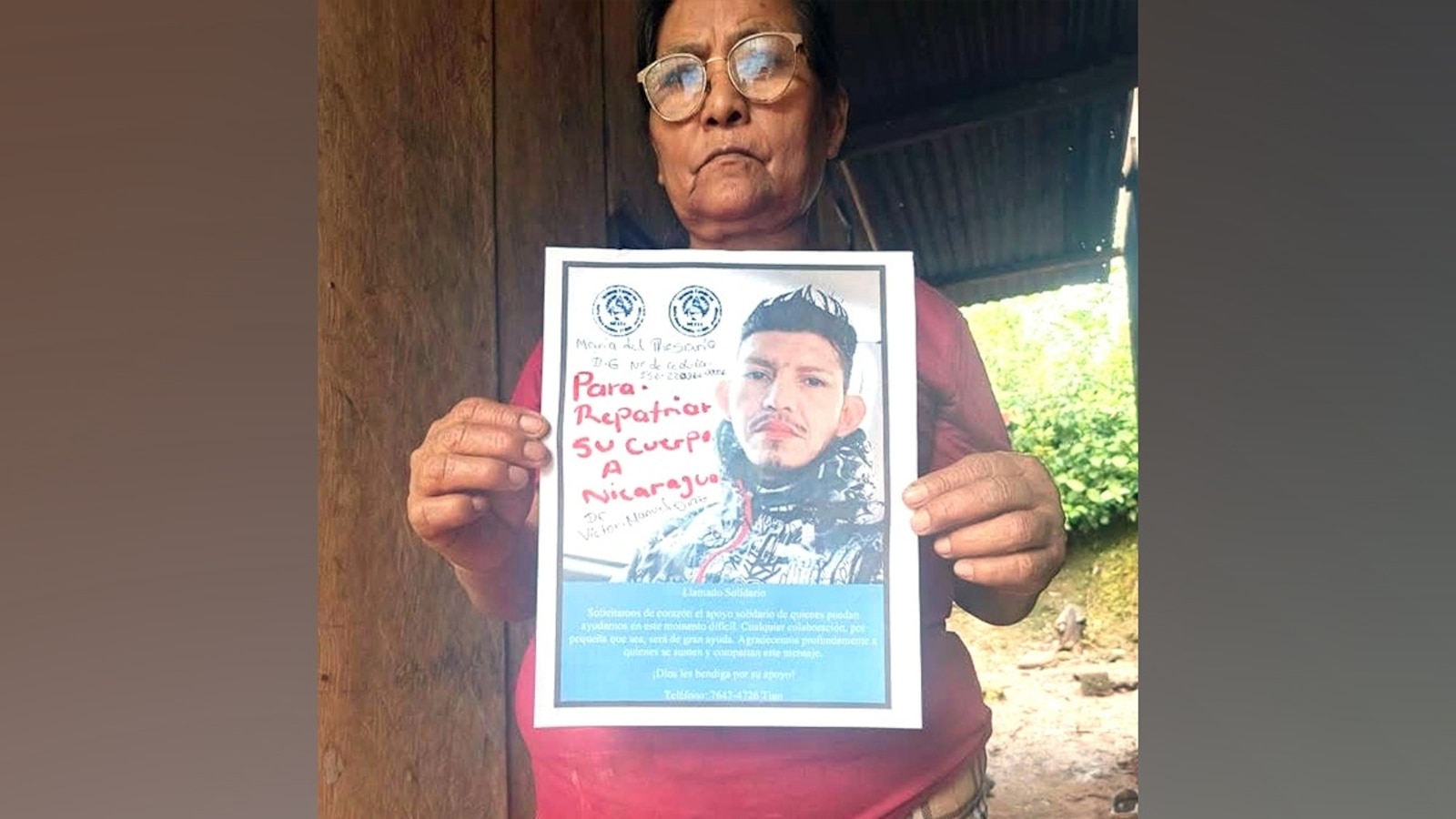
Emmanuel Damas’s death is far from an isolated incident. The recent surge includes numerous “presumed suicides,” a classification that families and advocates are increasingly questioning. These include 19-year-old Royer Perez-Jimenez, who died on March 16th in Florida, and Victor Manuel Diaz, who died at a Texas facility in January. According to DHS press releases, both were found “unconscious and unresponsive”—Diaz in his room at Camp East Montana in El Paso, and Perez-Jimenez by a detention officer at Glades County. While the department noted that official causes of death remain under investigation, they labeled these incidents as “presumed suicides.” However, Diaz’s family has told reporters they do not believe he took his own life and are calling for a full investigation into the circumstances of his death.
Immigration policy expert Reichlin-Melnick emphasized the preventable nature of these tragedies: “Suicide is a preventable cause of death for people in custody. It’s something that jails should be working to prevent, and yet we’ve now had three or four suicides just in 2026 alone, including the 19-year-old who died recently.” Questions about the accuracy of DHS statements regarding ICE deaths have been further complicated by the case of Geraldo Lunas Campos, a 55-year-old Cuban immigrant who died at Camp East Montana in January. While DHS initially stated Campos died after “experiencing medical distress,” an autopsy report from the El Paso County Medical Examiner later ruled the death a homicide, citing “asphyxia due to neck and torso compression.” Attorneys for the Campos family filed an emergency petition to stop the deportation of witnesses who alleged that guards choked and asphyxiated him—a claim that, if true, would represent a shocking failure of the duty of care owed to people in government custody.
Families Left Without Answers
For families grieving the loss of loved ones in detention, obtaining clear answers about what happened can be extremely difficult. The bureaucratic opacity of the immigration detention system, combined with the rapid deportation of potential witnesses and the government’s tendency to provide minimal information, leaves families struggling to understand how their relatives died. A sibling of Victor Manuel Diaz recently expressed this frustration in Spanish to reporters: “We don’t know what happened to him in that place.” This lack of transparency not only compounds the grief of bereaved families but also prevents necessary accountability and reform within the system.
Presner Nelson, however, says he already knows why his brother is gone. When asked what he believes caused Emmanuel’s death, he answered with two words: “Gross negligence.” His assessment reflects a broader concern among immigrant advocates, lawmakers, and families that the current immigration detention system is failing in its basic duty to keep people safe and provide adequate medical care. As the Trump administration continues to expand detention capacity and pursue aggressive enforcement policies, the human cost is becoming increasingly clear. Each statistic represents a person with a family, a story, and a life that ended while in the care of the United States government. The suits hanging in closets, the empty chairs at dinner tables, and the unanswered questions that haunt grieving families serve as a stark reminder that immigration policy has real, sometimes fatal, consequences for real people. Whether this growing crisis will prompt meaningful reform or simply become normalized as the cost of enforcement remains to be seen, but families like the Nelsons, the Diazes, and the Camposes continue to demand answers and accountability for losses that many believe could have been prevented.