



The Haunting Disappearance of Kimberly Langwell: A 25-Year Journey to Justice
A Detective’s Unfinished Mission
For over two decades, retired Detective Joe Ball from Beaumont, Texas carried a heavy burden on his shoulders. The case of 34-year-old Kimberly Langwell, who vanished without a trace in July 1999, haunted him long after he hung up his badge. Even in retirement, Ball couldn’t shake the feeling that he had let Kim down, that he had failed her and her family in their darkest hour. The emotional weight of this unsolved case became a constant companion, a reminder of the woman he couldn’t bring home and the answers he couldn’t provide to a grieving family.
The investigation began on July 10, 1999, when Ball was called to an Eckerd Pharmacy parking lot. Kim’s 15-year-old daughter, Tiffani McInnis, and her sister, Susan Butts, had already discovered Kim’s abandoned car. The scene was eerily clean—no purse, no wallet, no keys, nothing to suggest where Kim had gone or what had happened to her. The locked car simply sat there, as if its owner had walked away mid-errand and never returned. When Tiffani received that morning phone call from Ken Weatherford, her mother’s boyfriend, asking if Kim had come home, something felt terribly wrong. His admission that he’d seen the car the night before but waited until morning to tell anyone immediately raised red flags for investigators.
Kim wasn’t the type to simply disappear. Those who knew her best described a loving mother who treated her teenage daughter like she was everything, a woman who had overcome having a child at a young age to become an amazing parent. Esther Randall, who Kim affectionately called “Mimi,” considered her like a daughter and knew without question that Kim would never abandon Tiffani. She was fun-loving, easy to love, and deeply devoted to her family. When investigators suggested Kim might have started a new life somewhere else, those closest to her dismissed the idea entirely. Detective Ball quickly reached the same conclusion—something terrible had happened to Kimberly Langwell.
Following a Trail of Suspects
As with any missing person investigation, Detective Ball cast a wide net, treating everyone as a potential suspect. First on his list was Ken Weatherford, Kim’s boyfriend of six months. They had met at the Mobil Chemical plant where they both worked and had recently enjoyed a romantic trip to Cozumel, Mexico. By all accounts, they seemed happy together, deeply in love and building a future. But Ball found Weatherford’s behavior on the night of Kim’s disappearance suspicious. He had spotted her car in the parking lot but did nothing—he didn’t check inside, didn’t call police, and didn’t tell anyone until the following day. This delay in reporting struck the detective as odd behavior for a concerned boyfriend.
Another person who captured investigators’ attention was Frank McCormick, Kim’s married former supervisor at the chemical plant. McCormick’s interest in Kim had evolved from harmless admiration into something far more disturbing. He showered her with gifts, including chocolates from Paris, and bombarded her with dozens of love letters. But the situation took a darker turn when he began sending bizarre photo collages—grainy images of various women’s bodies with Kim’s face superimposed on them. Kim was upset by McCormick’s obsessive behavior but feared reporting him might cost her job. Despite this troubling pattern, McCormick provided investigators with an alibi: a grocery store receipt showing he was buying chips for a poker game around the time Kim disappeared. Detectives examined his story thoroughly and eventually ruled him out as a suspect.
The third and most compelling suspect was Terry Rose, Kim’s ex-boyfriend of six years. Unlike Weatherford and McCormick, Terry had a documented history with Kim that included both good times and frightening moments. After their relationship ended, they maintained contact, with Terry occasionally helping Kim with household projects. On the evening she disappeared, Kim had stopped by Terry’s house on her way home from work to help him hang some boards—a detail that struck even her daughter as strange. Two days after Kim vanished, Terry voluntarily came to the police station to provide a statement. He claimed Kim arrived around 5:10 or 5:15 PM, stayed briefly, and left to meet Tiffani. He said he hadn’t heard from her since. But Detective Ball sensed something wasn’t right. Terry’s vague recollection of details and the overall tone of his interview raised suspicions. When police searched his cluttered house, they found no signs of Kim or evidence of violence, but when Terry failed a polygraph test, Ball became convinced he was lying. The problem was, he had no physical evidence to prove it.
The Long Wait and a Cold Case Revival
For Tiffani McInnis, the realization that her mother might never come home settled in gradually, like a fog that wouldn’t lift. As a teenager grappling with typical adolescent challenges, she now faced the additional burden of her mother’s unexplained absence. Eventually, she reached a point of complete denial, unable to continue actively searching and hoping. Her Aunt Susan became the family’s tireless advocate, organizing searches and keeping the case alive in the public eye. Both Susan and Esther Randall grew increasingly convinced that Terry Rose was responsible for Kim’s disappearance.
Their suspicions were rooted in disturbing stories Kim had shared before she vanished. Esther recalled Kim expressing genuine fear that Terry might kill her if she tried to leave the relationship. During their six years together, Terry had displayed controlling and possessive behavior that sometimes crossed into violence. According to Esther, Kim described how Terry would call constantly when she visited friends, demanding to know when she was coming home and whether she was still there. The control escalated to physical abuse—Kim told Esther that Terry had once strangled her until she lost consciousness, then disappeared while she lay on the bed. Tiffani, though shielded from witnessing direct abuse, experienced Terry’s obsession after her mother ended the relationship. He would call at all hours, interrogating Tiffani about her mother’s whereabouts, demanding to know when she’d be home. The family even found him lurking outside their house. But once Kim disappeared, Terry’s intense interest evaporated—he showed no concern, offered no help in the search, and seemed oddly detached from the situation.
In 2001, the FBI stepped in to interview Terry Rose. During this conversation, he admitted to “one physical confrontation” with Kim where he had slapped her face. He also acknowledged having no alibi for the crucial hours between approximately 5:30 PM on the day Kim went missing and around 9:30 PM when he met his friend David Wiley to shoot pool. When Detective Ball interviewed Wiley, his suspicions deepened—he felt certain Wiley was also lying. But without physical evidence of a crime, the case went cold, and the years stretched into decades. Then in 2023, everything changed when the TV program “Cold Justice” selected Kim’s case for investigation. The Beaumont Police Department assigned Detective Heather Wilson as lead investigator, working alongside Lieutenant Mitch Sliger and Detective Jesus Tamayo. They approached the case with realistic expectations, re-examining all original suspects including Weatherford and McCormick, before focusing their attention on Terry Rose, now 66 years old. When confronted by investigators, Rose remained adamant about his innocence, but detectives believed David Wiley, Rose’s friend from the night Kim disappeared, held the key to breaking the case.
A Secret Finally Revealed
The breakthrough came in April 2024 when the district attorney convened a grand jury. Both Terry Rose and David Wiley testified under oath, with Rose sticking to his original story. But Wiley’s nervous demeanor caught investigators’ attention. When Detective Wilson later called to invite Wiley for a polygraph test, his immediate response—”you’re gonna need to contact my attorney”—before abruptly ending the call confirmed their hunch that he knew more than he’d revealed. Shortly after, Wiley’s attorney called back with stunning news: his client had information that could help them find Kim Langwell.
Wiley agreed to talk, but only under full immunity from prosecution. Detectives worried he might have been an accomplice, but his attorney clarified that Wiley hadn’t participated in Kim’s death—he simply knew what had happened to her. With immunity secured, Wiley met with investigators at his attorney’s office and finally told the truth about July 9, 1999. Around 6:15 PM that evening, Terry Rose called asking Wiley to pick him up at Walmart. When Wiley arrived, Terry was sitting in Kim’s car and asked his friend to follow him to the Colonnade Shopping Center parking lot, where Terry abandoned Kim’s vehicle and got into Wiley’s truck. Later that evening, the two men shot pool together as if nothing unusual had happened. Either that night or the following morning over breakfast, Terry revealed the horrifying truth: he and Kim had argued at his house, he had shot her, and he had buried her body under the concrete slab in one of his bedrooms.
When Wiley passed a polygraph test confirming his story, investigators knew they had their case. But the District Attorney’s Office insisted on physical evidence before making an arrest. This meant excavating Terry Rose’s house to find Kim’s remains—a massive operation that required intricate planning and absolute secrecy. Detectives worried that if Terry discovered their plans, he might harm David Wiley or even his common-law wife, Violet, who had lived in the house, unknowingly, with Kim’s body beneath her for twenty years. On June 10, 2024, investigators executed their carefully crafted ruse, summoning Terry and Violet to the police station under the pretense of discussing Terry’s father’s unsolved homicide. Once that conversation concluded, Detectives Wilson and Tamayo served Terry with a search warrant for his property while a team of investigators simultaneously began searching his home.
Unearthing the Truth
Terry Rose maintained his innocence even as detectives explained they would conduct a thorough search of his property, possibly including areas under the house. When asked directly if Kim’s body or any evidence of her murder would be found on his property, Terry said no. Violet, too, insisted she knew nothing about Kim’s whereabouts. Both were free to leave the police station, though investigators placed tracking devices on Terry’s vehicles to monitor his movements. What followed was an intense, multi-day search operation involving FBI evidence response teams and ground-penetrating radar equipment.
By day three, they had scanned one bedroom, but when equipment malfunctioned, Detective Wilson called Tim Miller, founder of Texas EquuSearch, an organization specializing in finding missing persons. Miller and his team arrived that afternoon and began scanning the second bedroom. Within minutes, they detected something unusual—an area where the concrete had been disturbed, with no wire mesh reinforcement. When Miller tapped on the surface, it sounded hollow. Kim had to be there. Investigators immediately began breaking through the tile flooring with sledgehammers, discovering that Terry had stacked cinder blocks underneath, which collapsed when struck, revealing a void. In that space, they found a keychain and sunglasses, followed by small bones that appeared to be from toes. They had found Kim Langwell.
On June 13, 2024, as undercover officers monitored Terry Rose’s movements at a local restaurant where he was having dinner with Violet, Lieutenant Sliger waited at the police station for a judge to sign the murder arrest warrant. The moment it was signed, as Terry walked out of the restaurant, Sliger gave the order: “Arrest him.” Officers moved swiftly, and Terry Rose dropped to his knees in the parking lot. His demeanor had changed completely—the defeat was visible on his face as he realized his twenty-five-year secret had finally been exposed. Back at the police station, Detectives Wilson and Tamayo informed Terry of his arrest warrant for murder. His response was chilling: “You got what you want… I won’t be believed anyway. I don’t — I’m not gonna waste my breath.” When asked if he had anything to say to Kim’s family, he simply replied, “No.”
The most devastating moment came when detectives brought Violet into the interrogation room with her brother and sister-in-law and told her they had found Kim under one of the bedrooms. Violet’s shock was profound and genuine: “You mean — I’ve been sleeping over her?” For twenty years, she had shared a home with her husband, never suspecting that the missing woman everyone had been searching for was buried beneath their floor. The excavation process took thirteen hours, with investigators working through the night. They found Kim’s completely skeletonized remains wrapped in a blanket, with an obvious gunshot wound to the back of her head. The quiet reverence in that room as they carefully removed her remains reflected everyone’s awareness that they were finally freeing Kim from her prison and bringing her home to her family.
Justice Delayed But Not Denied
Jefferson County Prosecutor Luke Nichols was confident about taking the case to trial. Finding a murder victim’s body under a man’s floor made for a strong case, and Nichols had developed a theory about what happened that July evening in 1999. He believed something Kim said or did made Terry realize he had lost her permanently—she was moving on with her new boyfriend, Ken Weatherford, and no longer needed Terry in her life. That realization triggered his rage, leading him to kill her. The sick, twisted decision to bury Kim under his floor was Terry’s way of maintaining physical control over her body even in death.
Just a week before trial, Terry Rose’s defense attorney approached Nichols about a plea deal. The prosecutor offered a maximum sentence of forty years without the possibility of appeal in exchange for a guilty plea. This meant Terry would admit his guilt for the first time in twenty-five years and eliminate any chance of appeals dragging out the process for years or decades. Tiffani and Susan had mixed feelings about accepting the deal rather than going to trial, but ultimately recognized that closure after twenty-five years of uncertainty outweighed the risk of a trial that might not deliver the outcome they hoped for.
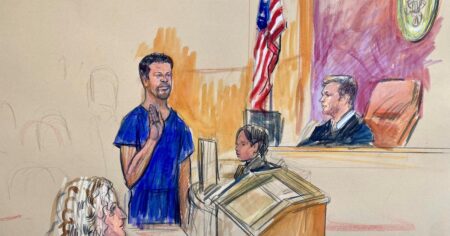
At the December 2025 sentencing hearing, Prosecutor Nichols called David Wiley to testify. Wiley recounted Terry’s confession from 1999, admitting that when police questioned him back then, he had lied and kept Terry’s secret. Now, twenty-five years later, he regretted that choice—he was tired of living with the guilt and wished he had come forward immediately. Tiffani found his testimony frustrating; all those years of searching for answers while Wiley held the truth “right in your back pocket” felt like a cruel betrayal. When Tiffani took the stand, she carefully avoided looking at Terry Rose, fearing she wouldn’t be able to speak if she made eye contact. She described feeling lost without her mother, the person she went to for everything, and expressed her hope that Terry would receive the full forty-year sentence, though she acknowledged no number of years would truly make things right.
The judge also heard a recorded jail phone call between Terry and his son that revealed Terry’s callous attitude. He described the murder as simply having “a bad day” and dealing with it wrong—certainly not the words of someone who felt genuine remorse. Even more disturbing, father and son joked about hoping Tiffani would die young, with Terry saying it would be “sweet” and offering to send a cup of his urine to pour on her grave. Judge Raquel West was appalled, pointing out that someone who kills a person they once cared about, buries them in their house, and lives on top of them for twenty-five years fits the very definition of a psychopath. She admitted to regretting accepting the plea agreement, believing a jury would have given Terry life or ninety-nine years in prison. Nevertheless, she sentenced him to forty years in the Texas Department of Corrections.
Tiffani delivered her victim impact statement directly to Terry Rose, staring at him as she spoke to ensure he heard every word. She listed the milestones her mother had missed—sixteenth and eighteenth birthdays, high school graduation, and countless other moments all shadowed by Kim’s absence. She challenged Terry’s characterization of the day he murdered her mother as simply “a bad day,” pointing out that his bad day had cost her everything. When asked if she had anything more to say to Terry Rose, Tiffani’s response was simple: she had said everything she needed to say, and she hoped he would rot in jail. Now, when she thinks about her mother, Tiffani tries to focus on the good times—Kim’s humor, her strength, and the love they shared. She believes her mother deserves to be remembered for how she lived, not how she died, and keeping her memory alive is the greatest tribute she can offer to a woman who was taken far too soon.