


Democratic Party Divisions Over Israel Take Center Stage in Michigan Senate Race
A Controversial Campaign Partnership Sparks Debate
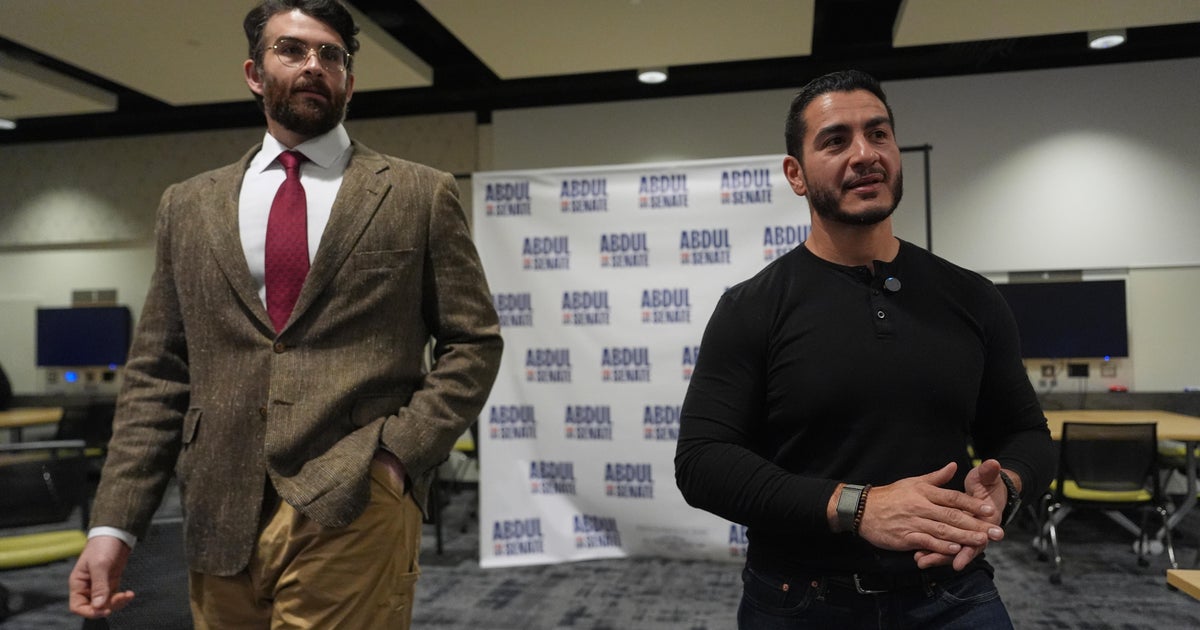
The deep rifts within the Democratic Party over U.S. policy toward Israel came into sharp relief this week when Abdul El-Sayed, a progressive candidate running for Senate in Michigan, brought left-wing political streamer Hasan Piker along on his campaign trail. The pair appeared together at Michigan State University and the University of Michigan in events that drew approximately 1,200 attendees combined. This decision has ignited a firestorm of criticism from across the political landscape, highlighting how Israel-Palestine policy has become one of the most divisive issues facing Democrats today. Piker, who commands an audience of over three million followers on the streaming platform Twitch, has built his reputation through marathon broadcasting sessions that can stretch beyond ten hours, cultivating a devoted following among young, progressive men. His inflammatory comments about the Israel-Hamas conflict, including statements about the October 7th terrorist attacks and sexual assault allegations from that day, have made him a lightning rod for controversy. Yet for El-Sayed, partnering with Piker represents a calculated gamble to energize a demographic that feels increasingly alienated from mainstream Democratic politics.
El-Sayed Defends His Choice Against Washington Critics
When asked about the backlash before the Michigan State event, El-Sayed didn’t back down from his decision. Instead, he reframed the controversy as emblematic of everything wrong with Washington politics. “The fact that this is the controversy to me says everything we need to know about what D.C. focuses on,” El-Sayed told CBS News. “I don’t pay much attention to D.C. I pay attention to Michigan.” His response reflects a broader frustration among progressive candidates who feel the Democratic establishment is out of touch with the economic anxieties facing everyday Americans. El-Sayed pivoted quickly from questions about Piker to what he sees as the real issues: “Here in Michigan, people can’t afford to fill up a tank because of the war that’s being fought out of D.C. and have to suffer.” He also criticized President Trump’s volatile rhetoric regarding Iran, including tweets about “genocidal fantasies” and trivial matters like building drapes. For El-Sayed, the focus should be on “reaching out to people who feel locked out of our politics because they cannot afford the basic needs of a dignified life.” This populist messaging resonates with a segment of voters who prioritize kitchen-table economics over foreign policy considerations, even as his opponents argue that moral leadership on issues like antisemitism cannot be separated from domestic concerns.
A Three-Way Primary Race Defined by Israel Policy
El-Sayed faces two Democratic opponents in the August primary, each representing different approaches to Israel-Palestine policy. Representative Haley Stevens has positioned herself as the most pro-Israel candidate in the race, accepting support from the American Israel Public Affairs Committee (AIPAC) and appearing in videos advocating for continued strong U.S.-Israel relations. On the other hand, state Senator Mallory McMorrow has staked out middle ground, joining El-Sayed in characterizing the conflict in Gaza as genocide and pledging not to accept AIPAC donations, yet sharply criticizing El-Sayed’s association with Piker. McMorrow told Jewish Insider that Piker “is not somebody that you should be campaigning with at a moment when there is clearly a lot of pain and trauma across our state.” She went further, comparing Piker to white nationalist Nick Fuentes as “somebody who says extremely offensive things in order to generate clicks and views and followers.” Stevens called the campaign partnership “unacceptable,” while other establishment voices, including the Anti-Defamation League and the center-left organization Third Way, have also condemned El-Sayed’s decision. These criticisms underscore the delicate balance Democrats must strike between supporting Israel’s security and acknowledging Palestinian suffering, a balance that becomes even more complicated in Michigan, which has the largest concentration of Arab, Muslim, and Palestinian Americans in the United States.
Michigan’s Unique Political Landscape and Shifting Electoral Dynamics
Understanding the strategic calculation behind El-Sayed’s campaign decisions requires appreciating Michigan’s distinctive demographics. The state, particularly cities like Dearborn, has the highest concentration of Arab, Muslim, and Palestinian Americans anywhere in the country. This population has traditionally voted Democratic but has shown increasing disillusionment with the party’s Israel policy. The numbers tell a striking story: in 2020, President Joe Biden captured 69% of the vote in Dearborn, a city with an Arab-majority population. Just four years later, Vice President Kamala Harris managed only 36% of Dearborn voters. This 33-point collapse represents one of the most dramatic electoral shifts in recent American politics and serves as a warning sign for Democrats who take these communities for granted. The appearance of both progressive Representative Rashida Tlaib, whose district includes Dearborn, and moderate Representative Debbie Dingell, whose district includes Ann Arbor, at the University of Michigan event demonstrates that criticism of U.S. Israel policy cuts across the progressive-moderate divide in Michigan. For candidates like El-Sayed, energizing these voters isn’t just about moral positioning—it’s an electoral necessity in a state where margins are often razor-thin.
Young Voters Respond to Unconventional Political Engagement
Attendees at the Michigan State and University of Michigan events revealed why El-Sayed’s strategy might be working, at least with younger progressive voters. Joey Conroy, a sophomore at Michigan State, told CBS News he specifically wouldn’t support candidates accepting AIPAC money. “I think a lot of people have not been comfortable speaking out against things that are happening abroad like in Iran and Palestine, actions I don’t support as a voter,” Conroy explained. “So, seeing people who will speak out against that, like El-Sayed, speaking out directly about what’s happening in Palestine, is really encouraging and I want to support more of that.” Anna Gonzales of Grand Rapids called El-Sayed’s decision to campaign with Piker “smart” because it engages left-wing voters who often feel abandoned by the Democratic Party. “I think one of the mistakes that the Democratic Party makes is estranging the left,” Gonzales said. “They really cater toward more moderate voters and a lot of pro-Israel supporters. I think that they lose a lot of us on the left when they do that.” Her son Ezekiel, in his late 20s, pointed out what he sees as a double standard: Democratic leaders appear willing to engage with conservative platforms like Theo Von’s and Joe Rogan’s podcasts but draw the line at progressive streamers like Piker. “When we see people like Corey Booker say, ‘I draw the line at Hasan Piker,’ it really shows the priority of the Democratic Party and the establishment on the left not wanting to be progressive,” Ezekiel observed. For these voters, Piker represents authenticity and a willingness to challenge conventional wisdom, qualities they find sorely lacking in traditional political figures.
The Broader Implications for Democratic Party Politics
The controversy surrounding El-Sayed’s campaign appearances with Hasan Piker reflects much larger questions facing the Democratic Party as it searches for a path forward. During Tuesday’s rally, Piker himself addressed the criticism directly, arguing that “a lot of prominent Democrats spent the last two weeks, instead of developing the appropriate response to Donald Trump’s mania, chose to repeat what corporate donors and foreign lobbyists and big donors had told themselves, including, but not limited to, Abdul El-Sayed’s opponents, Mallory McMorrow and Haley Stevens.” This framing—that establishment Democrats are more responsive to donors than to grassroots concerns—resonates with progressive voters who feel the party has drifted away from its working-class roots. The timing of these events, which occurred before President Trump announced a two-week ceasefire with Iran (following his threatening tweet that “a whole civilization will die tonight”), adds another layer of complexity to the debate about appropriate foreign policy discourse. As Democrats grapple with how to reach young voters, working-class voters, and diverse communities increasingly skeptical of traditional political messaging, candidates like El-Sayed are experimenting with unconventional approaches. Whether partnering with controversial internet personalities proves to be a winning strategy or a political liability will ultimately be decided by Michigan voters in August. What’s clear is that the Democratic Party’s internal divisions over Israel-Palestine policy, donor influence, and engagement with new media cannot be papered over with vague appeals to unity. These fundamental disagreements about values, priorities, and political strategy will continue shaping Democratic primaries nationwide, with Michigan serving as a crucial testing ground for competing visions of the party’s future.