

Democrats Demand Action on Insider Trading in Prediction Markets
Growing Concerns Over Government Officials’ Market Activity
In a significant move that highlights growing concerns about the integrity of financial markets and government ethics, more than 40 Democratic lawmakers from both the U.S. Senate and House of Representatives have united to address what they see as a troubling gap in regulatory oversight. These elected officials have formally requested that federal regulators and ethics watchdogs issue clear warnings to government employees about the illegality of insider trading in an emerging financial sector: prediction markets. The lawmakers are particularly concerned about platforms like Polymarket and Kalshi, where users can essentially place bets on real-world events, including government actions, political outcomes, and other newsworthy developments. The core argument presented by these Democrats is straightforward but potentially far-reaching: if government officials use confidential information they’ve gained through their positions to profit from bets on these platforms, they’re engaging in insider trading—the same illegal activity that’s prohibited in traditional stock markets.
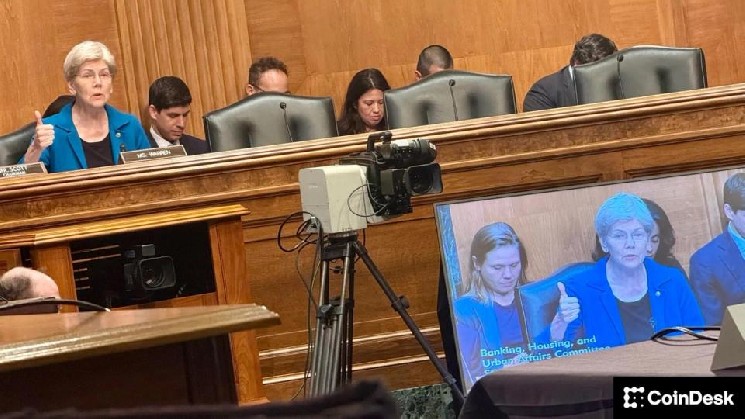
The letter, which represents a coordinated effort across multiple committees and jurisdictions, was spearheaded by some of the Democratic Party’s most prominent voices on financial regulation and government ethics. Senator Elizabeth Warren, who serves as the ranking Democrat on the Senate Banking Committee and has built much of her political career on consumer protection and financial accountability, joined forces with Senator Cory Booker, the ranking Democrat on the Senate Agriculture Committee, to lead this initiative. These two influential senators were joined by dozens of their colleagues who share concerns about potential abuse of government position for personal financial gain. Their joint letter was addressed to two key officials: Mike Selig, who chairs the Commodity Futures Trading Commission (CFTC), and the leadership of the U.S. Office of Government Ethics. The specific request is for these regulatory bodies to distribute comprehensive, executive branch-wide guidance that would make crystal clear that federal employees are absolutely prohibited from engaging in insider trading activities on prediction market platforms, just as they would be prohibited from such activities in traditional financial markets.
Suspicious Trading Patterns Spark Investigation
What prompted this coordinated congressional action wasn’t merely theoretical concern about potential abuse—it was a series of suspicious trading patterns that have raised red flags throughout the regulatory and political community. According to the lawmakers’ letter, there have been multiple instances where betting contracts on prediction market platforms related to government or military actions appeared to attract wagers from individuals who seemed to possess special, non-public knowledge about the likely outcomes of these events. This pattern has led many observers, analysts, and now lawmakers to believe that government officials themselves—or individuals closely connected to them—may have been using confidential information obtained through their official positions to place profitable bets on these platforms. Under existing U.S. derivatives law, it is explicitly illegal for government officials to make trades based on non-public, confidential information they’ve acquired through their government work. The lawmakers argue that since the CFTC has officially classified the contracts offered by prediction market platforms as regulated derivatives—essentially financial instruments similar to futures and options contracts—the same insider trading prohibitions that apply to traditional financial markets should logically and legally apply to these newer platforms as well.
The March 29 letter didn’t speak in vague generalities but rather pointed to specific, concrete examples that illustrate why the lawmakers believe immediate regulatory action is necessary. “We ask that the CFTC and OGE issue guidance reminding federal employees of their existing legal obligation to refrain from using their insider governmental information to profit from prediction market trades,” the letter stated explicitly. The examples cited paint a troubling picture of the breadth of potential abuse: contracts related to military actions involving Venezuela and Iran—the kind of sensitive national security matters where government officials would obviously have advance knowledge; a contract on the length of a speech to be given by President Donald Trump’s press secretary—seemingly trivial but indicative of how any government information might be exploited; and contracts related to the firing of former Department of Homeland Security Secretary Kristi Noem—a personnel decision that would have been known to insiders before the public announcement. These examples span national security, routine government communications, and high-level personnel decisions, suggesting that the potential for abuse extends across virtually all areas of government operations.
Bipartisan Regulatory Oversight and Political Implications
The letter garnered support from Democrats serving on the committees most directly responsible for overseeing financial markets and the agencies that regulate them. Beyond Senators Warren and Booker, the letter was also signed by Representative Angie Craig, who serves as the top Democrat on the House Agriculture Committee, and Representative Maxine Waters, who holds the same position on the House Financial Services Committee. This lineup of signatories is particularly significant because the agriculture committees in both the Senate and House are the panels with direct oversight responsibility for the Commodity Futures Trading Commission. By having the ranking members from both chambers sign onto this letter, the Democrats are sending a clear message that this isn’t just a concern for one committee or one chamber—it’s a priority for Democratic leadership across the legislative branch’s financial regulatory apparatus. The involvement of these specific lawmakers also ensures that the request will carry weight with the agencies being petitioned, as these are the very members of Congress who will be questioning agency officials during oversight hearings and who have significant influence over the agencies’ budgets and statutory authorities.
The timing of this letter is particularly interesting given the broader regulatory landscape surrounding prediction markets and related technologies. Chairman Selig’s CFTC has been actively working on developing a comprehensive new framework of policies specifically designed to govern prediction markets—a relatively new and rapidly growing sector that exists at the intersection of gambling, financial markets, and information gathering. These prediction market businesses have become closely intertwined with the cryptocurrency industry, as many of them utilize blockchain technology and cryptocurrency payments, and some are even exploring the use of decentralized prediction market protocols. This connection to crypto is significant because it’s an area of intense focus for many of the lawmakers who signed this letter, several of whom are also actively involved in efforts to pass the Digital Asset Market Clarity Act, comprehensive cryptocurrency legislation that has been pending in the Senate but has faced obstacles to passage. The intersection of prediction markets, cryptocurrency regulation, and government ethics creates a complex web of policy concerns that these lawmakers are attempting to address through multiple legislative and regulatory channels.
Federal Prosecutors Enter the Picture
Adding another layer of urgency and significance to the situation, news emerged on the same day as the letter’s release that federal prosecutors have reportedly begun speaking with prediction market companies about whether certain trading patterns and instances they’ve observed could potentially form the basis for insider trading prosecutions. This development transforms the issue from a merely theoretical concern or a matter of preventive ethics guidance into an active law enforcement matter. The fact that prosecutors are already investigating suggests that the patterns identified by lawmakers and market observers may be substantial enough to warrant criminal investigation, not just administrative or ethics reviews. For the prediction market companies themselves, this presents a challenging situation—they must cooperate with law enforcement while also maintaining their business operations and protecting their users’ privacy to the extent legally permissible. For government employees who may have engaged in questionable trading activity, the involvement of federal prosecutors raises the stakes considerably, transforming what might have been an ethics violation or administrative matter into potential criminal liability.
The Broader Implications for Government Ethics and Market Integrity
This coordinated effort by Democratic lawmakers raises fundamental questions about how government ethics rules must evolve to address new technologies and new forms of financial markets. Traditional insider trading law was developed primarily with stock markets in mind—preventing corporate executives, lawyers, accountants, and others with access to material non-public information from profiting at the expense of ordinary investors who lack such access. The extension of these principles to prediction markets represents a logical evolution but also presents unique challenges. Unlike stock markets, which are primarily about the financial performance of companies, prediction markets explicitly invite speculation on government actions, political outcomes, and current events—precisely the areas where government officials have the most privileged information. This creates an unusually large and diverse population of potential “insiders” who might be tempted to profit from their knowledge. The lawmakers’ letter essentially argues that the same ethical principles and legal prohibitions must apply regardless of the market structure or technology involved: government officials should not profit personally from information they’ve gained through their public service. This principle, if enforced effectively, could help maintain public trust in both government institutions and in these emerging financial markets, ensuring that prediction markets serve their stated purpose of aggregating public information rather than becoming vehicles for those with privileged access to exploit their positions for personal gain.