
The Attempted Assassination at the White House Correspondents’ Dinner: A Detailed Account
A Carefully Planned Journey Across America
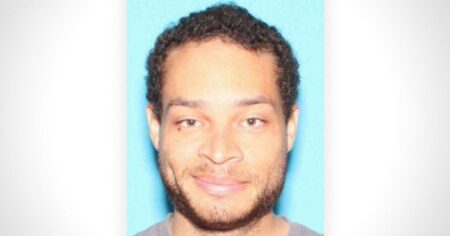
The shocking events that unfolded at the White House Correspondents’ Dinner on a Saturday evening have revealed a disturbing picture of premeditation and planning. Cole Allen, the man now facing federal charges for attempting to assassinate President Trump, didn’t just wake up one day and decide to carry out this attack. According to newly released court documents, Allen’s preparation began years earlier when he purchased a pistol from a California firearms dealer in October 2023. He later acquired a 12-gauge pump action shotgun in August 2025 from a different dealer. These weren’t impulsive purchases—they were part of a plan that would eventually lead him on a cross-country train journey from the West Coast to the nation’s capital. The FBI’s detailed affidavit paints a picture of someone who methodically prepared for this moment, reserving a hotel room at the Washington Hilton on April 6 for three nights, fully aware that this historic hotel would be hosting one of Washington’s most prestigious annual events.
The Cross-Country Trek to Washington
Allen’s journey to Washington, D.C., reads like something from a thriller novel, except this was frighteningly real. On April 21, he departed from Los Angeles by train, beginning what would be a multi-day trek across the American heartland. Two days later, on April 23, he arrived in Chicago, where he transferred to another train bound for the nation’s capital. This wasn’t the quickest way to travel—a flight would have gotten him there in hours rather than days—but perhaps the slower, more anonymous nature of train travel suited his purposes. He arrived in Washington on Friday afternoon around 1 p.m., giving himself plenty of time to check into the Hilton and prepare for what he planned to do the following evening. The fact that he chose train travel over flying might suggest he was concerned about the additional security screening at airports, or perhaps he simply wanted to avoid creating a digital trail that might raise red flags before he could carry out his plan.
The Night Everything Changed
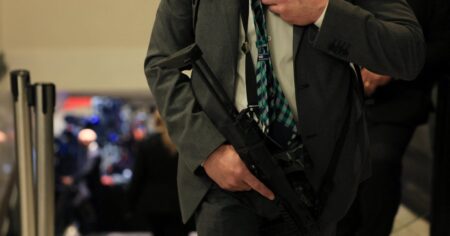
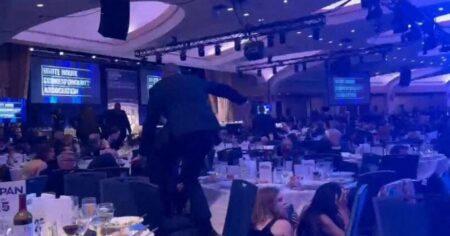
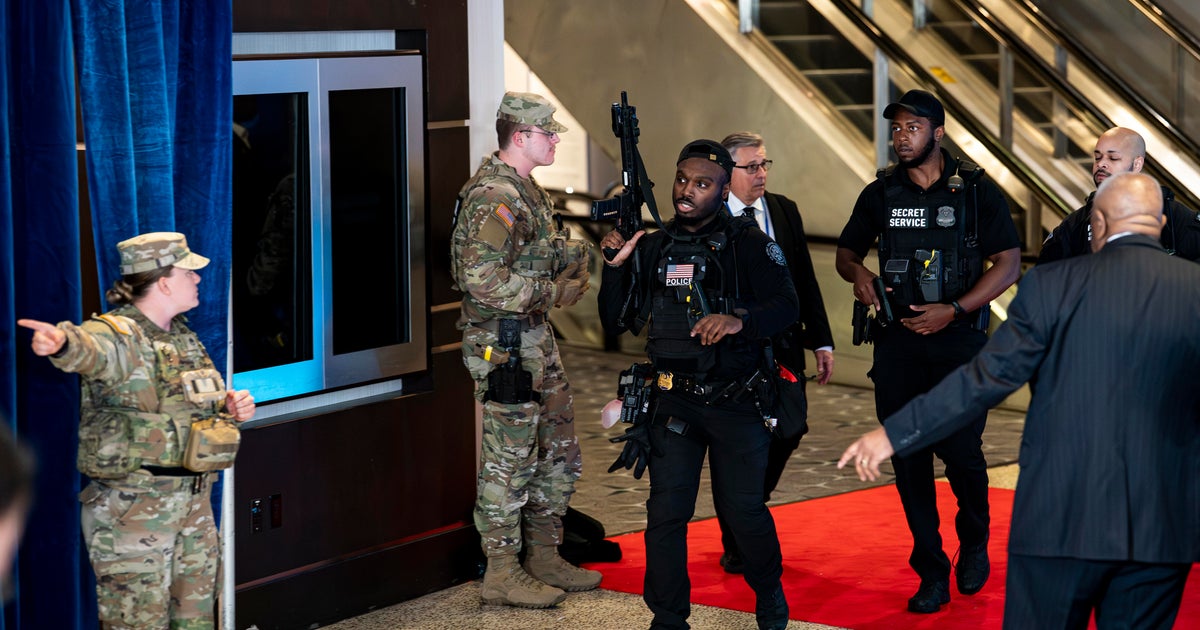
The White House Correspondents’ Dinner is typically an evening of celebration, bringing together more than 2,500 members of the media, political establishment, and entertainment industry in a glittering display of Washington’s power and influence. This year was no different, with President Trump, Vice President JD Vance, Cabinet officials, lawmakers, journalists, and media executives all gathering in the ballroom. The president had publicly announced his intention to attend on Truth Social back in March, which prosecutors believe gave Allen all the information he needed to know exactly where and when he could find his target. At approximately 8:40 p.m.—though CBS News footage and C-SPAN cameras suggest it may have been closer to 8:34 p.m.—Allen made his move. According to the FBI affidavit, he approached the security checkpoint carrying a long gun and then ran through the magnetometer. The carefully orchestrated security that surrounds any event attended by the President of the United States was suddenly shattered by the sound of gunfire echoing through the hotel.
Chaos and Quick Response
In those terrifying moments, Secret Service personnel stationed at the checkpoint heard a loud gunshot, and chaos erupted. A Secret Service officer, identified in court documents only as “Officer V.G.,” was struck once in the chest. Fortunately, the officer was wearing a ballistic vest, which likely saved his life. The affidavit describes how Officer V.G. drew his weapon and fired multiple times at Allen, who fell to the ground. Acting Attorney General Todd Blanche later told reporters that it appears law enforcement fired five shots in total during the incident. However, in a notable detail, the affidavit doesn’t specify who actually fired the shot that hit Officer V.G.—whether it came from Allen’s weapon or possibly from friendly fire in the confusion. Blanche acknowledged this uncertainty when he declined to confirm the source of that shot, telling reporters, “We want to get that right, so we’re still looking at that.” What is clear is that Allen himself was not shot, despite falling to the ground and suffering what were described as minor injuries. The swift response of the Secret Service prevented what could have been a national tragedy of unprecedented proportions.
The Digital Trail and “Manifesto”
Like many who commit or attempt to commit acts of public violence, Allen apparently felt compelled to explain his actions. The FBI affidavit reveals that shortly before 8:40 p.m.—just as Allen was storming the security checkpoint—a scheduled email was sent to his family and a former employer. Authorities have described this email as a “manifesto” explaining the attack. Allen signed this communication with an unusual signature: “Cole ‘coldForce’ ‘Friendly Federal Assassin’ Allen.” The FBI agent who wrote the affidavit noted that Allen had used the name “cold force” in multiple online accounts associated with him, suggesting this was an online persona he had cultivated over time. The email included an attached file titled “Apology and Explanation,” the contents of which are detailed in the court filings. Beyond this digital communication, authorities also discovered writings at Allen’s home in Torrance, California, and in his hotel room on the 10th floor of the Washington Hilton, though the specific details of these additional messages were not included in the public court documents. These writings will likely become crucial evidence as prosecutors build their case.
The Aftermath and Legal Proceedings
Thanks to the swift action of the Secret Service and other law enforcement personnel, the evening that could have ended in catastrophe instead ended with President Trump, Vice President Vance, and all the other attendees safely evacuated from the ballroom without injury. Officer V.G., despite being shot in the chest, has since been released from the hospital and is recovering. Allen now faces three serious federal charges: discharging a firearm during a violent crime, transporting a firearm in interstate commerce with intent to commit a felony, and attempting to assassinate the president. He made his initial appearance in federal court on Monday, where the criminal complaint and the seven-page FBI affidavit were unsealed to the public. These charges carry severe penalties and will likely keep Allen in federal custody for the foreseeable future as the case proceeds through the justice system. The incident has raised serious questions about security protocols at high-profile events, even those with extensive Secret Service protection. It serves as a sobering reminder that despite all the planning, screening, and security measures in place, determined individuals can still pose serious threats to our nation’s leaders and the fundamental freedoms—like freedom of the press—that events like the White House Correspondents’ Dinner are meant to celebrate.