
President Trump Breaks Silence After White House Correspondents’ Dinner Attack
The Terrifying Night That Shook Washington
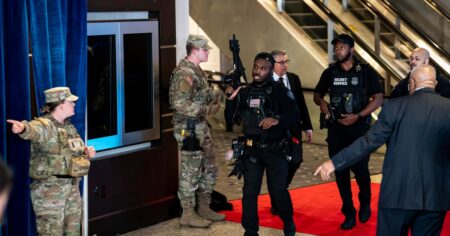
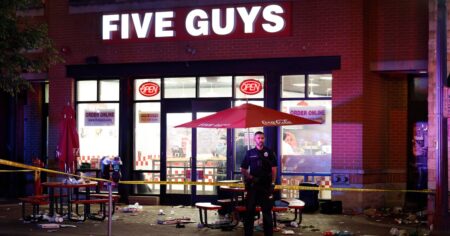
In what should have been an evening celebrating journalism and the First Amendment, the White House Correspondents’ Dinner at the Washington Hilton turned into a scene of chaos and fear. The day after a gunman attempted to breach the event where President Trump was in attendance, the president sat down with CBS News correspondent Norah O’Donnell for a revealing “60 Minutes” interview. The conversation covered everything from those terrifying moments when shots rang out to the suspect’s disturbing writings and the president’s determination not to let violence silence important American traditions. Cole Allen, a 31-year-old graduate from the prestigious California Institute of Technology, now faces federal charges after being apprehended at the scene. What makes this incident particularly chilling is the premeditation involved—shortly before attempting his attack, Allen sent what authorities are describing as a “manifesto” to his family members, outlining his intention to target Trump administration officials in a hierarchical manner, “prioritized from highest-ranking to lowest.”
Confronting the Gunman’s Disturbing Words
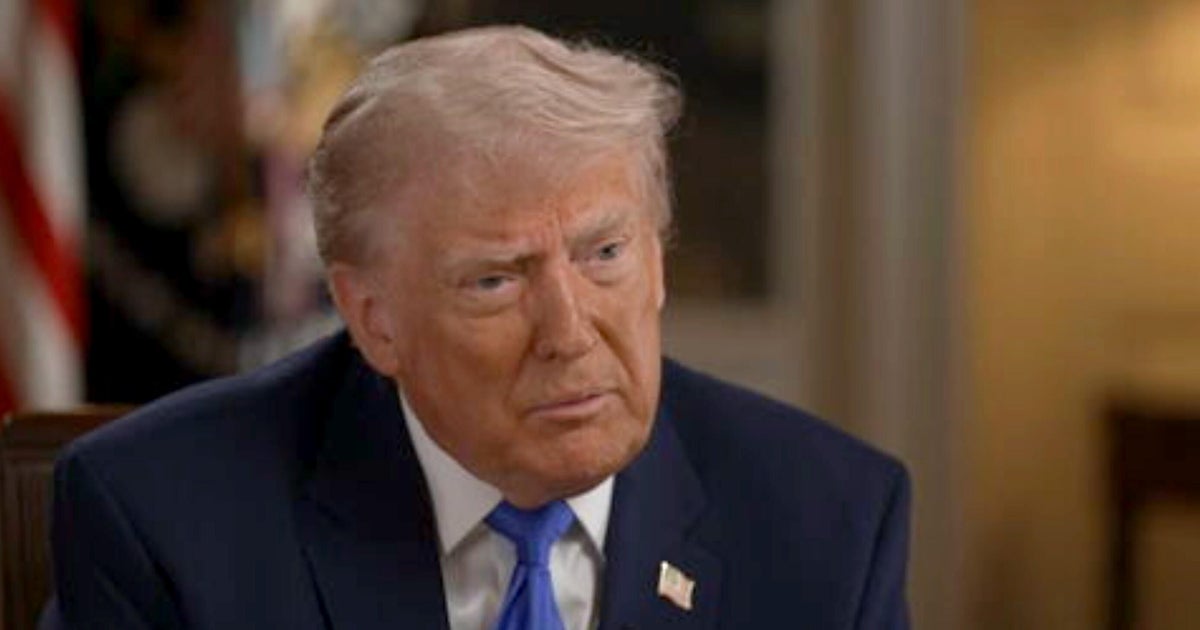
The interview took a contentious turn when O’Donnell broached the subject of Allen’s manifesto, which contained explosive accusations against unnamed administration officials. Reading directly from the document, O’Donnell quoted the suspect’s words: “Administration officials, they are targets,” and perhaps most disturbing, “I am no longer willing to permit a pedophile, rapist, and traitor to coat my hands with his crimes.” The president’s reaction was immediate and defensive, though notably the manifesto never mentioned him by name. Trump’s response revealed both his frustration with the media and his interpretation that these accusations were directed at him personally. “Well, I was waiting for you to read that because I knew you would,” Trump told O’Donnell, adding, “you’re horrible people.” He proceeded to directly address each allegation, stating emphatically, “I’m not a rapist. I didn’t rape anybody,” and “I’m not a pedophile.” The president characterized Allen as “a sick person” and accused the interviewer of being “a disgrace” for reading the manifesto’s contents on national television, despite these being the actual words that apparently motivated an attack on an event he was attending. Trump also referenced what he called his total exoneration and suggested that “your friends on the other side” had connections to controversial figures, deflecting the conversation away from the direct threat he had just faced.
Inside Those Terrifying Moments
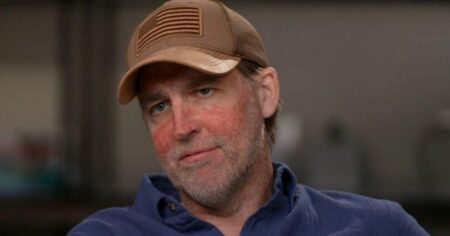
When O’Donnell pressed the president about the actual moments when danger struck, asking how he and First Lady Melania Trump responded when loud bangs erupted just outside the ballroom packed with journalists and officials, Trump’s answer was characteristically understated: “I wasn’t worried. I understand life. We live in a crazy world.” This matter-of-fact response seems almost surreal given that everyone else in the room hit the floor when they heard what they feared were gunshots. The president provided more details about those crucial seconds, explaining that he was sitting next to the First Lady while entertainer Oz Pearlman, known professionally as “The Mentalist,” was speaking with them when things went wrong. Trump noted that viewers could actually see the change in the First Lady’s expression as she realized something was amiss, stating, “In fact, you can see the expression on the first lady’s face.” When asked directly if his wife was scared, the president showed a rare moment of protective restraint, saying, “I don’t wanna say, and people don’t like having it said that they were scared,” before acknowledging the obvious: “But certainly, I mean, who wouldn’t be when you have a situation like that?” He revealed that Melania likely realized before he did that they were hearing bullets rather than a dropped serving tray, and having reviewed the footage before the interview, he observed that she “looked very upset about what just took place, you know? Why not?”
The Secret Service Response and Presidential Resistance
The mechanics of the Secret Service response provide a fascinating glimpse into how protective details handle such emergencies. According to the timeline Trump provided, it took approximately ten seconds for Secret Service agents to completely surround the president and about twenty seconds total to remove him from the stage—an impressively quick response by any measure. However, Trump’s account also reveals something about his personality and perhaps his approach to danger: he didn’t make it easy for his protectors. “Well, what happened is—it was a little bit me. I wanted to see what was happening, and I wasn’t making it that easy for ’em,” the president admitted. “I wanted to see what was going on. And by that time we started to realize maybe it was a bad problem.” This reluctance to immediately comply with security protocols, this desire to assess the situation himself rather than simply trusting his detail’s judgment, speaks to a certain mindset—whether you interpret it as courage, stubbornness, or something in between likely depends on your perspective. Trump also drew a distinction between his reaction and the First Lady’s, noting his previous experience with similar situations: “Well, my thought was, ‘You know, I’ve been through this before a couple of times.’ And—she has not to this extent.” Despite this being new territory for her, Trump praised his wife’s composure: “She handled it great. I mean, she’s very strong, smart. She got it. She knew what was happening.”
Refusing to Let Violence Win
Perhaps the most significant policy statement to emerge from the interview was Trump’s firm stance on rescheduling the dinner rather than canceling it. This position represents something larger than just one event—it’s about the principle of not allowing violent actors to dictate which American traditions continue and which are abandoned out of fear. “I don’t want to see it be canceled,” Trump stated clearly. “I don’t want to have a crazy person—I think it’s really bad for a crazy person to be able to cancel something like this.” This was particularly meaningful given that Saturday night’s dinner was the first White House Correspondents’ Dinner Trump had agreed to attend as president—a significant olive branch to an institution and press corps with which he has had a famously contentious relationship. Despite everything that happened, despite the fear and chaos, the president called for the event to be rescheduled within thirty days. He acknowledged that enhanced security measures would be necessary—”they’ll have even more security, and they’ll have bigger perimeter security”—but insisted the show must go on. Trump even acknowledged positive aspects of the press, saying, “There are great people in the press too,” though he couldn’t resist adding a jab about not wanting to “embarrass your show” by naming them, and characterizing the press corps as predominantly “very liberal or very progressive.”
The Bigger Picture and What Comes Next
This incident and the interview that followed raise profound questions about security, rhetoric, political violence, and the state of American public life. Cole Allen’s profile—a highly educated professional from a respected institution—challenges simple narratives about who commits political violence and why. His manifesto, with its specific targeting strategy and inflammatory accusations, represents the dangerous endpoint of a political culture where the temperature has been turned up to maximum on all sides. Trump’s defensive reaction to having the manifesto’s contents read to him, even while correctly noting that the writer was disturbed, also highlights the challenge of discussing political violence in our current environment, where everything becomes instantly partisan and defensive. The fact that the First Lady’s frightened expression will be analyzed and re-analyzed, that ten or twenty seconds of Secret Service response time becomes part of the public record, that a celebration of press freedom becomes a crime scene—all of this speaks to how thoroughly abnormal our political moment has become, even as participants like Trump characterize their lack of worry with phrases like “we live in a crazy world,” as if mass casualty events at journalism dinners are just part of the landscape now. Yet there’s something admirable in the determination not to cancel, not to let fear win, to reschedule and return with better security rather than abandoning the tradition entirely. Whether the White House Correspondents’ Association will indeed reschedule within Trump’s suggested thirty-day timeline remains to be seen, but the conversation itself—contentious, uncomfortable, revealing—represents exactly the kind of press-government interaction the dinner is meant to celebrate, even when that interaction involves a president calling an interviewer “disgraceful” for quoting a would-be attacker’s words.