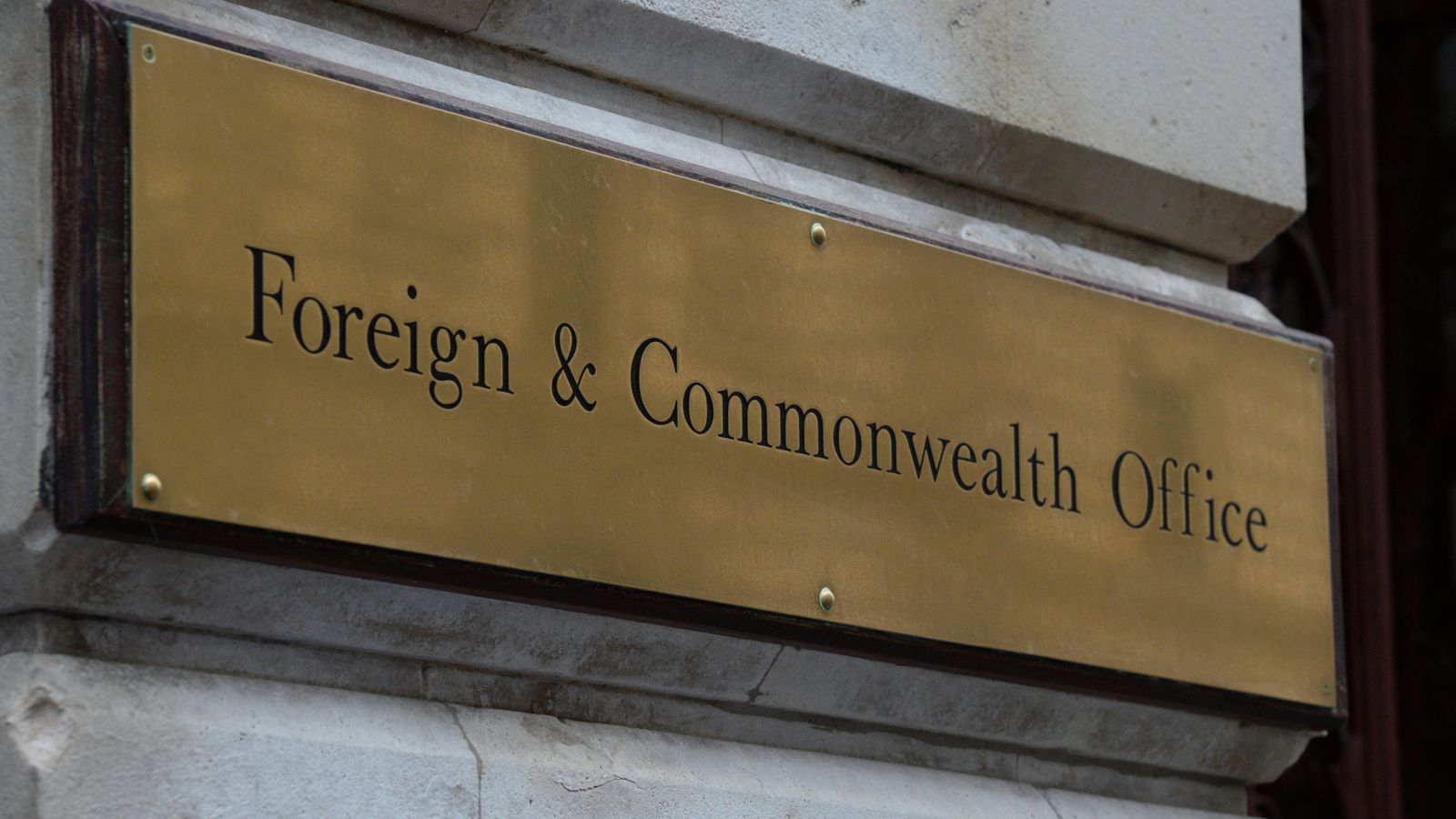

Britain’s Foreign Office Faces Massive Job Cuts Amid Rising Global Threats
A World Growing More Dangerous by the Day
When you look around at the state of the world today, it’s hard not to feel a creeping sense of unease. The global landscape that once seemed predictable and governed by established rules now feels chaotic and threatening. Long-standing alliances appear shaky, traditional norms are being challenged, and for many observers, the international community is becoming an increasingly frightening place to navigate. This isn’t merely pessimistic speculation—it’s a concern shared by those at the very top of Britain’s security apparatus. Blaise Metreweli, the head of MI6, Britain’s foreign intelligence service, recently delivered a sobering assessment, warning that “the frontline is everywhere.” Her speech highlighted the dangers posed by what she characterized as an “aggressive, expansionist” Russia, along with other hostile actors seeking to extend their influence and disrupt the established order. This stark warning has been echoed by military leaders across the British defense establishment. Richard Knighton, the chief of the British defence staff, put it bluntly: “The situation is more dangerous than I have known during my career,” adding that addressing these threats “requires more than simply strengthening our armed forces.” The message is clear—Britain faces a multifaceted challenge that demands a comprehensive response involving all instruments of national power, including diplomacy and intelligence.
The Foreign Office: Britain’s First Line of Defense
In this increasingly hostile environment, the specialists working at Britain’s Foreign, Commonwealth and Development Office (FCDO) represent a crucial component of the nation’s protective infrastructure. These are the diplomats, development experts, and regional specialists stationed in embassies and consulates around the world, working to advance British interests, gather intelligence, build relationships, and counter threats before they reach British shores. Foreign Secretary Yvette Cooper has publicly acknowledged the scale of the challenge, recently announcing the creation of a “state threats unit” alongside other initiatives designed to protect Britain from what she described as “escalating hybrid threats”—everything from cyberattacks and disinformation campaigns to economic coercion and political interference. The recognition at the highest levels of government that Britain faces unprecedented dangers makes recent decisions about the Foreign Office’s future all the more perplexing. While ministers publicly sound the alarm about growing threats, behind closed doors they’re implementing plans that will dramatically reduce the very workforce tasked with countering those dangers.
The Controversial FCDO 2030 Restructuring Plan
The Foreign Office is currently undergoing a major transformation under a restructuring initiative called FCDO 2030. This reorganization will result in approximately 2,000 job losses—representing up to 25% of the organization’s total workforce. Even more alarmingly, some London-based departments could see reductions of up to 40%, a truly staggering cut to institutional capacity. The human cost of these changes is already evident in the reports coming from within the organization. One employee described the atmosphere as “despondent, even mutinous,” with “very little trust in senior leadership.” Another compared the situation to The Hunger Games, the dystopian film where contestants fight to the death for survival—a metaphor for how staff members now feel forced to compete against colleagues for a shrinking number of positions. The PCS trade union, which represents Foreign Office employees, has been scathing in its assessment, describing the situation as “a mess” and noting that “we’ve seen no justification for these cuts and have yet to be told what work has been deemed disposable by senior leadership.” The disconnect is jarring: at the very moment when Britain’s security establishment is warning of unprecedented dangers, the government is gutting the diplomatic corps that forms a vital part of the country’s defense against those threats.
The Paradox of Cutting Expertise While Claiming to Rely on It
What makes this situation particularly bizarre is that senior Foreign Office leaders, including the minister responsible for international development, have explicitly stated that they will need to rely more heavily on staff expertise as they navigate significant budget cuts to international aid programs. Baroness Chapman, the development minister, told a parliamentary committee that “the shift from grants to expertise is quite fundamental,” arguing that Britain’s influence derives “not about the size of our programme… but much more about our diplomatic work, our political connections, the role we play in the multilateral space.” This represents a fundamental contradiction: claiming that diplomatic expertise and relationships are becoming more important while simultaneously slashing the workforce that provides that expertise and maintains those relationships. The importance of that diplomatic capacity has only increased as Britain’s international position has become more isolated and complex. The country can no longer automatically rely on collective action with European Union partners following Brexit, nor can it depend on the United States to advance British interests in the way it once could. Britain must now compete for influence and power largely on its own, making every diplomat, every regional expert, every established relationship more valuable than ever.
Leadership’s Defense and Parliamentary Pushback
The architect of these cuts, permanent under-secretary Sir Oliver Robbins, has defended the restructuring as following a mandate from former foreign secretary David Lammy, who reportedly viewed the Foreign Office as unfocused, top-heavy, and “not sufficiently strategic.” In testimony before Members of Parliament, Robbins acknowledged the concerns but seemed to accept that some of the organization’s most talented people would likely leave, saying “we are working incredibly hard to try to make sure that we hang on to as much of what I agree is the extremely experienced talent that we need, at various degrees of seniority.” That admission—that the Foreign Office is likely to lose significant expertise—has triggered fierce criticism from parliamentary oversight bodies. The International Development Committee described the cuts as “brutal” and, in an interim report, called for the plan to be “immediately paused.” Committee chair Sarah Champion warned that “lives will be put at risk, not to mention the real risk to the UK’s global reputation. Once prized FCDO expertise is lost, it will be lost for good.” According to sources, these parliamentary criticisms were dismissed at a recent “Town Hall” meeting between staff and senior leadership. A PCS union official expressed shock, saying “it is unheard of to ignore the recommendations of a parliamentary committee like this.” The government’s willingness to proceed despite such concerns suggests either supreme confidence in the restructuring plan or a disturbing indifference to expert opinion.
A Dangerous Path Forward
Perhaps the most devastating critique has come from Rory Stewart, a former minister who has emerged as one of the most vocal defenders of Britain’s diplomatic infrastructure. Stewart has pointed out that Britain’s foreign policy establishment has been deteriorating for years, noting that “in 2015 as we were destroying the Foreign Office and much of our overseas infrastructure, it was pathetic even then, even 10 years ago. The Foreign Office was half the size of the French equivalent. We spend more on Kent County Council than our foreign policy.” His comparison is striking—Britain dedicates more resources to governing a single English county than to conducting foreign policy across the entire world. Stewart argues that the current Labour government is continuing the same destructive approach pursued by previous administrations, warning that “we are creating a mad world where we have dismantled our soft power and somehow we believe we are going to be able to defend ourselves with a couple of aircraft carriers and nothing to protect them and some big nuclear weapons with nothing to surround them.” His point is that military hardware alone cannot protect national interests without the diplomatic relationships, intelligence networks, and cultural understanding that a robust foreign service provides. In response to these criticisms, a Foreign Office spokesperson offered the standard bureaucratic reassurance, stating that “the FCDO is transforming to be more agile and focused, so we can deliver for the UK in a rapidly changing world. This is part of wider government reforms to deliver for the British people and ensure value for money for the taxpayer, while retaining our world-leading expertise in diplomacy and development.” Whether Britain can actually retain that expertise while cutting a quarter of its workforce remains very much an open question—one with profound implications for the country’s security and standing in an increasingly dangerous world.