
The “Worst of the Worst” List: When Immigration Enforcement Goes Wrong
An Ordinary Worker Branded as a Dangerous Criminal
Telesforo Cerero-Palacios, a 53-year-old home renovator living in Minnesota, never imagined his face would appear on a government website labeled as one of the “worst of the worst” criminals in America. For years, he’d lived a quiet life, working hard to renovate homes and stay out of trouble. So when a relative called him in a panic after discovering his photo on the Department of Homeland Security’s public database of dangerous detained immigrants—listed alongside an accusation of “dangerous drugs”—he was completely blindsided. “What happened here? Why does their system say this about you?” he recalled thinking. The shock wasn’t just personal; it was public humiliation broadcast across the internet for anyone to see. This wasn’t a case of mistaken identity involving similar names—this was his actual photo, his actual information, tied to criminal allegations that he insists never happened. The confusion and fear that followed would consume his life for months, raising serious questions about how the government compiles and publishes information about immigrants in its custody.
The Reality Behind the Accusations
When ABC News began investigating Cerero-Palacios’s case, what they discovered was troubling. According to DHS’s own internal document—a “Record of Deportable/Inadmissible Alien” created when individuals are detained—Cerero-Palacios has no criminal history. The document, which ABC News reviewed in detail, painted a very different picture from what appeared on the public-facing website. An independent review of Minnesota criminal records found exactly what you’d expect from an average resident: some traffic tickets, a few parking violations, and one small claims case. Nowhere in these records was there any mention of drug-related charges or convictions. In an interview conducted in Spanish, Cerero-Palacios explained that he has never been accused of any drug offense in his entire life. The DHS document itself even noted that “CERERO claims and appears to be in good health and takes no medication. CERERO does not use narcotics.” It’s a remarkable detail—the very agency that branded him as involved with “dangerous drugs” had documentation in its own files explicitly stating he didn’t use narcotics.
How He Ended Up in Custody
The story of how Cerero-Palacios came to be detained reveals the sometimes arbitrary nature of immigration enforcement. On April 7, 2025, federal agents came to his home, but they weren’t looking for him—they were searching for a relative. When agents knocked on his door, Cerero-Palacios cooperated fully. During the encounter, agents asked him about his immigration status, and he answered honestly: he told them he was undocumented and didn’t have legal authorization to be in the United States. That admission led to his immediate detention. The DHS document corroborates this account, noting that deportation officers working alongside the Drug Enforcement Agency were conducting fugitive operations at his address when they interviewed him. There was no warrant for his arrest, no ongoing investigation into his activities—he simply happened to be home when agents came looking for someone else. The document does mention that in 1998—more than two decades ago—Cerero-Palacios was arrested for giving a police officer a false name, but even that case was dismissed in 2000. Despite this ancient, dismissed charge, DHS had apparently found him trustworthy enough to issue him non-immigrant visas three separate times, with the last one granted in 2015.
The Government’s Confusing Response
When ABC News reached out to Immigration and Customs Enforcement for clarification, the response only deepened the mystery. An ICE spokesperson cited the 1998 arrest for giving a false name but then made a puzzling claim: “The FBI number connected to this drug charge is linked to multiple aliases, including Telesforo Cerero-Palacios.” The spokesperson promised more information would follow shortly, but it never came. What drug charge were they referring to? If there was indeed a drug charge connected to an FBI number, why wasn’t it documented in the DHS’s own internal records about Cerero-Palacios? Why would the agency release him on bond after just 16 days if he was truly one of the “worst of the worst” drug offenders? His attorney, Gloria Contreras Edin, raised these exact questions: “They would have never released him if he had been a drug dealer. They would have never let him out on a bond and then I wonder how many other people are they doing that to.” Days after ABC News began asking pointed questions about the case, Cerero-Palacios’s profile quietly disappeared from the “worst of the worst” database. DHS never acknowledged the removal, never explained whether it was an error, and never responded to repeated requests for clarification. The silence speaks volumes about accountability—or the lack thereof.
The Personal Toll of Public Shaming
For Cerero-Palacios, the damage had already been done. After his attorney showed him that his face was plastered on a government website accessible to anyone with an internet connection, branding him as a dangerous drug offender, his entire life changed. “I was afraid to leave the home thinking that they might detain me again,” he told ABC News. For months, he limited his movements to just going to work and coming straight home, constantly looking over his shoulder. But the fear of re-arrest was only part of the problem. The public nature of the accusation devastated his reputation in his community. “Imagine how many others have seen my photo? My reputation is ruined, they’ll say ‘Oh, I thought he was a hard worker, but he’s involved with drugs,'” he explained. For someone who makes his living through word-of-mouth referrals as a home renovator, this kind of public branding could destroy his livelihood. Neighbors, potential clients, and community members who might have searched his name online would have found a government website declaring him a dangerous criminal. Even after his removal from the list, the damage to his reputation and mental health remains. Meanwhile, he still faces ongoing immigration proceedings with a hearing scheduled for April, the outcome of which could determine whether he’s allowed to remain in the country he’s called home for decades.
Broader Implications and Unanswered Questions
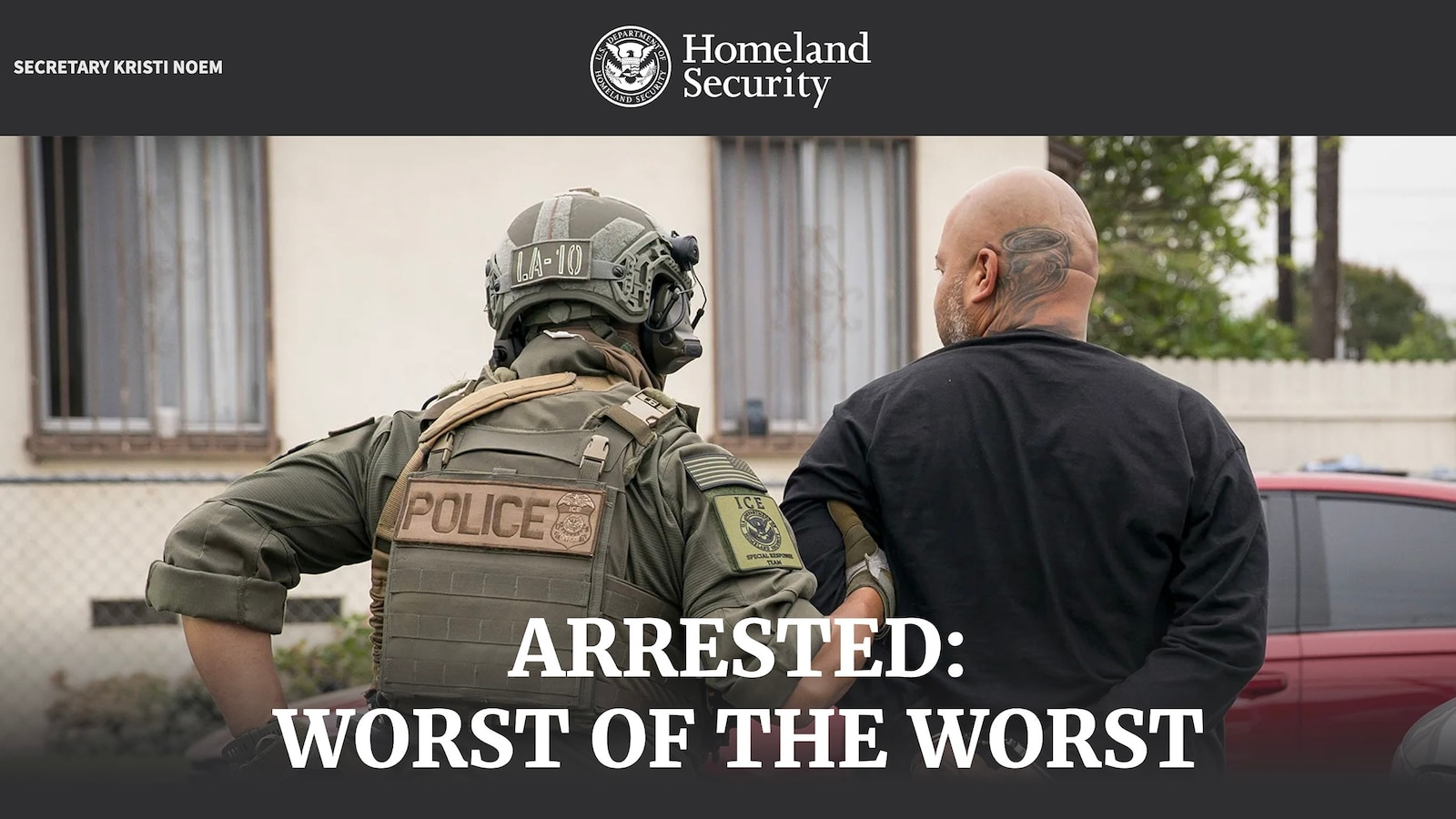
The case of Telesforo Cerero-Palacios raises troubling questions about the Department of Homeland Security’s “worst of the worst” database, which was launched in December with great fanfare. The agency promised the public could “search through some of the hundreds of thousands of criminal illegal aliens who have been arrested across all 50 states.” Since its launch, the database has grown to include more than 30,000 people, and DHS has used the information on the website to justify expanding immigration enforcement operations, including “Operation Metro Surge” in Minnesota—an operation during which two U.S. citizens were fatally shot by federal agents. If the government can’t accurately identify who actually has a criminal history and who doesn’t, what does that say about the reliability of this entire database? Gloria Contreras Edin obtained a letter from the Minnesota Bureau of Criminal Apprehension confirming that a comprehensive background search using her client’s fingerprints, name, and date of birth “indicates that no record was found.” She shared this with ABC News as evidence that the government’s claims were baseless. “I have to believe in my heart that it was an error or a mistake, but it’s such a significant error and such a significant mistake that it worries me that they may be doing this to other people,” she said. How many other people are incorrectly listed? How many lives have been upended by inaccurate information published by the federal government without proper verification? And what recourse do these individuals have when their faces and names are associated with crimes they never committed? These questions remain unanswered as DHS continues to maintain its database and expand its enforcement operations, all while refusing to address the documented errors that have already come to light.