
Wall Street Tumbles as Iranian Conflict Rattles Global Markets
Market Chaos Amid Growing Geopolitical Tensions
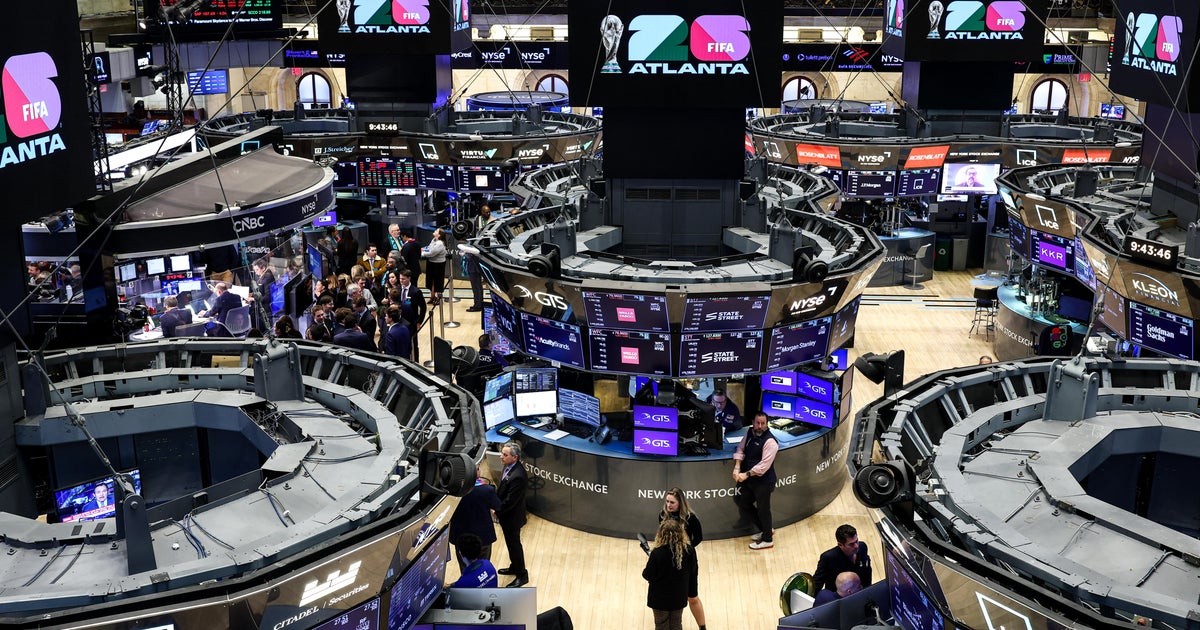
Tuesday morning brought a harsh wake-up call to American investors as stock markets experienced a dramatic sell-off in response to escalating military tensions with Iran. The financial carnage was immediate and severe—the Dow Jones Industrial Average nosedived by more than 1,200 points, representing a stomach-churning 2.5% decline that brought the index down to 47,670 points shortly after the opening bell. The broader S&P 500 wasn’t spared either, falling 2.2%, while the technology-focused Nasdaq Composite dropped 2.4%. This wasn’t just another day of market volatility; it was a clear signal that investors are genuinely worried about what comes next. The trading floor atmosphere reflected a palpable sense of anxiety as Wall Street professionals tried to make sense of how a conflict thousands of miles away could reshape the American economic landscape.
Carl Weinberg, the chief economist at High Frequency Economics, didn’t mince words when describing the situation to his clients. He characterized global financial markets as being “in disarray,” pointing directly at the military operations against Iran as the catalyst. The core concern isn’t just about the immediate military situation—it’s about what happens to the energy that powers the world economy. Weinberg highlighted that confidence in the continuity of energy supplies is eroding as the conflict shows signs of spreading rather than containing itself. This concern isn’t theoretical or abstract; it’s rooted in very real questions about whether oil and natural gas will continue flowing at the volumes the global economy needs to function smoothly. For everyday Americans, this uncertainty translates into questions about what they’ll pay at the gas pump, how much their heating bills might increase, and whether the prices of goods transported across the country will spike.
The Uncertainty Factor and Investor Psychology
Investment analyst Bret Kenwell from eToro captured the mood perfectly when he noted that “markets hate uncertainty.” This simple statement explains much of what happened on Tuesday morning. Investors had already endured a roller-coaster ride on Monday, with markets initially plunging before managing a modest recovery by day’s end. That recovery suggested that perhaps the initial panic was overdone, that cooler heads might prevail. But Tuesday’s fresh decline to new lows for 2026 demonstrated that the previous day’s rebound was more of a temporary reprieve than a genuine turning point. The problem facing investors isn’t just that there’s a conflict happening—it’s that nobody can confidently predict how long it will last, how far it will spread, or what the ultimate economic consequences will be. In the absence of clear information, investors tend to assume the worst, which means selling stocks and moving money to safer assets.
This deepening uncertainty in the Middle East creates a feedback loop that can become self-reinforcing. As investors grow more jittery, they sell more aggressively. As selling intensifies, market declines accelerate, which in turn increases anxiety and prompts even more selling. Breaking this cycle typically requires either a clear resolution to the underlying crisis or such attractive valuations that bargain-hunting investors start to see opportunity rather than risk. Neither condition currently exists, leaving markets vulnerable to continued turbulence. For ordinary Americans watching their retirement accounts and investment portfolios shrink, the experience can be deeply unsettling, especially for those approaching retirement who have less time to recover from significant losses.
The Oil Supply Bottleneck That Has Everyone Worried
At the heart of the market’s anxiety lies the Strait of Hormuz, a narrow waterway that most Americans have probably never heard of but which plays an absolutely critical role in the global economy. This strait serves as the passage through which roughly 20% of the world’s oil supply flows, connecting the oil-rich Persian Gulf region to the Gulf of Oman and ultimately to markets around the world. As tanker traffic through this crucial chokepoint has slowed to a crawl amid the conflict, the implications for global energy supplies have become impossible to ignore. It’s not hard to understand why markets are spooked—if one-fifth of the world’s oil suddenly becomes difficult or impossible to transport, the economic consequences would be severe and far-reaching.
The oil markets responded exactly as you’d expect to such a supply threat. Brent crude, which serves as the international benchmark for oil pricing, jumped by $4.72 per barrel, a 6.2% increase that brought it to $80.83. The movement in U.S. benchmark crude was even more dramatic, surging $6.22 or 8.8% to reach $77.45 per barrel. These aren’t small, routine fluctuations—they represent significant price shocks that will ripple through the economy. Higher oil prices mean higher gasoline prices for drivers, increased costs for airlines and shipping companies, and elevated expenses for any business that relies on transportation or petroleum-based products. For households already stretched thin by years of elevated inflation, the prospect of another price surge is particularly unwelcome news.
Inflation Fears Return to Haunt the Economy
Just when Americans thought they might be seeing the light at the end of the inflation tunnel, the conflict in Iran has reintroduced concerns that price pressures could intensify once again. The bond market provides a useful window into these inflation expectations. The yield on the 10-year Treasury note climbed from 4.05% on Monday to 4.10% on Tuesday—a movement that might sound small but signals that investors are demanding higher returns to compensate for expected inflation. When bond yields rise, it means investors are less willing to accept fixed payments that might be eroded by future price increases. According to Capital Economics, if oil prices sustain a climb to the $90-100 per barrel range, it could significantly ramp up inflationary pressures across the U.S. economy, potentially undoing much of the progress that’s been made in bringing inflation down from the elevated levels of recent years.
The implications extend beyond just the prices consumers pay at stores. Rising Treasury yields directly impact mortgage rates, which tend to move in tandem with the bond market. This timing couldn’t be worse for the housing market, which had just received some welcome relief when 30-year fixed mortgage rates finally dipped below 6% for the first time since 2022. That breakthrough had offered hope to prospective homebuyers who had been priced out of the market by the combination of high home prices and elevated borrowing costs. Now, if Treasury yields continue climbing in response to inflation fears, mortgage rates could reverse course and head back upward, once again putting homeownership out of reach for many American families. The housing market, which represents such a crucial component of both the economy and household wealth, could face renewed pressure at a time when it was just beginning to stabilize.
Can Increased Production Fill the Gap?
In response to the potential supply disruption, eight countries within the OPEC+ alliance announced on Sunday that they would increase their crude oil production. The coalition includes major players like Saudi Arabia and Russia, along with Iraq, the United Arab Emirates, Kuwait, Kazakhstan, Algeria, and Oman. On the surface, this coordination might seem like exactly the kind of response needed to calm markets and ensure adequate supply. However, a closer look at the numbers reveals why this announcement hasn’t been enough to ease investor concerns. The additional production amounts to 206,000 barrels per day—a figure that sounds substantial until you consider the massive volume of oil that normally flows through the Strait of Hormuz.
Gregory Daco, chief economist at EY-Parthenon, put the situation in perspective when he noted that this production increase would be “insufficient to neutralize the effects of a meaningful or sustained disruption.” In other words, if the conflict genuinely interrupts the flow of the 20% of global oil supply that passes through the strait, the OPEC+ production increase would barely make a dent in closing that gap. This reality helps explain why oil prices surged despite the announced production increase and why markets remain nervous. The arithmetic simply doesn’t work out favorably. Unless the situation in the Strait of Hormuz resolves quickly or additional production increases are announced, the world could be facing a genuine supply shortage with all the economic pain that would entail—higher prices, potential rationing, economic slowdown, and the possibility of recession if the disruption proves severe and prolonged enough to significantly damage economic activity.