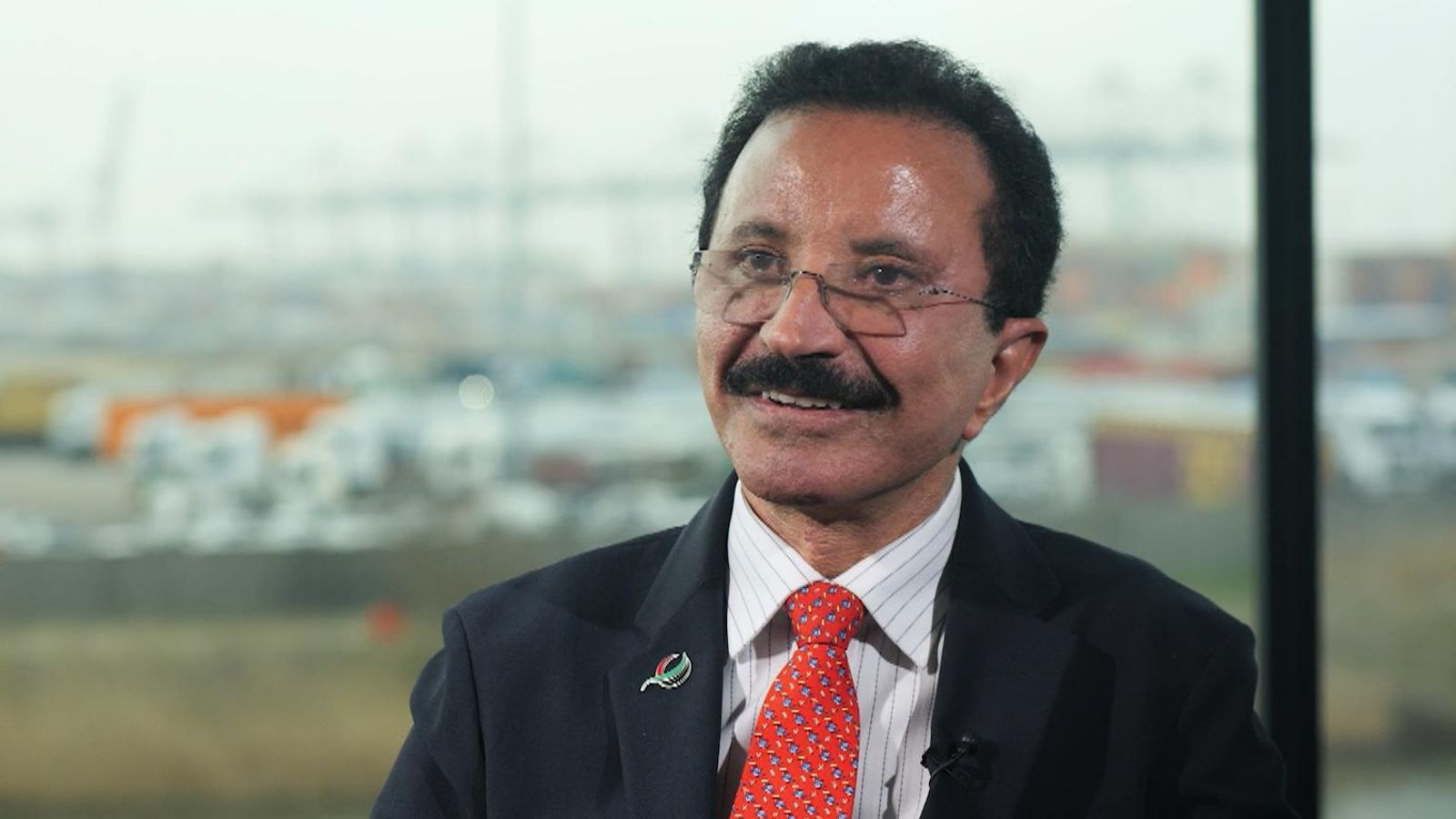

DP World CEO Resigns Amid Jeffrey Epstein Scandal: The Fall of a Logistics Giant’s Leader
The Departure of a Dubai Business Titan
In a stunning development that has sent shockwaves through the global logistics industry, Sultan Ahmed bin Sulayem has stepped down from his position as chairman and CEO of DP World, the Dubai-based shipping and ports giant. His resignation marks the end of an extraordinary four-decade tenure at the helm of one of the world’s most influential logistics companies. Bin Sulayem was widely recognized as the visionary leader who transformed DP World from a regional operator into a global powerhouse controlling roughly 10% of the world’s port market through its network of 80 ports worldwide, including the strategically important London Gateway in the United Kingdom. The company’s vast portfolio also includes ownership of P&O Ferries, the British ferry operator that gained notoriety in 2022 for controversially dismissing 800 seafarers in favor of cheaper agency workers. While bin Sulayem built an impressive business empire and earned respect in commercial circles for his strategic acumen, his departure comes under a cloud of controversy related to his personal associations with convicted pedophile and disgraced financier Jeffrey Epstein, raising serious questions about judgment and corporate governance at the highest levels of international business.
The Epstein Connection That Proved Fatal
The immediate catalyst for bin Sulayem’s resignation was the publication of what have become known as the “Epstein files” – a collection of communications that revealed disturbing details about the former DP World chief’s relationship with Jeffrey Epstein. These documents included a series of lewd emails exchanged between bin Sulayem and Epstein that painted an uncomfortable picture of their friendship. What made these revelations particularly damaging was the timing of the correspondence – the emails continued long after Epstein had been convicted of serious sex offenses, suggesting that bin Sulayem maintained his relationship with the financier even after his criminal behavior had become public knowledge. According to Sky News business correspondent Paul Kelso, bin Sulayem represents “the biggest corporate scalp of the Epstein scandal so far,” indicating the significance of his downfall in the broader context of the Epstein affair’s continuing impact on prominent business and political figures. While there has been no evidence presented of any criminal wrongdoing by bin Sulayem himself, the association with Epstein and the nature of their communications proved toxic enough to make his position untenable. The scandal highlights how professional relationships and personal judgment can have devastating consequences in the modern business environment, where scrutiny of corporate leaders’ conduct extends far beyond their business decisions to encompass their personal associations and character.
A Leader Previously Immune to Controversy
What makes bin Sulayem’s rapid fall from grace particularly noteworthy is that he had previously proven remarkably resilient in the face of intense public and political pressure. DP World under his leadership had demonstrated a high tolerance for external criticism and public backlash. The company stood firm during the massive public outcry following P&O Ferries’ decision to summarily dismiss more than 800 seafarers in March 2022 – a move that sparked outrage across the United Kingdom and led to calls for government intervention. Despite fierce criticism from unions, politicians, and the general public, bin Sulayem and DP World maintained that the mass dismissals were a sound business decision and refused to reverse course. Even more remarkably, in late 2024, bin Sulayem engaged in a very public confrontation with British Prime Minister Sir Keir Starmer after threatening to withdraw a planned £1 billion expansion of DP World’s London Gateway port. This threat came in response to criticism from then-transport minister Louise Haigh, demonstrating bin Sulayem’s willingness to use economic leverage in political disputes. That particular standoff was eventually resolved when bin Sulayem personally attended a government investment summit to shake hands with Starmer. As recently as March of last year, he was still actively engaging with British officials, meeting with junior minister Poppy Gustafsson at London Gateway and telling Sky News that DP World had been “discredited” by Haigh’s earlier comments. The fact that someone who had weathered such storms and shown such defiance in the face of political pressure found his position untenable within just two weeks of the Epstein revelations underscores just how damaging the scandal proved to be.
The Collapse of Business Support
The turning point that ultimately forced bin Sulayem’s departure was not public opinion or media coverage, but rather the concrete business consequences that began to materialize as international partners distanced themselves from DP World. What had initially been a reputational problem quickly evolved into a tangible threat to the company’s operations and future growth when major investment partners began suspending their involvement with the logistics giant. British International Investment (BII), the UK government’s development finance institution, took the significant step of halting its joint ventures with DP World, sending a clear signal that association with bin Sulayem had become unacceptable for organizations concerned about their own reputations and values. Similarly, La Caisse, Canada’s second-largest pension fund, withdrew its funding from DP World projects, representing another major blow to the company’s financial partnerships. These decisions by institutional investors represented more than mere symbolic gestures – they threatened real damage to DP World’s ability to execute its growth strategy and maintain its competitive position in the global logistics market. DP World initially offered no comment following the first Epstein revelations, perhaps hoping the controversy would blow over, but as the financial consequences mounted, the company’s leadership apparently concluded that change at the top was necessary. Beyond the immediate financial impact, there was also consideration for DP World’s 115,000 employees around the world, who would have to continue working for an organization led by someone so evidently close to Epstein and his documented excesses. The accumulation of these pressures made bin Sulayem’s position untenable, regardless of his past successes or his importance to the organization he had built.
The Transition to New Leadership
DP World moved quickly to install new leadership and attempt to turn the page on the scandal. The company announced on Friday that His Excellency Essa Kazim would assume the role of Chairman of the Board of Directors, while Yuvraj Narayan would step into the position of Group Chief Executive Officer. Notably, the initial statement announcing these appointments made no mention whatsoever of bin Sulayem, though it was later confirmed that he had indeed resigned from his positions. This conspicuous omission speaks volumes about the company’s desire to create distance from the departed leader and the controversy surrounding him. In its announcement, DP World emphasized that the new appointments would “support its strategy for sustainable growth and reinforce its role in strengthening global supply chains and supporting Dubai’s position as a leading hub for trade and logistics.” The carefully crafted language was clearly designed to reassure stakeholders that the company would continue its strategic direction while moving beyond the scandal. The company also stressed its commitment to its core mission and its importance to global trade infrastructure, attempting to refocus attention on its business fundamentals rather than the personal failings of its former leader. The speed of the leadership transition and the emphasis on continuity suggest that DP World is eager to minimize disruption and demonstrate that the organization is bigger than any one individual, regardless of that person’s historical importance to its success.
Moving Forward: Redemption and Recovery
The immediate response from at least one of DP World’s alienated partners suggests that the leadership change may achieve its intended purpose of allowing the company to move forward. British International Investment responded to the announcement by immediately lifting the suspension of its investment activities with DP World. A BII spokesperson stated: “We welcome today’s decision by DP World and look forward to continuing our partnership to advance the development of key African trading ports to unlock the continent’s global trading potential.” This rapid restoration of the relationship indicates that institutional partners viewed the issue as specifically related to bin Sulayem’s leadership rather than systemic problems within DP World itself. The reference to developing African trading ports reminds us that DP World’s work has significant implications for economic development in emerging markets, giving stakeholders additional incentive to restore normal business relationships once the problematic leadership issue was resolved. For DP World, the challenge now will be proving that it can maintain its trajectory of growth and influence under new leadership while also demonstrating improved judgment and governance standards. The company will need to reassure employees, customers, investors, and government partners that it has learned from this episode and implemented appropriate safeguards. The bin Sulayem scandal serves as a powerful reminder that in today’s interconnected and transparent business environment, personal conduct and associations matter enormously, and even the most successful business leaders can find their legacies tarnished and their careers ended by revelations about their personal lives and the company they keep. How DP World navigates this transition will be closely watched as a test case for whether major corporations can successfully separate themselves from compromised leaders and rebuild trust with their stakeholders.