
The Mystery Behind Jeffrey Epstein’s Fortune: A Deep Dive into Money, Power, and Dark Secrets
How Money Fueled a Web of Crime and Influence
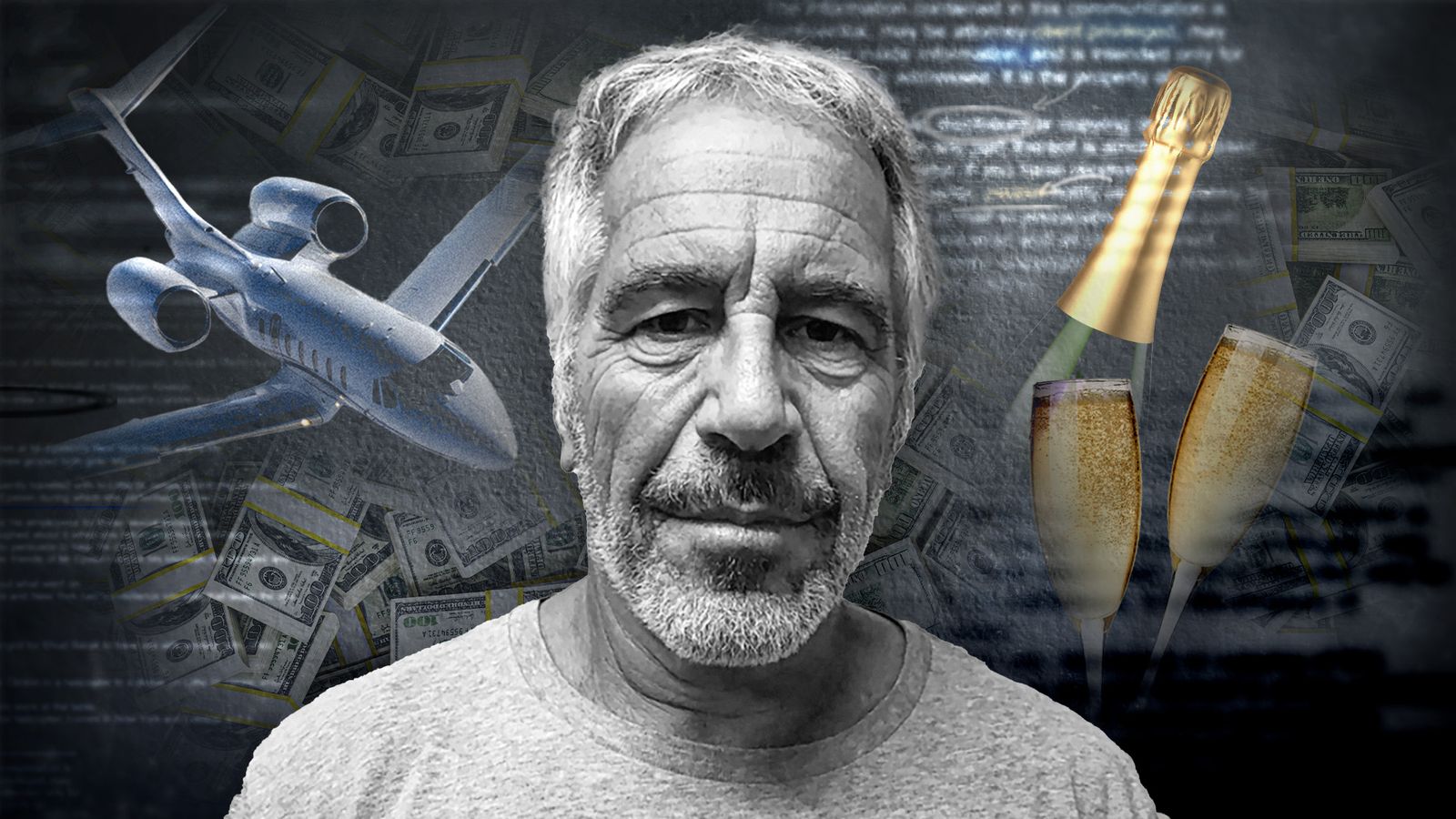
Jeffrey Epstein’s story is, at its core, about how money can buy not just luxury, but power, protection, and access to the world’s elite. His wealth wasn’t just impressive on paper—it was the engine that drove his criminal enterprise for decades. The convicted sex offender used his fortune to attract influential people, create an aura of legitimacy, and ultimately facilitate the horrific crimes he committed against young women and girls. When he died by suicide in a Manhattan jail cell in 2019, he left behind not just victims seeking justice, but a tangled web of financial dealings that raised more questions than answers. His empire was vast and puzzling: the largest private residence in Manhattan, two sun-drenched Caribbean islands that would become synonymous with his abuse, and a fleet of private jets. But the real question that continues to haunt investigators, journalists, and the public is this: where did all that money actually come from? Was Epstein truly a financial genius, as he claimed, or was his wealth built on something far more sinister—perhaps blackmail masquerading as investment advice, or even connections to intelligence services? The frenzied speculation following his death has only intensified as more documents have come to light, painting a picture of a man who was as skilled at hiding his money as he was at evading justice for his crimes.
The Paper Trail: What We Know About Epstein’s Wealth
Just two days before taking his own life in August 2019, Epstein signed a document that provides our clearest window into his finances. This document established the “1953 Trust”—likely named for his birth year—and valued his estate at approximately $580 million. Unlike a traditional will, this trust fund allowed the identities of those inheriting his fortune to remain hidden from public view, adding yet another layer of secrecy to his affairs. When the U.S. Department of Justice finally released a redacted version of this document last week, it revealed that more than 40 people stood to inherit millions of dollars each from Epstein’s estate. Among them was Ghislaine Maxwell, his longtime associate and convicted accomplice in sex trafficking, who was set to receive $10 million. The revelation of Maxwell’s inheritance sparked outrage, given her role in facilitating Epstein’s abuse of young women. But beyond the beneficiaries, the trust document also highlighted just how successfully Epstein had structured his finances to avoid scrutiny and taxation, using offshore entities and complex legal structures that made tracking his true wealth nearly impossible.
From Math Teacher to Wall Street: Epstein’s Unlikely Rise
Epstein’s journey to wealth began in the most unexpected way. Born in New York, he was considered something of a math prodigy, though he never actually graduated from college. His first career move was equally unconventional—he became a teacher at a prestigious private school in Manhattan, despite having no teaching qualifications whatsoever. He taught math and physics to the teenage children of New York’s elite families, a position that gave him his first taste of proximity to power and money. Ironically, he was eventually fired from this teaching position for poor performance in the classroom. But that failure became the launching pad for his fortune. One of the parents whose children attended the school was Alan “Ace” Greenberg, who would soon become the chief executive of Bear Stearns, one of Wall Street’s most powerful investment banks. Greenberg gave Epstein a job at Bear Stearns despite his lack of formal credentials or experience in finance—a move that would prove to be the critical turning point in Epstein’s life. Over five years, Epstein worked his way up the ranks at Bear Stearns, demonstrating enough skill to eventually earn over $200,000 per year (equivalent to about $710,000 today) as an adviser and limited partner. However, his time at the firm ended in 1981 when he left following a trading violation that resulted in a $2,500 fine. Despite this inauspicious departure, his connections to Bear Stearns would continue to benefit him for years to come, long before the firm itself collapsed as the first major casualty of the 2008 financial crisis.
Building an Empire in the Shadows
After leaving Bear Stearns, Epstein began constructing his financial empire, and from this point forward, his business dealings became increasingly opaque and difficult to trace. He founded his own firm specializing in recovering lost money for wealthy individuals and, reportedly, several foreign governments—work that would have given him access to sensitive financial information and powerful international contacts. In 1987, he was hired as a “consultant” at Towers Financial Corporation, earning $25,000 per month (a substantial sum at the time). He left in 1989, and four years later, Towers was exposed as a massive Ponzi scheme that defrauded investors of $450 million. Remarkably, Epstein was never charged in connection with this fraud, despite his role at the company. The real foundation of Epstein’s fortune was J. Epstein & Company, which he founded in 1988. This entity later became Financial Trust Company after he strategically moved his operations to the U.S. Virgin Islands—a well-known tax haven. In 2011, he established Southern Trust Company, which would become his primary income source in his later years. By painting himself as a “consultant” rather than a regulated financial adviser, lawyer, or accountant, Epstein cleverly evaded the oversight and regulations that would have applied to traditional financial professionals. This allowed him to operate in the shadows, managing vast sums of money with virtually no public accountability or regulatory supervision.
The Billionaire Clients and Tax-Free Millions
The bulk of Epstein’s income appears to have come from just two extraordinarily wealthy clients, though the full extent of his client list remains unknown. Les Wexner, the billionaire founder and long-time CEO of Victoria’s Secret, was Epstein’s most significant early client. According to investigations by Forbes and other outlets, Wexner paid Epstein at least $200 million over the years for managing his financial affairs, continuing until they parted ways in 2007. The exact nature of their relationship has been the subject of much speculation, particularly given that Epstein at one point held power of attorney over Wexner’s personal finances—an extraordinary level of trust and control. The second major source of income was Leon Black, co-founder of the private equity giant Apollo Global Management, who paid Epstein’s companies approximately $170 million between 2012 and 2017. Black later claimed these payments were solely for “estate planning, tax and philanthropic endeavours,” and expressed deep regret for any association with Epstein. Both Wexner and Black have denied any knowledge of Epstein’s sexual abuse. In total, Forbes calculated that Epstein took at least $360 million in dividends from his various companies between 1999 and 2018, and by operating through the U.S. Virgin Islands, he saved himself approximately $300 million in taxes that he would have owed if operating from the mainland United States. However, the relationship with Wexner apparently wasn’t entirely smooth. U.S. prosecutors revealed that Wexner received a $100 million payment from Epstein in 2008, related to claims that hundreds of millions of dollars had been stolen while Epstein controlled his finances. These allegations included improper property purchases where Epstein allegedly bought real estate from Wexner’s portfolio at below-market prices, though the full details of these transactions remain murky.
Offshore Secrets, Suspicious Transactions, and the Unanswered Questions
Epstein’s financial empire took a significant hit during the 2008 financial crisis. Financial Trust was an investor in a Bear Stearns fund that collapsed along with the bank in March 2008, and the company recorded net losses of $166 million between 2008 and 2010. He also reportedly lost money through exposure to the toxic mortgage-backed securities that triggered the global financial meltdown. But even these losses didn’t reveal the full picture of Epstein’s finances. He had spent years building a complex network of offshore shell companies designed to cloak his wealth from scrutiny. An investigation by the International Consortium of Investigative Journalists found evidence of multiple entities based in tax havens, including his eight-year chairmanship of Liquid Funding Ltd until 2007—a company that dealt in the very financial products that would later cause the financial crisis, and which counted Bear Stearns among its owners. Perhaps most damning were the findings that emerged after his death. JPMorgan, which had kept Epstein as a client from 1998 to 2013 despite multiple red flags, identified more than $1 billion in suspicious transactions linked to him. The New York Times reported that the bank flagged thousands of transactions that could have facilitated his sex-trafficking operations—financial evidence of the criminal enterprise hiding behind the veneer of legitimate business. The recently released Department of Justice files have only added fuel to long-standing suspicions that Epstein’s wealth wasn’t built solely on financial expertise, but potentially on blackmail. The theory suggests he may have secretly recorded powerful individuals in compromising situations at his properties, then leveraged that material to secure ongoing “business relationships” and payments. This would explain both his extraordinary access to the ultra-wealthy and the seemingly illogical amounts they paid him for vaguely defined “consulting” services. While these business relationships don’t prove wrongdoing by his clients, the pattern is deeply suspicious. As financial journalists continue analyzing the document dumps, more questions emerge than answers. Given Epstein’s demonstrated skill at manipulation and deception from the very beginning of his career, and his sophisticated use of offshore structures and shell companies, many experts believe there is likely more money hidden somewhere—wealth that may never be found even as his estate is drained through legal costs, victim settlements, and compensation claims. The full truth of how Jeffrey Epstein built his fortune may remain forever obscured, just as he intended.