
Europe’s Uncomfortable Truth: Funding Russia’s War Through Energy Purchases
The Parliament President’s Stark Admission
In a remarkably candid acknowledgment, European Parliament President Roberta Metsola has confronted a harsh reality that many European leaders have been reluctant to fully address: European countries are inadvertently financing Russia’s ongoing war in Ukraine through continued purchases of Russian oil and gas. Speaking during an interview on Sky News’s “The World With Yalda Hakim,” Metsola didn’t mince words, describing the situation as fundamentally “unacceptable.” Her admission represents a significant moment of transparency regarding Europe’s energy dilemma, revealing the uncomfortable contradiction between the continent’s public support for Ukraine and its continued financial relationship with the aggressor nation. Despite multiple rounds of sanctions and strong political rhetoric condemning Russia’s invasion, European money continues to flow into Russian coffers, providing the Kremlin with crucial resources to sustain its military operations. This honest assessment from one of Europe’s most prominent political figures highlights the complex challenges facing the European Union as it attempts to balance energy security, economic stability, and moral responsibility in supporting Ukraine against Russian aggression.
The Shadow Fleet: Russia’s Sanction-Busting Operation
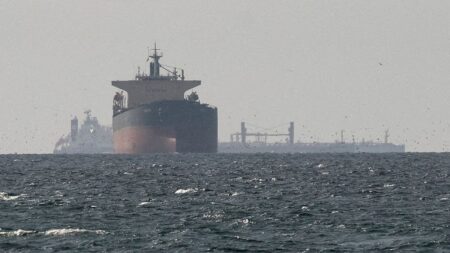
At the heart of Europe’s struggle to cut off Russian oil revenues is what has become known as Russia’s “shadow fleet”—a sophisticated network of up to 800 vessels specifically designed to circumvent Western sanctions. These ships operate in a legal gray area, frequently changing their flags and registration between different jurisdictions in what Metsola described as “an illegal manner.” This elaborate system allows Russia to continue exporting massive quantities of crude oil despite the comprehensive sanctions packages imposed by Western nations. Sky News recently conducted an investigative operation that tracked dozens of these Russian tankers loaded with sanctioned oil as they sailed brazenly through the waters between Britain and France. Three vessels in particular—the Rigel, the Hyperion, and the Kousai—were followed from the Gulf of Finland, where they had loaded oil at Russian Baltic ports, as they navigated through the narrowest point of the Dover Straits. These ships were carrying Russian oil valued at approximately $100 million (£74.1 million), cruising through one of the world’s busiest shipping lanes in clear defiance of Western sanctions. The shadow fleet’s operation demonstrates both Russia’s determination to maintain its oil export revenues and the significant enforcement challenges facing European authorities attempting to implement sanctions effectively.
Europe’s Sanctions Struggle: Too Little, Too Late?
President Metsola acknowledged that despite the European Union imposing 19 separate packages of sanctions against Russia, the measures have not been sufficient to stop the flow of European money funding the war. She emphasized that “any possibility for Russia to continue to wage its war against Ukraine and against Europe as a whole, by using funds that could inadvertently or overtly come from the European Union, is unacceptable.” The EU has implemented sanctions designed to prevent Russian gas from being purchased within member states or imported through third countries in cheaper or altered forms, and according to Metsola, the bloc is moving toward implementing similar comprehensive bans on Russian oil. However, the gap between policy intention and practical enforcement remains substantial. When asked directly whether there was a concrete plan to seize vessels operating as part of Russia’s shadow fleet, Metsola’s response revealed the ongoing challenges: “We have seen a lot of work, jointly, on this shadow fleet. It’s not solved yet. There are a lot of vessels that continue to operate.” While she acknowledged that authorities had successfully identified ships rapidly changing their flags and registration, she admitted that enforcement efforts “need to be faster” and that while “we are doing well, we need to do better.” This frank assessment suggests that European sanctions, while extensive on paper, lack the enforcement mechanisms necessary to effectively cut off Russia’s oil revenue streams.
The Energy Security Dilemma
The continued European purchases of Russian energy reveal a fundamental dilemma that has plagued the continent since the invasion began four years ago. Many European nations, particularly in Central and Eastern Europe, built their energy infrastructure around Russian gas and oil over several decades, creating deep dependencies that cannot be easily or quickly severed. The challenge is not simply about political will—though that plays a role—but about practical realities of energy supply, economic stability, and the immediate welfare of European citizens who depend on affordable energy for heating, transportation, and industrial production. While European leaders have worked to diversify energy sources, securing alternative supplies of liquefied natural gas from the United States, Qatar, and other producers, and accelerating renewable energy development, these transitions require time, massive infrastructure investments, and cannot immediately replace the volume of energy previously supplied by Russia. This creates a moral paradox where European nations find themselves simultaneously providing military, financial, and humanitarian aid to Ukraine while also providing revenue to the very nation attacking it. The situation forces uncomfortable questions about priorities and the real cost of energy security, challenging the European Union’s self-image as a unified force for democratic values and international law.
Enforcement Challenges and Jurisdictional Complications
The shadow fleet operates precisely because of the complexities of international maritime law and the difficulties of enforcement across multiple jurisdictions. Ships can change their flag registration relatively easily, moving between countries with different regulatory standards and enforcement capabilities. Some nations, often with less robust regulatory oversight or different political interests, provide flags of convenience that allow vessels to operate in legal gray areas. This jurisdictional arbitrage makes it extraordinarily difficult for European authorities to track, monitor, and intercept vessels carrying sanctioned Russian oil. Even when ships are identified and their activities documented—as demonstrated by the Sky News investigation—actually impounding these vessels requires navigating complex legal processes, international maritime law, and coordination between multiple countries with different legal systems and political priorities. Metsola’s call for more vessels to be impounded acknowledges this gap between identification and action. The shadow fleet’s ships often operate with obscured ownership structures, using shell companies registered in different countries to hide the ultimate beneficiaries and decision-makers behind the operations. This corporate complexity adds another layer of difficulty for European authorities attempting to enforce sanctions, as proving the Russian connection and establishing legal grounds for seizure requires extensive investigation and international cooperation that can be slow and politically complicated.
The Path Forward: Four Years After the Invasion
As this week marks the grim four-year anniversary of Vladimir Putin’s full-scale invasion of Ukraine, Metsola’s comments arrive at a moment of reflection and reassessment. Peace talks between negotiators from Russia, Ukraine, and the United States are currently being held in Abu Dhabi, raising questions about how energy sanctions might factor into any potential settlement. The European Union faces critical decisions about whether to strengthen enforcement of existing sanctions, implement new measures targeting the shadow fleet more effectively, or pursue alternative strategies to cut off Russian oil revenues. Metsola’s acknowledgment that current efforts are insufficient suggests that European leadership recognizes the need for more aggressive action, but the practical implementation remains challenging. The situation calls for enhanced international cooperation, potentially involving naval operations to intercept shadow fleet vessels, expanded legal frameworks that close jurisdictional loopholes, and diplomatic pressure on countries that provide flags of convenience to these ships. Technology could also play a role, with improved satellite tracking, artificial intelligence analysis of shipping patterns, and blockchain-based verification of oil origins helping to identify and stop sanctioned shipments. Ultimately, however, Europe faces a fundamental choice about how much economic pain it is willing to endure to truly cut off Russia’s energy revenues, and whether the political will exists to make the difficult decisions necessary to align European actions with European values. The coming months will reveal whether Metsola’s frank admission leads to meaningful policy changes or remains simply an uncomfortable acknowledgment of an unresolved contradiction at the heart of Europe’s response to Russian aggression.