
Swiss Crypto Bank Amina Joins EU Blockchain Platform, Bridging Traditional Finance and Digital Assets
A Milestone Partnership Between Banking and Blockchain
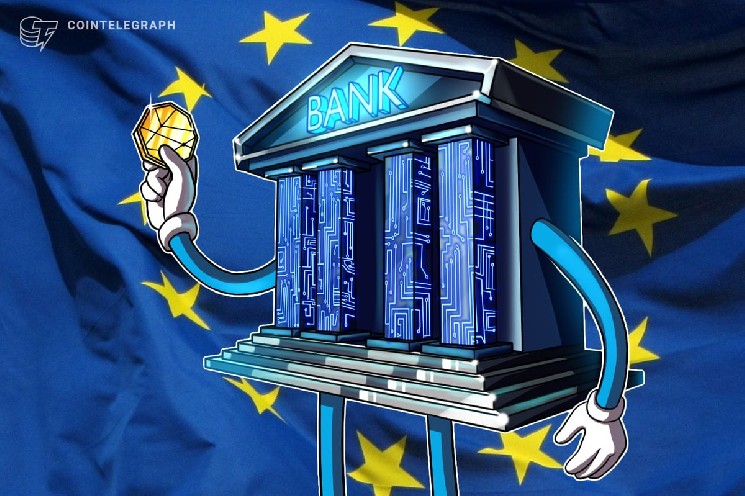
In a significant development for the digital asset industry, Amina, a fully regulated Swiss crypto bank based in Zug, has announced its participation as a listing sponsor on 21X, a blockchain-based settlement platform for tokenized securities. This partnership, announced this week, represents a meaningful step forward in connecting traditional banking infrastructure with emerging blockchain technology. What makes this particularly noteworthy is that Amina becomes the first completely regulated bank to participate in this EU-regulated venue, which operates under the European Union’s experimental DLT (Distributed Ledger Technology) pilot regime. The collaboration involves Tokeny, a Luxembourg-based technology provider specializing in creating and managing tokenized financial assets, and is designed to help companies issue tokenized securities on the 21X platform. This three-way partnership essentially creates a bridge between the established banking world and the innovative space of blockchain-based securities, addressing what many industry experts have identified as a critical gap in the adoption of digital assets by mainstream financial institutions.
Tackling the Interoperability Challenge in Tokenized Markets
One of the most significant hurdles facing the tokenized asset market has been the lack of standardization and interoperability across different platforms. As Baker McKenzie’s European Financial Services practice pointed out in mid-2024, this fragmentation stands as one of the primary obstacles preventing widespread adoption of tokenization among financial institutions. Zurich partner Yves Mauchle articulated the problem clearly when he explained that achieving meaningful scale requires numerous market participants to transact with each other on common or interconnected platforms. Currently, the tokenized asset landscape resembles a collection of isolated islands rather than an integrated archipelago, with different platforms operating independently without seamless ways to communicate or transfer assets between them. This is where Amina’s involvement becomes particularly important – by bringing a fully regulated banking institution into the ecosystem, the partnership creates a more credible pathway for traditional financial players to engage with tokenized securities. The presence of a regulated bank as a listing sponsor provides the kind of institutional legitimacy that many conservative investors and companies require before they’re willing to explore blockchain-based alternatives to traditional securities issuance and trading.
Understanding the EU’s DLT Pilot Regime and Its Potential
The European Union’s DLT pilot regime, which granted 21X an infrastructure permit in December 2024, represents an experimental approach to regulating blockchain-based financial markets. Introduced in 2023, this framework creates what’s essentially a regulatory sandbox – a controlled environment where market operators can test blockchain-based trading and settlement of financial instruments under regulatory supervision but with some relaxed restrictions. The concept behind this pilot program is forward-thinking: rather than trying to force new technology into old regulatory frameworks or leaving it completely unregulated, the EU is creating a space where innovation can develop while regulators observe, learn, and gather data about how blockchain technology actually functions in real-world financial market conditions. This allows policymakers to make more informed decisions about future permanent regulations, theoretically striking a better balance between protecting investors and fostering innovation. However, this experimental approach hasn’t been without criticism. Industry participants have expressed concerns that the current limitations built into the pilot regime might actually prevent European blockchain-based markets from achieving the scale necessary to compete effectively with similar initiatives in other jurisdictions, particularly the United States and Asia, where regulatory approaches have taken different paths.
The Broader Context: Tokenization’s Growing Momentum
Amina’s participation in 21X doesn’t exist in isolation – it’s part of a much larger trend of financial institutions increasingly investing in blockchain infrastructure for tokenized assets. The numbers tell a compelling story: according to data from RWA.xyz, the total value of tokenized real-world assets has reached an impressive $26.5 billion, demonstrating substantial and growing market interest. In the United States, major financial institutions including BNY Mellon, Nasdaq, and S&P Global have recently backed the expansion of the Canton Network, a blockchain infrastructure project designed to support institutional-grade tokenized assets. Meanwhile, in Europe, various regulated blockchain trading venues are being tested under the EU’s DLT pilot regime, with 21X being a prominent example. This parallel development across both sides of the Atlantic suggests that tokenization isn’t just a passing technological fad but rather represents a fundamental shift in how financial assets might be issued, transferred, and settled in the future. The involvement of household names from traditional finance lends credibility to this transformation and signals that blockchain technology has moved beyond its earlier association primarily with cryptocurrency speculation into more mature applications in mainstream capital markets.
Regulatory Concerns and Competitive Pressures
Despite these positive developments, the European tokenized asset sector faces genuine competitive concerns regarding its regulatory framework. In February, a coalition of eight EU-regulated digital asset companies made an urgent appeal to policymakers, warning that the European Union risks falling behind the United States and other jurisdictions in developing tokenized financial markets if it doesn’t accelerate its digital asset legislation. This warning reflects a broader anxiety within the European financial technology community that overly cautious or slow-moving regulatory approaches might cause the continent to miss the opportunity to establish itself as a leader in this emerging sector. The worry is understandable: in the digital age, financial innovation can move across borders with relative ease, and if regulatory environments become too restrictive or uncertain in one jurisdiction, both companies and capital can relocate to more welcoming territories. The challenge for European regulators is threading a delicate needle – creating frameworks that are robust enough to protect investors and maintain market integrity while remaining flexible and supportive enough to allow innovation to flourish and compete globally. Whether the DLT pilot regime represents the right balance remains an open question, and the participation of institutions like Amina may provide valuable data points for answering it.
Recent Successes and the Path Forward
There are encouraging signs that Europe is making progress despite the challenges. In September, major cryptocurrency exchange Kraken launched tokenized securities trading for European users through its xStocks platform, which offers blockchain-based versions of US-listed equities, demonstrating that consumer-facing applications of tokenization are already reaching the market. Two months later, tokenization platform Ondo received regulatory approval in Liechtenstein to offer tokenized equities trading to European investors, further expanding the available options for accessing blockchain-based securities. These developments, combined with Amina’s participation in 21X, suggest that a practical ecosystem for tokenized securities is genuinely taking shape in Europe, moving from theoretical possibility to operational reality. The involvement of a fully regulated Swiss bank adds another crucial piece to this puzzle, potentially making it easier for traditional companies to issue tokenized securities and for institutional investors to participate in these markets with confidence. Whether this momentum proves sufficient to address the interoperability challenges, scale concerns, and regulatory uncertainties that continue to face the sector remains to be seen, but the direction of travel appears clear: tokenization is gradually moving from the experimental margins toward the mainstream of European capital markets, with regulated financial institutions increasingly willing to participate in and validate this technological transformation.