
FCC Chair Warns Broadcasters: Public Interest Comes Before License Rights
The Controversy Erupts Over Media Coverage and Broadcast Licenses
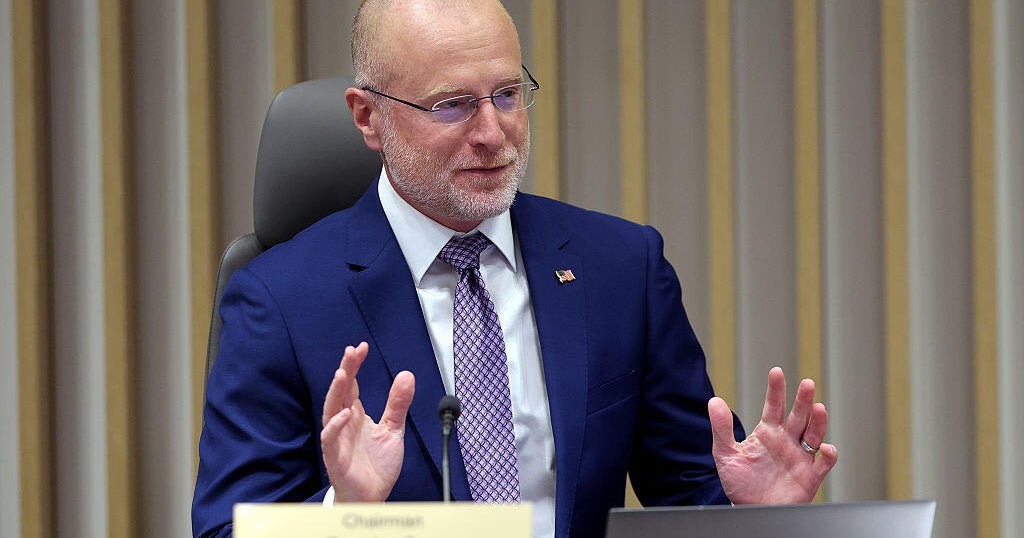
In a move that has sent shockwaves through the media industry and sparked fierce debate about press freedom, Federal Communications Commission Chair Brendan Carr has issued stark warnings to broadcast news organizations, suggesting their licenses could be at risk if they fail to serve what he defines as “the public interest.” During an exclusive interview with CBS News, Carr made it clear that broadcasting licenses shouldn’t be viewed as untouchable property rights, but rather as privileges that come with serious responsibilities. This bombshell came after President Trump criticized what he called “fake news” coverage of military operations in Iran, specifically taking aim at how media outlets reported on an attack involving U.S. air tankers in Saudi Arabia. The president claimed that reports significantly exaggerated the damage to the aircraft, insisting that four of the five tankers had minimal damage and quickly returned to service, contradicting headlines that he felt painted a far more dire picture. Carr amplified these concerns on social media, warning broadcasters running what he termed “hoaxes and news distortions” that they had an opportunity to “correct course” before their license renewals come up, citing legal requirements that broadcasters must operate in the public interest or face losing their licenses.
Political Firestorm and Constitutional Concerns
The response from Democratic lawmakers was swift and fierce, with prominent senators raising alarm bells about what they see as a dangerous governmental overreach into press freedom. Senator Elizabeth Warren of Massachusetts didn’t mince words, calling out what she described as a fundamental violation of constitutional principles, stating bluntly that it’s illegal for the government to censor speech simply because it doesn’t like coverage of Trump’s actions regarding the Iran conflict. Senator Chris Murphy of Connecticut characterized the situation in even starker terms, describing it as “the federal government telling news stations to provide favorable coverage of the war or their licenses will be revoked,” calling it “a truly extraordinary moment” in American media history. These concerns tap into deep-seated American values about the role of a free press in holding government accountable, especially during times of military conflict when accurate, independent reporting becomes even more crucial. Critics argue that the FCC chair’s comments, coming in the wake of presidential criticism of specific news coverage, create a chilling effect where broadcasters might self-censor or slant their reporting to avoid government retaliation, fundamentally undermining the watchdog role the press is supposed to play in a democratic society.
Understanding the FCC’s Actual Power Over Media
To fully grasp what’s at stake here, it’s important to understand how the FCC actually regulates the media landscape, which is far more limited than many people might assume. The FCC is an independent agency that issues eight-year licenses to individual broadcast stations—many owned and operated by larger television networks—but crucially, it does not actually license the networks themselves like CBS, NBC, ABC, or Fox. The agency’s authority over content standards only extends to over-the-air broadcasts on television and radio, meaning that cable networks, satellite programming, and streaming platforms fall outside its regulatory reach. This distinction matters enormously in today’s fragmented media environment, where traditional broadcast television competes with countless cable channels and streaming services that operate under entirely different rules. As the FCC’s own website explicitly states, speech transmitted by cable or satellite TV systems generally isn’t subject to the same constraints as over-the-air broadcasts, and the agency doesn’t regulate online content at all. During his interview, Carr emphasized that broadcasters should feel “entirely free to do all of their reporting” as long as they’re not engaging in what he defines as “news distortion,” and he made clear that anyone uncomfortable with these licensing requirements could simply move to cable, streaming services, or return their licenses and operate differently.
Ongoing Investigations and the Equal Time Rule
While Carr stated there’s no immediate plan to reassess broadcast licenses across the board, he pointed to several ongoing FCC investigations that could potentially trigger early license renewal reviews. One significant probe focuses on ABC’s daytime talk show “The View” over potential violations of the equal time rule, while another investigation targets Comcast and its subsidiary NBC Universal regarding their diversity, equity, and inclusion policies. The equal time rule has become particularly contentious recently, especially after the FCC issued a notice in January reversing previous policy to make clear that daytime talk shows and late-night comedy programs are indeed subject to the rule. This regulation requires that FCC-licensed broadcasters who allow a political candidate to appear on their airwaves must offer “equal opportunities” to all other candidates running for the same office. The policy shift created real-world complications almost immediately, including when Stephen Colbert, host of CBS’s “The Late Show,” alleged that an interview he conducted with U.S. Senate candidate James Talarico was blocked from airing over equal time concerns. CBS countered that the show wasn’t prohibited from broadcasting the interview but was given legal guidance that doing so could trigger equal time obligations for two other candidates, including Representative Jasmine Crockett, and the show ultimately chose to post the interview on YouTube instead. These incidents highlight the increasingly complex regulatory environment broadcasters must navigate, where booking guests for entertainment programs now requires careful legal vetting to avoid running afoul of FCC rules.
The Broader Reshaping of America’s Media Landscape
Beyond the immediate controversy over news coverage and broadcast licenses, larger forces are at work that promise to fundamentally transform the American television industry in the coming years. The Trump administration is positioned to weigh in on several mega-mergers that could dramatically consolidate media ownership and reshape what Americans see on their screens. President Trump has already signaled support for Nexstar Media Group’s proposed $6.2 billion purchase of Tegna, with Chair Carr also expressing support for the deal as the FCC prepares to make its official determination. Even more significantly, both the FCC and the Justice Department will need to consider the massive $110 billion acquisition of Warner Bros. Discovery by Paramount Skydance (the parent company of CBS News, which conducted the interview with Carr). These consolidations are happening against a backdrop of what Carr describes as an already problematic centralization of media power, where he believes local television stations have lost their independence and become mere “mouthpieces” for programming coming from what he dismissively referred to as “Hollywood and New York.” Carr told CBS News that he believes the media landscape needs more change, arguing that there used to be a healthy balance where local stations would pre-empt or push back against national programming they felt didn’t serve their communities, but that pushback has largely disappeared in today’s media environment.
The Kimmel Incident and What It Signals for the Future
Perhaps the most concrete example of how quickly this new regulatory approach can impact actual programming came in September 2025, when Carr ignited a firestorm by criticizing remarks made by late-night host Jimmy Kimmel about the assassination of conservative activist Charlie Kirk, calling them “some of the sickest conduct possible” and explicitly stating there was “a path forward for suspension” and that “the FCC is going to have remedies we could look at.” The response was immediate and dramatic: later that same day, ABC announced it had suspended Kimmel’s show “indefinitely,” while media companies Nexstar and Sinclair pulled the program from their stations entirely. Kimmel returned to the air just six days later, with the stations also restoring the show shortly thereafter, but the incident demonstrated the powerful chilling effect that regulatory threats can have on media companies, even when those threats don’t result in formal FCC action. Looking ahead, broadcast television licenses are up for renewal as early as June 2028 in several states, with renewal dates rolling through August 2031 for different regions according to the FCC’s website, meaning broadcasters may be operating under this cloud of uncertainty for years to come. The fundamental tension between the government’s legitimate interest in ensuring broadcast licensees serve the public and the constitutional protection of press freedom remains unresolved, setting up what could be ongoing battles over where to draw the line between appropriate regulation and government intimidation of news organizations whose coverage displeases those in power.