


Precious Metals and Markets Tumble as Trump’s Fed Pick Reshapes Investment Landscape
Historic Collapse in Gold and Silver Prices
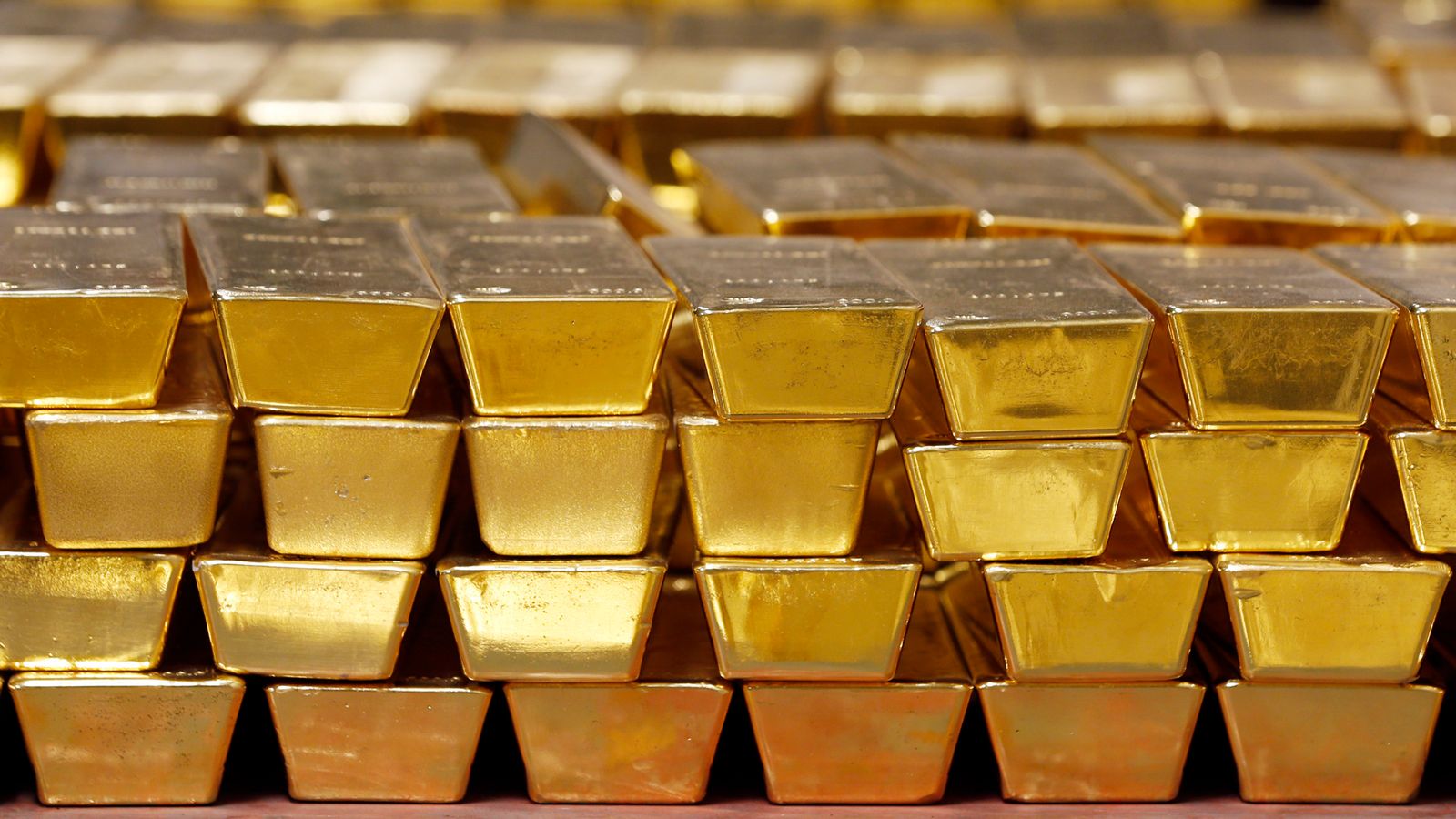
The financial markets experienced a seismic shift as gold and silver prices continued their dramatic descent on Monday, extending what became one of the most severe selloffs in precious metals history. After reaching unprecedented heights just days earlier, both metals faced their steepest declines in decades following former President Donald Trump’s announcement of his choice to lead the Federal Reserve. Gold, which had soared to an all-time high of $5,594.82 per ounce on Thursday, plummeted to $4,480 by Monday morning—a staggering loss that represented more than a 20% decline in just a few trading sessions. Silver experienced an even more brutal correction, dropping from its record peak of $121.64 to $73.94, with Monday alone seeing an 11% decline following the previous session’s catastrophic 30% fall. These weren’t just ordinary market corrections; gold suffered its worst single-day performance since 1983, while silver’s losses marked its most severe decline since 1980, underlining the extraordinary nature of this market upheaval and the profound impact that central bank policy expectations can have on traditional safe-haven assets.
The Warsh Factor: Calming Fears About Fed Independence
The catalyst for this remarkable reversal came Friday when Trump revealed his intention to nominate Kevin Warsh as the next Federal Reserve chair, succeeding Jay Powell when his term expires in May. This announcement proved to be a turning point that fundamentally altered investor sentiment and market dynamics. Prior to the nomination, markets had been gripped by anxiety over the possibility that Trump might appoint someone who would compromise the Fed’s independence and advocate for aggressive, politically-motivated interest rate cuts regardless of economic conditions. Warsh’s selection effectively quieted these concerns, as he is widely regarded as a traditional, independence-minded monetary policy expert rather than a political loyalist who would bend monetary policy to presidential preferences. His track record and public statements have established him as someone who takes a more orthodox approach to central banking, prioritizing long-term economic stability over short-term political gains. This perception immediately shifted investor calculations about future monetary policy, triggering a massive reassessment of asset values that had been inflated partly by expectations of looser monetary conditions. The market’s violent reaction demonstrated just how much speculation and positioning had been based on fears of Fed politicization, and how quickly those bets unwound once a more conventional nominee emerged.
Margin Calls and Cascading Selloffs Amplify the Pain
The severity of Monday’s continued declines in precious metals wasn’t solely attributable to fundamental reassessments of value; technical market factors significantly amplified the downturn. As volatility spiked and prices plunged, several major brokerages responded by raising their margin requirements—the minimum amount of capital investors must maintain in their accounts to hold leveraged positions in commodities like gold and silver. This procedural response to volatility, while standard risk management practice for brokerages, created a self-reinforcing spiral of selling pressure. Investors who had borrowed money to amplify their gold and silver positions suddenly found themselves facing margin calls, demands from their brokers to deposit additional funds or reduce their positions. Many were caught off-guard by the speed and magnitude of the price collapse and lacked sufficient liquid capital to meet these increased requirements. Consequently, they were forced to sell other assets—including stocks, bonds, and even other commodities—to raise cash to either meet margin calls or close out their precious metals positions entirely. This forced liquidation created spillover effects across multiple asset classes, spreading the contagion beyond just gold and silver markets and contributing to broader market weakness observed throughout global exchanges.
Broader Market Contagion: Crypto, Oil, and Equities Feel the Pressure
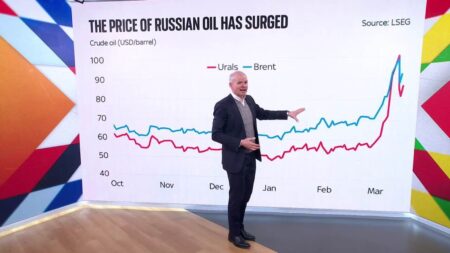
The turbulence that began in precious metals markets rapidly spread across the broader financial landscape, demonstrating the interconnectedness of modern global markets. Cryptocurrencies, which had shown some correlation with gold as alternative stores of value outside traditional financial systems, experienced significant declines. Bitcoin, the flagship cryptocurrency, dropped below $80,000 for the first time since April, eventually trading around $75,142—a substantial fall from recent levels that wiped billions from the crypto market’s total valuation. Energy markets weren’t spared either, with Brent crude oil sliding from $70 per barrel the previous week to $65, reflecting both technical selling pressure and concerns about global economic growth that might reduce energy demand. Equity markets across continents registered the damage as well. Asian markets led the decline, with Hong Kong’s Hang Seng index closing down 2.3%, setting a negative tone for European trading. London’s FTSE 100, which includes numerous precious metal mining companies and energy stocks particularly vulnerable to commodity price swings, opened 0.5% lower. Futures markets indicated that American stocks would follow suit, with the broad-based S&P 500 expected to open approximately 1% down, suggesting that the selloff would continue as US markets opened for business.
Understanding Warsh’s Economic Philosophy and Its Market Implications
To comprehend why Warsh’s nomination triggered such a dramatic market response, it’s essential to understand his economic philosophy and what it signals about future Federal Reserve policy. Market analysts have been poring over Warsh’s past statements and policy positions for clues about the monetary policy direction he might pursue. Ipek Ozkardeskaya, a senior analyst at Swissquote, highlighted several key aspects of Warsh’s thinking that have particular significance for markets. Notably, Warsh has been critical of various Federal Reserve policy decisions in recent years, particularly the massive expansion of the Fed’s balance sheet that occurred during and after the 2008 financial crisis and was further accelerated during the COVID-19 pandemic. His preference appears to be using balance sheet reduction—allowing bonds to mature without replacement rather than relying solely on interest rate adjustments—as a primary tool for controlling inflation. This approach matters enormously because the Fed’s balance sheet has grown from less than $1 trillion before the 2008 crisis to a peak of nearly $9 trillion in 2022, currently sitting around $6.5 trillion. Warsh’s expressed belief that there is “substantial scope” to shrink this balance sheet suggests a potentially lengthy period of quantitative tightening ahead. As Ozkardeskaya noted, this “could mark the end of the era of free money for markets—and that is bad news” for investors who have become accustomed to abundant liquidity supporting asset prices across the board.
The End of Easy Money and What It Means for Investors
The market upheaval sparked by Warsh’s nomination represents more than just a temporary correction; it potentially signals a fundamental regime change in the relationship between monetary policy and financial markets. For more than fifteen years, since the 2008 financial crisis, global markets have operated in an environment of unprecedented monetary accommodation. Central banks, led by the Federal Reserve, maintained interest rates at or near zero for extended periods and purchased trillions in bonds to inject liquidity into the financial system. This “era of free money” created conditions where investors could borrow cheaply to invest in virtually any asset class, contributing to sustained bull markets in stocks, real estate, commodities, and even speculative assets like cryptocurrencies. Precious metals benefited both from their traditional role as inflation hedges and from the sheer abundance of capital seeking stores of value outside traditional currencies being devalued by money printing. If Warsh follows through on his apparent preference for aggressive balance sheet reduction and a more hawkish monetary stance, markets will need to adjust to a new reality of tighter financial conditions, higher borrowing costs, and reduced liquidity. This transition won’t necessarily be smooth or painless, as last week’s dramatic selloff demonstrated. Investors will need to recalibrate their expectations, moving away from strategies that depend on abundant central bank liquidity and toward approaches that can succeed in a more traditional, tighter monetary environment. The coming months will reveal whether markets can make this adjustment gradually or whether additional volatility lies ahead as the financial world adapts to what may truly be the end of the easy money era that defined investing for a generation.