


Iran Demonstrates Resilience Despite Sustained Military Campaign Against Its Forces
Strategic Adaptation in the Face of Overwhelming Firepower
Despite facing what military observers describe as sophisticated and devastating air strikes from the United States and Israel, Iran continues to show remarkable adaptability and determination in its military response. While acknowledging that Iran’s military capabilities have been significantly diminished, retired British General Richard Shirreff, who served as NATO’s deputy supreme allied commander from 2011 to 2014, emphasized that the “industrial application of military force” by the U.S. and Israel has been incredibly advanced. However, he pointed to historical precedents suggesting that aerial bombing campaigns alone rarely succeed in breaking a nation’s will to resist. Instead, such attacks often strengthen resolve and reinforce determination among those being targeted. As the conflict extends beyond two weeks, surpassing Iran’s previous 12-day war from the previous June, the situation has evolved into Tehran’s longest sustained military engagement in recent years, raising fundamental questions about whether overwhelming military superiority can quickly achieve strategic objectives.
The Iranian leadership has maintained from the outset that their military strategy was carefully developed over two decades of studying American military operations throughout the Middle East. Foreign Minister Abbas Araghchi stated on March 1, just one day after the initial strikes, that Iran had spent twenty years analyzing U.S. military defeats in neighboring countries and incorporated those lessons into their defensive planning. Araghchi asserted that bombing campaigns against the capital would have no impact on Iran’s ability to conduct war, explaining that the Iranian military had deliberately created a “decentralized” defense structure designed to allow Tehran to determine when and how the conflict would end. This strategic framework appears designed specifically to counter the conventional military advantages held by the United States and Israel, focusing instead on asymmetric warfare capabilities that can impose costs on adversaries despite technological and firepower disadvantages.
Escalating Iranian Counterstrikes Across Multiple Fronts
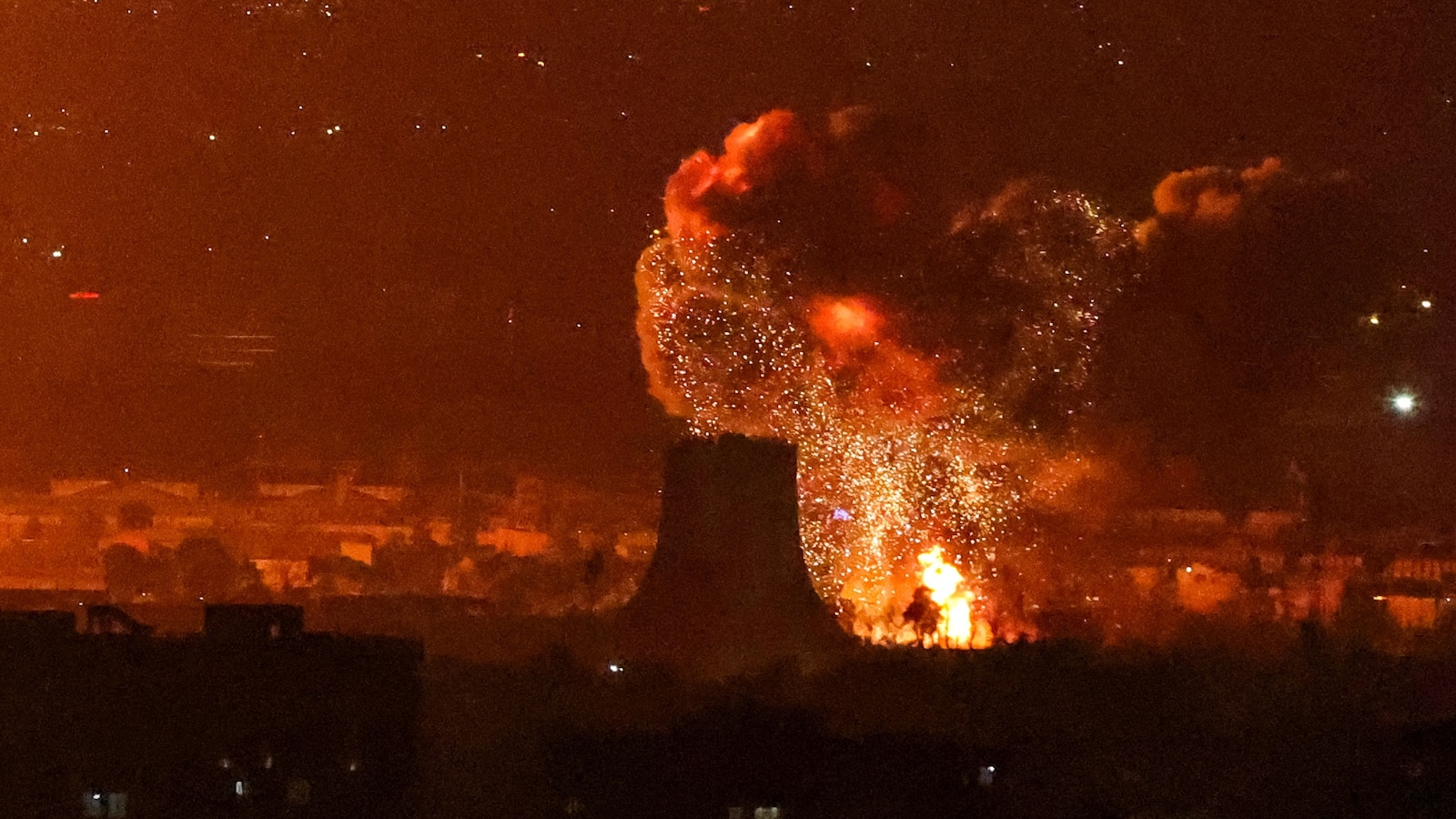
Iran has demonstrated its commitment to this asymmetric approach through increasingly intense overnight drone and missile strikes targeting Israel and Gulf nations hosting American military assets. By Wednesday, Iran had launched its 37th wave of such attacks, which Tehran characterized as the most intense of the entire conflict. These strikes hit targets across a wide geographic area, with officials in Israel, the United Arab Emirates, Oman, Qatar, and Saudi Arabia all confirming Iranian aerial attacks on their territories. The expanding scope and intensity of these counterstrikes suggests that Iran’s military command structure has remained functional despite the loss of senior leadership, including Supreme Leader Ayatollah Ali Khamenei, who was killed on the first day of the conflict.
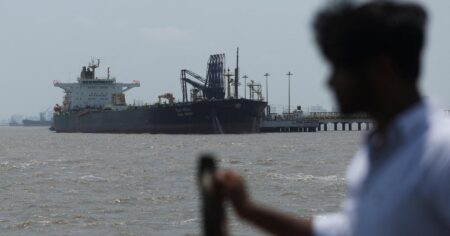
Beyond aerial attacks, Iran has opened new fronts by targeting maritime traffic in and around the strategically vital Strait of Hormuz, through which approximately 20 percent of the world’s oil supply passes. On Wednesday, Iran struck at least two vessels near the strait, characterizing these attacks as responses to ships “ignoring alerts” from Iran’s navy. Tehran also claimed responsibility for strikes on an oil tanker off the Iraqi coast and appeared responsible for additional attacks on vessels in the Persian Gulf. Iran has explicitly threatened to attempt closing the Strait of Hormuz entirely, a move that has already contributed to global oil prices surging to levels not seen since 2022. The United States and allied nations responded by announcing releases from strategic oil reserves to counter potential supply disruptions. General Shirreff expressed surprise that American planners seemed unprepared for this predictable Iranian response, noting that the connection between attacking Iran and subsequent threats to close the Strait of Hormuz with resulting economic consequences should have been obvious.
Evidence of Careful Preparation and Succession Planning
Military analysts and academic observers point to substantial evidence that Iran’s leadership had carefully prepared for precisely this scenario well before hostilities began. Janice Stein, founding director of the University of Toronto’s Munk School of Global Affairs and Public Policy, credits the late Supreme Leader Ali Khamenei with architecting a strategy that deliberately distributed power throughout the command structure, planned for leadership succession several levels deep, and determined in advance to increase costs for the United States by attacking Washington’s allies in the Gulf region while driving up oil prices. This preparation became evident when the Assembly of Experts, the religious body responsible for selecting a new supreme leader, quickly adapted by shifting to virtual voting rather than gathering in person, demonstrating organizational flexibility under extreme pressure.
The rapid installation of Mojtaba Khamenei, son of the slain supreme leader, further demonstrated the effectiveness of Iran’s succession planning. In his first strategic message delivered Thursday via state television, the new supreme leader announced Iran’s intention to continue efforts to close the Strait of Hormuz to international traffic and called for the closure of American military bases throughout the Middle East. He also warned that Iran was prepared to open “other fronts” against the U.S. and Israel, claiming Iranian intelligence had identified exploitable vulnerabilities. Jonathan Graubart, political science chair at San Diego State University, emphasized that Iran’s government, whatever one thinks of its ideology, has consistently demonstrated rational strategic planning. This rationality extended to preparing for the very scenario now unfolding, including contingency plans for the deaths of senior political and military leadership.
Strategic Logic Behind Iran’s Expanding Military Response
Iran’s escalating attacks, particularly those targeting energy infrastructure and shipping in the Persian Gulf region, reflect a coherent strategic framework designed to impose maximum political and economic costs on the United States and its regional partners. Vicki J. Gilbert, an associate professor in international affairs at Wofford College, explained that Iranian leadership understands they cannot defeat the U.S. and Israel through conventional military force. Instead, their strategy focuses on making the conflict sufficiently costly politically and economically to generate domestic pressure within the United States and diplomatic pressure from other affected nations to end the fighting. The intensifying attacks on shipping through the Strait of Hormuz fit precisely within this broader strategic approach, transforming a regional military conflict into a global economic crisis that affects nations far beyond the immediate combat zone.
General Dan Caine, chairman of the U.S. Joint Chiefs of Staff, acknowledged during a Tuesday press briefing that Iran has shown signs of adaptation, though he declined to provide specific details for operational security reasons. He emphasized that American forces are also adapting and doing so faster than their Iranian counterparts. However, the fact that senior U.S. military leadership publicly acknowledges Iranian adaptation suggests that Tehran’s decentralized command structure has proven more resilient than might have been expected following the decapitation strikes that killed the country’s top leadership. As Stein noted, Iran has also adapted its messaging throughout the conflict, progressively toughening the conditions it would require for ending hostilities, suggesting confidence rather than desperation despite the overwhelming military pressure it faces.
Questions About Victory Objectives and Long-Term Outcomes
Fundamental questions remain about what would constitute victory for the United States and Israel, particularly given that aerial bombardment alone is unlikely to fundamentally transform how Iranian officials view their national interests and regional role. President Trump stated last week that American objectives include destroying Iran’s ballistic missile capabilities, annihilating its navy, and ensuring Iran can never obtain nuclear weapons. He initially suggested the conflict would be a “four-to-five-week deal,” though he and other officials have since acknowledged it will continue for as long as necessary to achieve stated objectives. Two days into the conflict, Trump told reporters “we won,” yet the fighting has intensified rather than concluded, suggesting a disconnect between political declarations and military realities on the ground.
General Shirreff predicted that the Trump administration will likely “declare victory over the smoking ruins of Iran,” but suggested this would require first “defanging” Iran’s nuclear, ballistic, and naval capabilities while installing leadership friendly to Washington. He expressed skepticism about whether these objectives could be achieved through airstrikes alone, comparing the situation to Venezuela, where the Trump administration successfully pressured regime change. However, Shirreff argued that Iran’s political culture and regional position make such an outcome far less likely. Both Graubart and Gilbert emphasized that while air power has historically proven effective at weakening regimes, it is “in no way sufficient” for actually changing governments, particularly if regime change is the ultimate objective. Gilbert noted that the stated objectives have remained vague and appear to shift over time, but if regime change is indeed the goal, there is no possibility of achieving it without ground forces—a commitment that would transform the conflict entirely.
The potential long-term consequences of destroying the Iranian state worry some observers more than the immediate humanitarian and economic costs of the current conflict. General Shirreff suggested that Israeli objectives may extend beyond degrading military capabilities to potentially destroying Iran as a functioning state, though Prime Minister Benjamin Netanyahu has called for regime change while stopping short of publicly advocating for a completely failed state. Shirreff warned that such an outcome could create a power vacuum filled by fundamentalist Islamic militants, potentially transforming Iran into a haven for extremist ideologies and creating a long-term threat to regional stability. Even a destroyed regime that retains the ability to launch asymmetric attacks in the Persian Gulf region could continue disrupting global oil supplies for years or decades, with economic reverberations felt worldwide. The geographic reality that Iran controls one side of the Strait of Hormuz means that instability there inevitably translates into global economic instability, regardless of who ultimately controls the Iranian government or what remains of its military capabilities.