




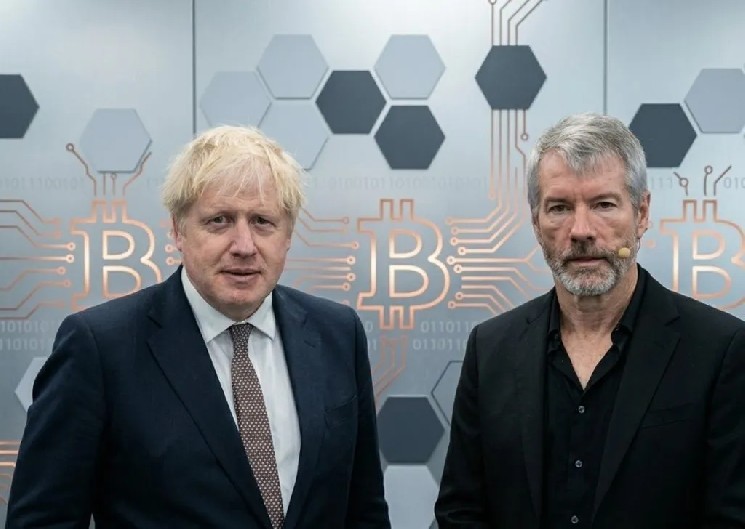

Boris Johnson Calls Bitcoin a “Giant Ponzi Scheme” – Sparking Heated Cryptocurrency Debate
Former Prime Minister Takes Aim at Digital Currency
Boris Johnson, the controversial former Prime Minister of the United Kingdom, has thrown himself into the ongoing cryptocurrency debate with surprisingly blunt commentary about Bitcoin. Speaking candidly, Johnson revealed that he has harbored suspicions for quite some time that Bitcoin might actually be “a giant Ponzi scheme.” His concerns aren’t just theoretical musings either – they’re grounded in real stories he’s encountered from everyday people who have lost substantial amounts of money investing in the digital currency. Johnson’s willingness to speak so directly about his doubts regarding cryptocurrency has immediately reignited passionate discussions on both sides of this divisive issue. For someone of his political stature to make such bold claims about Bitcoin demonstrates just how mainstream and important these conversations about digital assets have become. His comments reflect growing concerns among traditional politicians and financial experts who remain deeply skeptical about cryptocurrencies, even as they become increasingly integrated into global financial systems.
A Cautionary Tale from a Village Church
What makes Johnson’s criticism particularly compelling is that it’s rooted in a personal story rather than abstract economic theory. The former Prime Minister shared a troubling anecdote about an elderly person he encountered at a village church who experienced devastating financial consequences from Bitcoin investments. According to Johnson’s account, this individual was convinced years ago by an acquaintance to invest in Bitcoin, lured by promises that sound all too familiar to anyone who has followed cryptocurrency hype cycles. The person apparently believed they would be able to make quick money with just a modest initial investment – the kind of get-rich-quick promise that has attracted millions to cryptocurrency markets worldwide. However, the reality proved far different from these rosy predictions. After approximately three and a half years of holding and presumably trying to trade Bitcoin, this individual had lost around £20,000 – a substantial sum for anyone, but potentially devastating for an elderly person on a fixed income. Johnson emphasized that the losses weren’t just from market volatility but also from various fees and unsuccessful trading attempts that gradually eroded the investment. Perhaps most concerning to Johnson was his observation that this wasn’t an isolated incident – he indicated there were other people in the same region who had suffered similar financial setbacks, suggesting a pattern of cryptocurrency-related losses among ordinary investors.
Questioning the Fundamental Value of Digital Assets
Johnson didn’t stop at sharing cautionary tales; he delved into the philosophical and economic foundations of what gives assets value. He drew a comparison between Bitcoin and traditional stores of value like gold, arguing that physical precious metals have centuries of historical appeal and cultural significance that give them intrinsic worth. Even collectible items, Johnson suggested, possess a certain tangible demand and perceived value that people can understand and relate to. Bitcoin, however, is fundamentally different in his view – it’s essentially just a sequence of numbers, mathematical code stored across computer networks around the world. This digital nature raises uncomfortable questions for Johnson: “Who is behind this asset, who is responsible?” These aren’t frivolous concerns but get to the heart of how we understand value and trust in financial systems. Johnson pointed out that modern monetary systems, for all their flaws, are ultimately built on state authority and the collective trust that governments and central banks will maintain their currencies’ value. A currency without any central authority, without any government or institution backing it, can only maintain its value through one thing: continued investor confidence. And that confidence, Johnson implies, might be dangerously fragile. Without someone accountable, without an institution guaranteeing its value, Bitcoin exists in a kind of financial limbo that makes traditional economists and politicians deeply uncomfortable.
The Ponzi Scheme Comparison and Vulnerable Investors
The former Prime Minister’s most provocative claim is that the cryptocurrency market’s sustainability depends fundamentally on a continuous influx of new investors – a characteristic he believes closely resembles the structure of Ponzi schemes. In a classic Ponzi scheme, early investors are paid returns from the money brought in by later investors rather than from actual profits, creating an unsustainable system that eventually collapses when new money stops flowing in. Johnson appears to believe that Bitcoin operates on a similar principle: its value increases primarily because new buyers enter the market, pushing prices higher, which then attracts even more buyers in a self-reinforcing cycle. But what happens when that cycle breaks? When new investors stop arriving? Johnson’s concern is that the whole structure could come crashing down, leaving the most recent investors – often the least sophisticated – holding worthless digital assets. He expressed particular worry about older and inexperienced investors who might be especially vulnerable to what he characterizes as fraud or at least dangerously risky speculation. These individuals, often with limited financial literacy about complex digital assets, might invest retirement savings or emergency funds based on promises from enthusiastic promoters or even well-meaning friends and family. Johnson warned that trust in the cryptocurrency market could gradually diminish as more people experience losses and realize the risks involved. In a particularly cutting remark, he even suggested that in the future, people might find that traditional trading cards would have been a better investment than Bitcoin – a comment clearly designed to diminish the perceived legitimacy of cryptocurrency as an asset class.
Michael Saylor and Bitcoin Advocates Push Back
Johnson’s harsh criticism didn’t go unanswered. Michael Saylor, the founder of MicroStrategy and one of Bitcoin’s most prominent and vocal advocates, quickly responded to defend the cryptocurrency. Saylor’s company has invested billions of dollars in Bitcoin, making him one of the digital currency’s largest institutional supporters and giving him significant credibility within the crypto community. Saylor directly challenged Johnson’s characterization of Bitcoin as a Ponzi scheme, arguing that the comparison fundamentally misunderstands both Ponzi schemes and Bitcoin’s actual structure. According to Saylor, true Ponzi schemes have specific characteristics: they require a centralized operator who promises investors certain returns and then pays early investors using funds collected from later investors, all while pretending that returns come from legitimate business activities. Bitcoin, Saylor explained, has none of these elements. There is no central issuer controlling Bitcoin, no promoter making guaranteed return promises, and no organization collecting money from new investors to pay existing ones. Instead, Saylor described Bitcoin as “an open, decentralized monetary network driven by code and market demand.” In his view, Bitcoin operates through transparent, open-source software that anyone can examine and verify. Its value comes from market participants who freely choose to buy and sell it, not from any centralized promise of returns. Saylor’s response represents the broader Bitcoin community’s frustration with what they see as mischaracterizations from traditional financial and political figures who don’t fully understand the technology or its purpose. For Bitcoin believers, the cryptocurrency represents a revolutionary alternative to government-controlled currencies, offering financial freedom and protection against inflation and political interference.
The Broader Implications of This Debate
This exchange between a former Prime Minister and a prominent Bitcoin advocate represents more than just two individuals with different opinions – it reflects a fundamental divide in how society views money, value, and financial innovation. On one side are traditional thinkers like Johnson who believe that currencies and assets need institutional backing, government oversight, and established frameworks to be trustworthy and stable. They see Bitcoin’s lack of central authority not as a feature but as a dangerous flaw that leaves investors unprotected and vulnerable to market manipulation and catastrophic losses. Their concerns are grounded in real stories of people losing substantial money, often individuals who can least afford such losses. On the other side are cryptocurrency enthusiasts like Saylor who view government-controlled currencies as the real problem – subject to inflation, political manipulation, and the failures of central banks and governments. They see Bitcoin’s decentralization as its greatest strength, creating a form of money that no government can debase or control. As cryptocurrency becomes increasingly mainstream, with major financial institutions now offering crypto services and some countries even considering Bitcoin as legal tender, these debates will only intensify. For ordinary people trying to decide whether to invest in cryptocurrency, the truth probably lies somewhere between these extremes. Bitcoin and other cryptocurrencies do represent genuine financial innovation with potential benefits, but they also carry significant risks, especially for inexperienced investors who don’t fully understand the technology or market dynamics. The most prudent approach is probably to treat cryptocurrency as a high-risk investment, never investing more than you can afford to lose, and certainly not putting retirement savings or emergency funds into such volatile assets. Whether Bitcoin ultimately proves to be a revolutionary financial innovation or a cautionary tale about speculation and hype may not be clear for many years to come.









