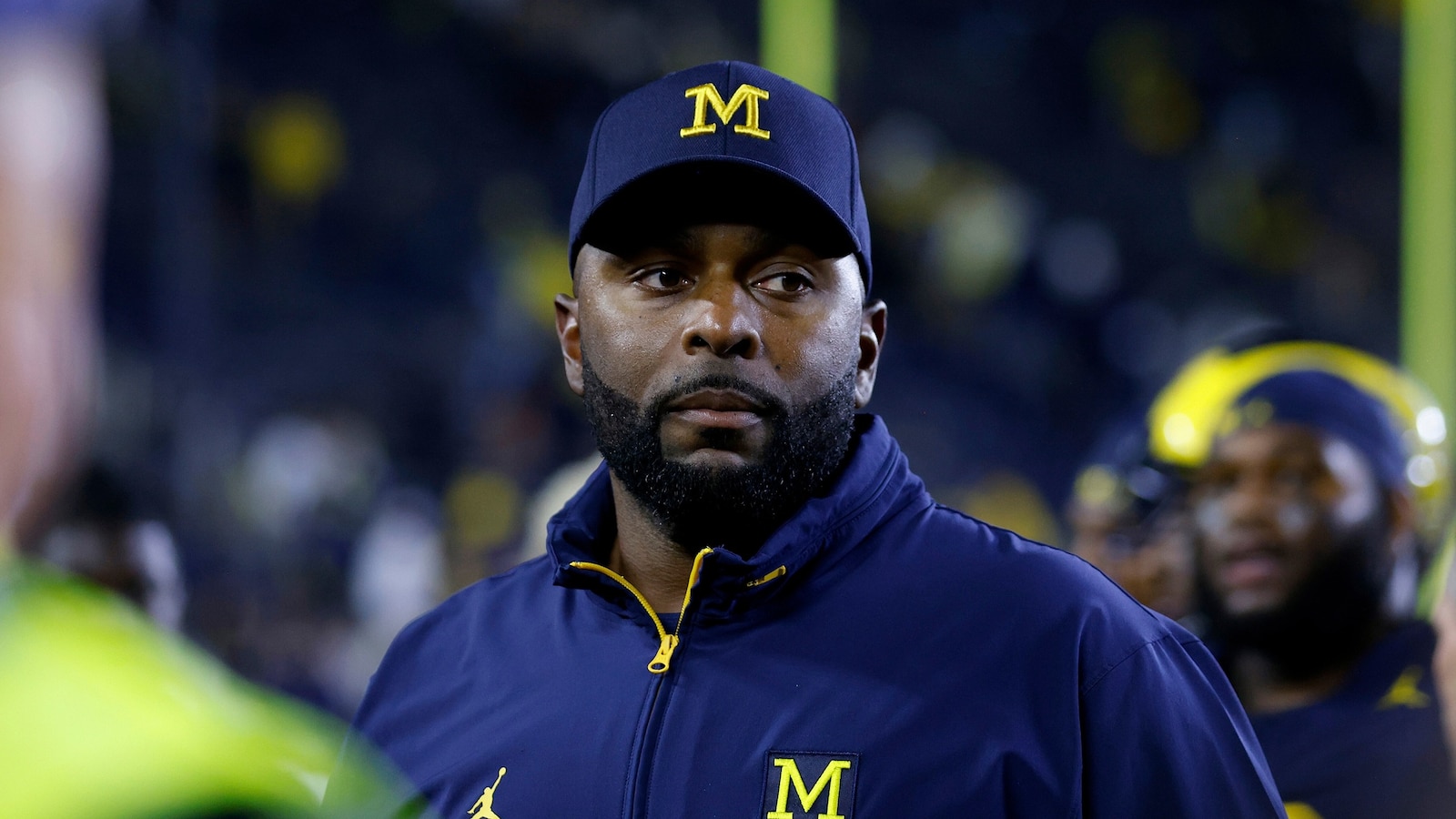

The Fall of Sherrone Moore: A Promising Career Derailed by Personal Turmoil
The Plea Deal and Current Legal Standing
In a dramatic turn of events that has shocked the college football world, Sherrone Moore, the former University of Michigan head football coach, entered a no contest plea to two misdemeanor charges on Friday, bringing some resolution to a case that has dominated headlines since December. The 40-year-old coach, whose promising career came to an abrupt halt just months ago, pleaded no contest to malicious use of a telecommunications device and trespassing, significantly lesser charges than those he initially faced. As part of the negotiated plea agreement, three more serious charges—home invasion, stalking in a domestic relationship, and breaking and entering in a domestic relationship—were dropped by prosecutors. The prosecution made it clear that after reviewing the evidence, they did not believe they could prove domestic violence occurred in this incident. Moore’s sentencing has been scheduled for April 14, and until that date arrives, he will remain under GPS monitoring as ordered by the presiding judge. This monitoring requirement ensures that authorities can track his movements and location at all times, a standard precautionary measure in cases involving allegations of threatening behavior or potential danger to others.
The Incident That Changed Everything
The events that led to Moore’s arrest and subsequent firing unfolded on December 10, a day that would mark the end of his tenure at one of college football’s most prestigious programs. According to police reports, the Pittsfield Township Police Department received a 911 call from attorney Heidi Sharp, who represented a woman with whom Moore had allegedly been involved in an extramarital affair. Sharp’s frantic call to emergency services painted a disturbing picture: she reported that Moore had entered her client’s apartment and was attacking her. The attorney explained to investigators that she had received a distressing phone call from her client, who simply said, “Sherrone is here,” before Sharp heard screaming through the phone line. What made the situation even more alarming was Sharp’s account that Moore had armed himself with a knife during the confrontation. The incident occurred shortly after Sharp and her client had left the University of Michigan campus, where they had just filed a formal report about the situation. The timing suggests a possible confrontation that escalated quickly following official action being taken against the coach. Moore, a married father of three children, found himself in handcuffs that evening, his booking photo later released by the Pittsfield Township Police Department, marking a stark contrast to the victorious images of him on the sidelines just months earlier.
The Alleged Confrontation Details
The details that emerged from Detective Jessica Welker’s testimony during the probable cause hearing painted a harrowing picture of what allegedly transpired inside that apartment. According to the detective’s account based on Sharp’s statement, Moore allegedly grabbed two knives from a kitchen drawer and pointed them at the alleged victim while repeatedly saying, “You ruined my life. You ruined my life.” This phrase, repeated in apparent anguish, suggested the emotional state Moore was allegedly in during the confrontation. The detective testified that Moore allegedly backed the woman toward the living room while armed with the knives, creating an intimidating and threatening situation. Court documents later revealed additional alarming details, claiming that Moore had grabbed not just knives but also a pair of kitchen scissors, and that he had threatened to harm himself rather than the victim. According to these accounts, Moore allegedly threatened to take his own life during this confrontation, but stopped when the woman indicated she would call the police. This particular detail added another layer of complexity to the case, suggesting a person in extreme emotional distress rather than someone with clear violent intent toward another. The conflicting accounts and the ultimate decision by prosecutors that they couldn’t prove domestic violence may explain why the plea deal resulted in significantly reduced charges from the initial accusations.
The University’s Swift Response
The University of Michigan moved with remarkable speed in addressing the situation, firing Moore before his arrest was even completed on December 10. The institution, which has one of the most storied football programs in the nation, released a carefully worded statement explaining their decision to terminate the coach who had been expected to lead the Wolverines into a new era. According to the university’s official statement, “credible evidence was found that Coach Moore engaged in an inappropriate relationship with a staff member.” This violation of professional boundaries and university policy was apparently serious enough to warrant immediate termination, regardless of the criminal charges that would follow. The university’s decision to fire Moore before the legal process had run its course demonstrated their commitment to maintaining institutional integrity and professional standards, even at the cost of losing a coach who had been part of their successful program. Moore had been associated with Michigan football for years, working his way up through the coaching ranks before finally achieving his dream position as head coach. His firing represented not just a personal catastrophe but also a significant disruption to the university’s athletic program, forcing them to search for new leadership at a critical time in the competitive landscape of college football.
The Silence and What Comes Next
In the aftermath of Friday’s plea hearing, neither Moore nor his legal team has issued any public statement regarding the plea deal or the events that led to his arrest. This silence is likely strategic, as any public comments could potentially impact his sentencing hearing scheduled for April 14. The lack of commentary leaves many questions unanswered about Moore’s perspective on what happened that December evening and what led to the deterioration of what appeared from the outside to be a successful career and stable family life. Legal experts often advise clients to refrain from public statements during ongoing legal proceedings, and Moore’s attorneys appear to be following this conventional wisdom. The April sentencing date will be a crucial moment when Moore learns what consequences he will face for his actions. Misdemeanor convictions, while far less serious than the felony charges he originally faced, can still result in jail time, probation, fines, mandatory counseling, and other penalties. The judge will consider various factors, including Moore’s lack of prior criminal history, the circumstances of the offense, any statements from the victim, and recommendations from both the prosecution and defense teams. Beyond the legal consequences, Moore faces the daunting challenge of rebuilding his life and career after such a public fall from grace. His reputation in the coaching community has been severely damaged, and returning to college football coaching, especially at the highest level, seems unlikely in the near future, if ever.
The Broader Implications and Human Cost
The Sherrone Moore case serves as a sobering reminder that success in one’s professional life doesn’t immunize anyone from personal failures and poor decision-making. Here was a man who had achieved what many consider a dream job—head coach at the University of Michigan, one of college football’s most prestigious positions—only to lose everything through alleged involvement in an inappropriate relationship and the confrontation that followed. The human cost of this situation extends far beyond Moore himself. There’s his wife and three children, who must now navigate the public humiliation and private pain of a husband and father whose actions have upended their family life. There’s the woman at the center of the allegations, whose privacy has been invaded by this very public case and who has had to relive a traumatic experience through legal proceedings. There are the players Moore coached, who lost their leader mid-season and had to adjust to new coaching during a critical time in their athletic careers. There are the assistant coaches and staff members whose employment and career trajectories were affected by the sudden change in leadership. The case also highlights the complexities of relationships, power dynamics in workplace settings, and the importance of maintaining professional boundaries. Whatever ultimately drove Moore to allegedly enter that apartment on December 10, the consequences have been devastating and far-reaching. As he awaits sentencing in April, Moore has time to reflect on how a series of choices—to engage in an inappropriate relationship, to allegedly enter someone’s home uninvited, to allegedly make threatening statements and gestures—led to the complete unraveling of the life he had built. The story serves as a cautionary tale about how quickly success can turn to failure when personal conduct crosses legal and ethical lines.