


Face the Nation Summary: Trump Administration Faces Scrutiny Over Immigration, Elections, and Public Health
Immigration Enforcement Under Fire as Political Costs Mount
The Trump administration finds itself walking a political tightrope on immigration enforcement as the 2026 midterm elections approach. President Trump has acknowledged that “maybe we can use a little bit of a softer touch” regarding deportation operations, particularly following the tragic deaths of two Minnesota residents during federal immigration raids. This admission comes as Republican lawmakers voice growing concerns about the political fallout from aggressive enforcement tactics that have captured national attention.
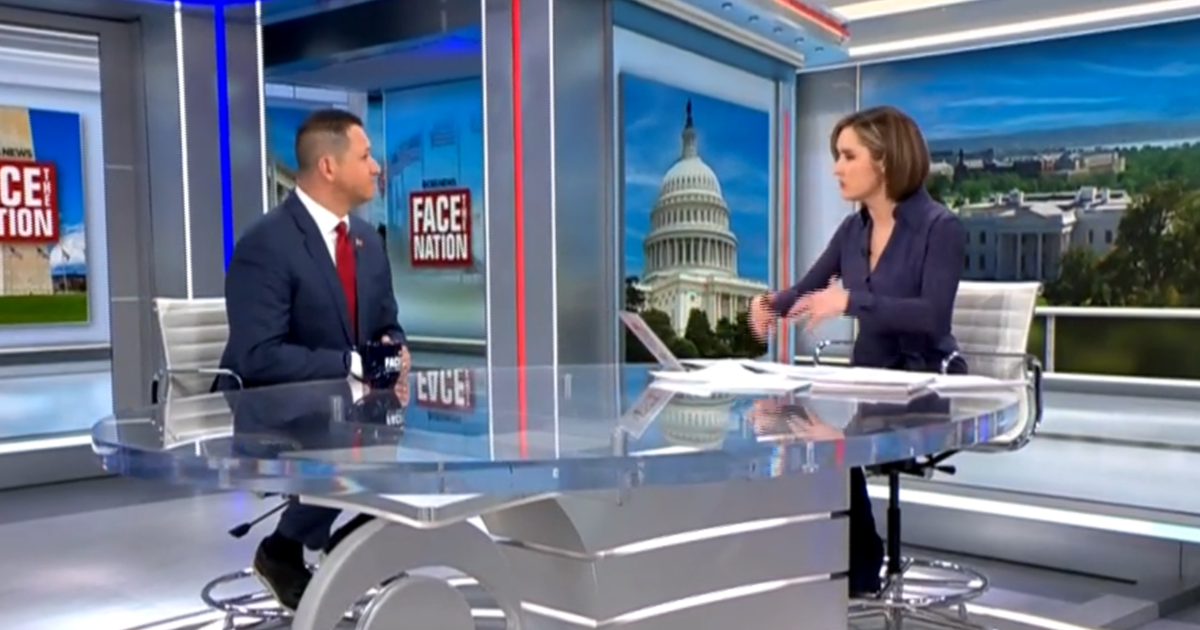
Texas Republican Congressman Tony Gonzales, whose district includes a family detention facility, offered a nuanced perspective on the immigration debate during his appearance. While defending the administration’s focus on criminal deportations, Gonzales emphasized the need for better communication between federal agents and local communities. He suggested creating liaison positions to bridge the gap between ICE operations and municipal leaders, drawing parallels to successful programs from the Biden administration. “We can be compassionate and we can also enforce our laws,” Gonzales said, trying to strike a balance between the administration’s hardline stance and growing public discomfort with enforcement methods.
The political stakes became clearer when discussing recent special elections, where Democrats have flipped 26 state legislative seats previously held by Republicans since Trump took office. In Texas alone, a stunning Democratic victory in a reliably red district has Republicans worried about losing Latino voters who helped deliver them control of Congress and the White House. The case of five-year-old Liam Ramos, detained with his father despite entering through legal channels using a government-approved app, has become emblematic of the tensions between strict enforcement and humanitarian concerns. While Gonzales defended the administration’s actions, arguing for a “nation of laws,” he acknowledged the emotional difficulty of such cases.
Election Security and Constitutional Concerns Take Center Stage
Perhaps the most alarming discussions on the broadcast centered on the Trump administration’s unprecedented involvement in state election processes, raising serious constitutional questions about the separation of powers and federal overreach. Senator Mark Warner, the top Democrat on the Senate Intelligence Committee, revealed that the FBI seized 2020 voting records from Fulton County, Georgia, with Director of National Intelligence Tulsi Gabbard personally present at the scene. Warner described the situation as “Nixonian,” questioning how the president would even know about a search warrant before it was executed and why the DNI would be involved in what appears to be a domestic matter without any foreign intelligence nexus.
The administration’s shifting explanations for Gabbard’s presence have only deepened concerns. Initial reports claimed the president personally requested her involvement, but later accounts attributed the direction to Attorney General Pam Bondi. Warner emphasized that the DNI’s role is to focus on foreign threats, not domestic political investigations, and expressed alarm that neither he nor the Intelligence Committee was informed about these activities beforehand. The situation became more complex with revelations that Gabbard had previously traveled to Puerto Rico to seize voting machines, again without informing Congress. A whistleblower complaint against Gabbard, which two inspectors general deemed non-credible but which Warner finds troubling, remains heavily redacted and under review.
President Trump has repeatedly called for “nationalizing” elections and placing Republicans in charge of voting procedures in 15 states, statements that directly contradict constitutional provisions giving states authority over elections. David Becker, an election law expert, explained that the Constitution’s Article One, Section Four specifically grants states this power, with Congress having legislative authority but the executive branch explicitly excluded from election administration. Multiple federal courts have already blocked Trump administration executive orders attempting to dictate election policies to states and demands for sensitive voter data from 24 states and Washington D.C. Becker emphasized that the 2020 election was “the most scrutinized election in American history,” with paper ballots counted multiple times in contested states, always confirming the original results.
Vaccine Hesitancy and Measles Outbreak Present Growing Health Crisis
A disturbing public health trend emerged as a major topic, with former FDA Commissioner Dr. Scott Gottlieb warning that America faces a generational shift away from childhood vaccinations with potentially devastating consequences. The measles outbreak that Gottlieb predicted last year has materialized and expanded, with South Carolina reporting approximately 900 cases in the largest outbreak since measles was declared eliminated in the United States. Cases have appeared in iconic locations like Disneyland and the nation’s capital, signaling that this isn’t a localized problem but a nationwide crisis in the making.
Gottlieb explained that current vaccination rates have dropped to dangerous levels, with the national MMR (measles, mumps, rubella) vaccination rate at about 90 percent, below the 95 percent threshold needed for herd immunity. Some states experiencing outbreaks have rates as low as 81 percent in Alaska and 88 percent in other affected areas. The demographics of infections are particularly concerning—most cases are occurring in children aged 5 to 17 rather than toddlers, suggesting that declining vaccination rates among younger children will create even larger outbreaks as these unvaccinated cohorts age into school settings where diseases spread more easily.
The political dimension of this health crisis cannot be ignored. Gottlieb traced much of the current vaccine hesitancy to backlash against COVID-19 vaccine mandates, which he opposed at the time as likely to create exactly this kind of anti-vaccine movement. The problem has been compounded by mixed messages from health officials in the current administration. During Senate testimony, NIH Director Dr. Jay Bhattacharya carefully avoided directly stating that vaccines don’t cause autism, instead saying he hadn’t seen studies showing “any single vaccine” causes autism—a statement he later walked back on social media. Gottlieb suggested that administration officials are reluctant to contradict Secretary of Health and Human Services Robert F. Kennedy Jr., who has been a prominent vaccine skeptic for decades and is now in a position to influence official policy. The former FDA commissioner emphasized that viral infections themselves can have serious long-term health consequences, sharing his personal experience with Epstein-Barr virus leading to B-cell lymphoma, and noting research linking various viruses to conditions including Alzheimer’s disease, Type 1 diabetes, and multiple sclerosis.
Congressional Funding Battle Reflects Deeper Immigration Reform Divide
With Department of Homeland Security funding set to expire on Friday, Congress faces a standoff that reflects fundamental disagreements about immigration enforcement methods and civil liberties protections. Democrats are demanding a series of reforms as the price of their votes, including requirements for judicial warrants rather than administrative ones before entering private property, mandatory identification and body cameras for federal agents, protection of sensitive locations like schools and churches, prohibitions on racial profiling, and better coordination with local jurisdictions for prosecuting crimes.
Congressman Gonzales indicated openness to some reforms, particularly body cameras, which the administration has already begun implementing, and communication liaisons between ICE and local communities. However, he drew a hard line against requiring judicial warrants, arguing that administrative warrants are necessary tools for law enforcement and that requiring judges to approve every action would create roadblocks that prevent agents from apprehending criminals. This position puts him at odds with Democrats who argue that the Fourth Amendment protects all people, regardless of citizenship status, from unreasonable searches and seizures, and that a judicial check on executive power is a fundamental constitutional principle.
The debate over warrants reflects a broader tension in how the Trump administration is interpreting its enforcement authority. The administration has adopted new interpretations of administrative warrants that weren’t used even during Trump’s first term, allowing warrantless arrests in situations that previously would have required judicial approval. Democrats like House Minority Leader Hakeem Jeffries argue that requiring judicial warrants for entering private property shouldn’t be controversial and represents basic constitutional protection. Gonzales countered that when local officials won’t cooperate with federal immigration enforcement, ICE agents need tools to do their jobs, and administrative warrants provide that authority without the delays of obtaining judicial approval.
Racial Controversy and Political Messaging Complicate Administration’s Agenda
The broadcast also addressed a significant controversy involving a video posted to President Trump’s social media account that included racist imagery of President Obama and former First Lady Michelle Obama at its conclusion. While the video was eventually removed and the president claimed he hadn’t watched the entire clip before posting, the incident has drawn condemnation from Republican lawmakers and raised questions about vetting processes within the White House. U.S. Olympic athletes competing in Milan expressed “mixed emotions” about representing America during this period, with one athlete stating, “Just because I’m wearing the flag doesn’t mean I represent everything that’s going on in the U.S.”
Congressman Gonzales downplayed the incident, noting the offensive portion appeared for only one second at the video’s end and describing it as “really weird.” He emphasized that the bulk of the video focused on election integrity, which he characterized as an important topic, and suggested the White House would soon issue a memo outlining its policy for the upcoming midterm elections with the Director of National Intelligence playing a central role. However, when pressed on whether there should be consequences for the staffer who allegedly posted the video, or whether the president should apologize, Gonzales deflected, saying Trump shouldn’t worry about people being upset with him and noting that Democratic leaders have also used inappropriate language.
The controversy highlights the administration’s ongoing struggles with messaging and discipline as it pursues aggressive policy changes across multiple fronts. With approval ratings showing public support for the concept of mass deportation but disapproval of the methods being employed, Republicans face a delicate balancing act heading into the midterms. The flip of previously safe Republican seats to Democrats, particularly in districts with significant Latino populations, has created urgency around recalibrating both policy implementation and communication strategies. As Senator Warner warned, the administration’s actions on election security, immigration enforcement, and other fronts represent “uncharted territory” that could have profound implications for American democracy and the 2026 elections. The coming months will test whether the administration can address these concerns while maintaining its policy priorities, or whether the political costs will force more significant course corrections.