



Britain’s Political Earthquake: Labour and Conservatives Suffer Devastating Losses in Local Elections
A Night of Reckoning for Traditional Power
The political landscape of the United Kingdom experienced a seismic shift on Thursday as voters delivered a devastating blow to both of the country’s traditional ruling parties in local elections across England. Prime Minister Keir Starmer’s Labour Party, which swept to power less than two years ago with a commanding parliamentary majority, watched in dismay as more than half of its local council seats evaporated into the night. The Conservative Party, which governed Britain for fourteen years before its own landslide defeat in 2024, fared no better, continuing its downward spiral and losing significant ground to insurgent political forces. For over a century, these two political giants have dominated British politics, producing every prime minister and shaping the nation’s destiny. Now, both parties find themselves hemorrhaging support to outsider movements, raising fundamental questions about the future of British democracy and whether the traditional two-party system can survive this populist uprising.
The Rise of Reform UK and Nigel Farage’s Triumph
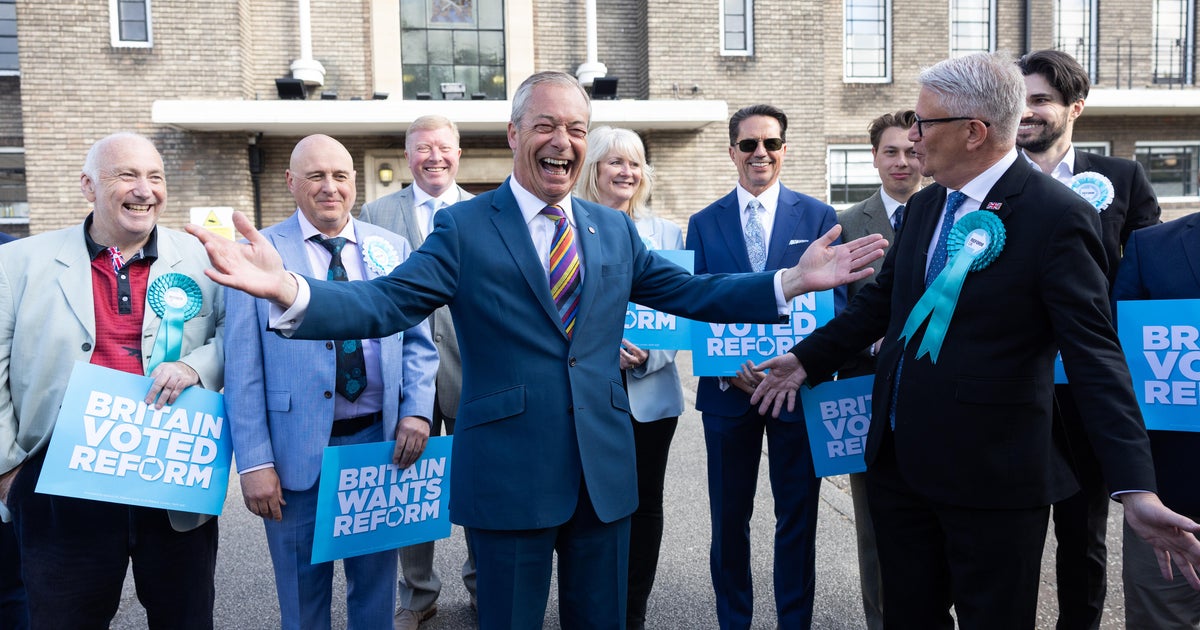
The undisputed winner of Thursday’s electoral contest was Nigel Farage and his right-wing populist party, Reform UK, which made substantial gains across England, particularly in working-class and post-industrial communities that once formed the bedrock of Labour’s support. Farage, a controversial figure who has long championed nationalist and anti-establishment causes, celebrated what he described as “a truly historic shift in British politics,” declaring that Labour was being “wiped out” in areas where it had previously enjoyed unquestioned dominance. The firebrand politician, who has cultivated close ties with President Trump and appeared alongside the American leader on multiple occasions, has successfully tapped into widespread discontent with mainstream politics. Reform UK’s success mirrors populist political realignments witnessed across the United States and parts of Europe, where traditional center-left and center-right parties have lost ground to movements promising radical change and challenging established political norms. In some regions of England, Reform UK is now positioning itself as the primary alternative to Labour, effectively replacing the Conservative Party as the main opposition force—a development that would have seemed unthinkable just a few years ago.
Starmer Faces Mounting Pressure but Refuses to Quit
Prime Minister Keir Starmer confronted the electoral catastrophe head-on, acknowledging the scale of his party’s defeat while firmly rejecting growing calls for his resignation as both party leader and national leader. “I’m not going to walk away from those challenges and plunge the country into chaos,” Starmer declared, striking a defiant tone despite the brutal results. The Prime Minister described the outcome as “tough” and characterized it as a clear warning from voters to his government, accepting personal responsibility for the setback while insisting that such difficult moments only strengthen his determination to deliver the change he promised when Labour won power. “It hurts, and it should hurt, and I take responsibility,” Starmer said, attempting to demonstrate both humility and resolve in the face of devastating losses. However, his position has become increasingly precarious, with critics within his own party questioning whether he can recover from such a comprehensive rejection by voters after less than two years in office. The electoral beating represents a stunning reversal of fortune for a leader who, not long ago, seemed to have secured Labour’s position as the natural party of government for years to come.
Understanding the Stakes: Local Elections as National Barometer
While Thursday’s elections determined the composition of 136 city and county councils across England, with approximately 5,000 seats at stake along with six mayoral races, their significance extends far beyond decisions about trash collection, road maintenance, social care, and public housing. Much like midterm elections in the United States, these local contests serve as a crucial barometer of the national mood, providing citizens with an opportunity to express their opinions about the current government between general parliamentary elections. This dynamic gives the voting particular importance, as it offers the electorate a chance to send messages of approval or disapproval to those in power without triggering a full change of government. Additionally, local elections provide valuable opportunities for smaller parties, independent candidates, and political outsiders to establish footholds that would be nearly impossible to achieve in national parliamentary races, where the electoral system tends to favor established parties. Elections were also held for the Scottish Parliament and Welsh Assembly, with those results just beginning to emerge on Friday, adding further complexity to the evolving political picture across the United Kingdom and potentially revealing different regional dynamics at play in various parts of the country.
The Conservative Collapse Continues
For the Conservative Party, Thursday’s results represented yet another chapter in an ongoing story of decline and voter rejection. After governing Britain for fourteen consecutive years, the Conservatives suffered a catastrophic defeat in the 2024 general election, losing power in a landslide that swept Labour into office with a commanding majority. Under the leadership of Kemi Badenoch, the party has struggled to recover from the deep voter dissatisfaction that accumulated during its long tenure in government, a period marked by economic turbulence, political scandals, and the chaotic aftermath of Brexit. The local election results confirmed that this dissatisfaction has not subsided; instead, it has intensified and evolved, with many traditional Conservative voters either staying home or defecting to Reform UK. In certain regions of England, particularly working-class and post-industrial areas that have felt left behind by economic changes and globalization, the Conservative Party is no longer seen as a viable political force, having been effectively replaced by Reform UK as the primary alternative to Labour. This shift represents a fundamental realignment of British politics, with implications that extend far beyond local governance to the very structure of the nation’s democratic system.
Minor Gains for Greens and the Future of British Democracy
The Green Party of England and Wales managed to secure modest gains in Thursday’s voting, though their success paled in comparison to the breakthrough achieved by Reform UK. Green Party leader Zack Polanski brought his party to the polls amid controversy, having recently re-posted a social media message criticizing the actions of London police officers who arrested a knife-wielding suspect following a stabbing attack that wounded two Jewish men. Despite this potentially damaging incident, the Greens managed to increase their representation, and Polanski seized upon the overall results to proclaim that Britain’s traditional two-party system “is not just dying, it is dead and it is buried.” While this declaration may be premature, the election results certainly provide substantial evidence of voter appetite for alternatives to Labour and Conservative dominance. As votes continued to be counted in Scotland and Wales, the full picture of Britain’s shifting political landscape remained incomplete, but the trajectory appeared clear: voters are increasingly willing to abandon traditional loyalties and experiment with parties and movements that promise different approaches to governing. Whether this represents a temporary protest or a permanent realignment remains to be seen, but for Prime Minister Starmer and Conservative leader Badenoch, the challenge is immediate and existential—how to win back voters who have fundamentally lost faith in mainstream politics and are searching for something radically different from what the establishment has offered for more than a century.