



A Journey From Homelessness to Homecoming: A Mother-Daughter Story of Resilience
Breaking the Cycle of Struggle in Boca Raton
Boca Raton, Florida, is known as one of the state’s most affluent cities, where luxury homes line pristine beaches and wealth appears to be the norm. Yet beneath this glossy exterior, not everyone enjoys the same prosperity. Financial hardship can strike anywhere, even in seemingly paradise-like settings. For 26-year-old Ana Duarte and her mother Anette, their story is a powerful reminder that poverty doesn’t discriminate by zip code. Growing up in this wealthy enclave, Ana experienced a childhood that stood in stark contrast to her surroundings. She recalls worrying about things no child should have to consider—where they would sleep that night, how they would afford basic necessities, and whether they would ever have a stable place to call home. These concerns, which should have been far from a young girl’s mind, became her daily reality as she and her mother navigated years of homelessness and financial instability.
A Mother’s Unwavering Love Through Impossible Circumstances
Anette Duarte worked tirelessly to provide for her daughter, taking on demanding jobs as a maid and whatever other work she could find. Despite working long hours and multiple jobs, she struggled to keep a roof over their heads. They moved constantly, never able to establish the stable home that young Ana desperately craved. Through it all, Anette held onto one certainty—that she and her daughter had each other, and together they could face whatever challenges the world threw at them. Ana’s constant plea for a real home weighed heavily on her mother’s heart. Anette heard her daughter’s requests and felt the pain of not being able to fulfill this basic need. The guilt of not providing what her child needed was crushing, but circumstances seemed beyond her control. Despite her best efforts and longest hours, financial stability remained frustratingly out of reach. Yet Anette never stopped trying, never stopped working, and never stopped loving her daughter with every fiber of her being, even when it seemed like nothing she did was enough.
When Love Turns to Resentment
As Ana entered high school, the years of hardship began taking an emotional toll that changed their relationship. The patience and understanding she had shown as a young child started to erode, replaced by bitterness and resentment. Ana began to blame her mother for their circumstances, viewing their struggles through the lens of a teenager who couldn’t fully comprehend the impossible situation her mother faced. This shift was devastating for both of them. Anette felt her daughter pulling away, interpreting Ana’s anger as a belief that she didn’t care, when in reality, she cared more than anything but felt completely powerless to change their situation. The divide between them grew until Ana made the difficult decision to leave home. For Anette, this separation was torture—losing her daughter, the person she had fought so hard for, felt like the ultimate failure. But for Ana, leaving seemed like the only way to break free from the patterns that had defined her childhood. She didn’t want to continue living in survival mode; she wanted to build something different, something stable, something better.
Building a New Life Through Education and Determination
After leaving home, Ana channeled her pain and determination into creating the life she had always dreamed of. She enrolled at Florida Atlantic University, where she pursued a degree in social work—a choice that likely reflected her own experiences with hardship and her desire to help others facing similar struggles. Her educational journey wasn’t just about getting a degree; it represented a complete transformation of her circumstances through her own efforts. Graduating from university was a monumental achievement, especially considering where she had started. Following graduation, Ana secured a position with Food for the Poor, an international Christian relief organization dedicated to helping those in need. The irony wasn’t lost on her—the girl who had once worried about where she would sleep was now working to help others escape poverty. This job represented more than just employment; it was validation that she had successfully broken the cycle that had trapped her and her mother for so long.
The Greatest Gift: A Place to Call Home
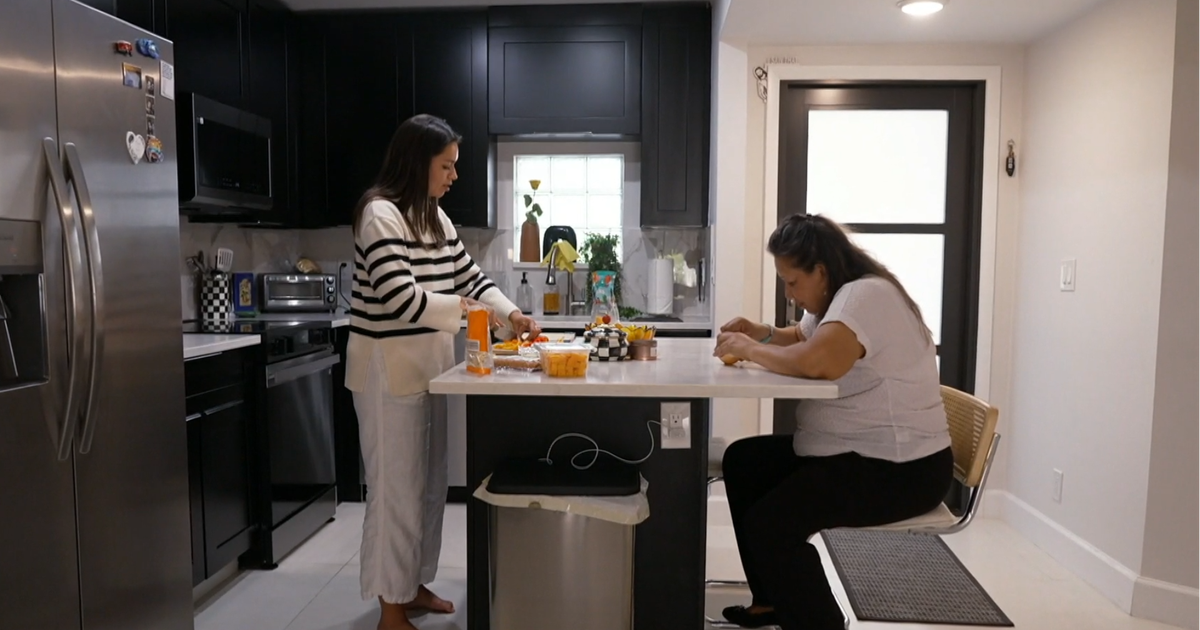
With her degree in hand and a steady job, Ana achieved something that had eluded her throughout her childhood—she got her first real apartment. It was a two-bedroom, two-bathroom space, nothing extravagant by Boca Raton standards, but to Ana, it represented everything she had worked for. And in that moment of achievement, something shifted in her heart. She thought about her mother, about all those years of struggle, and about the woman who had worked herself to exhaustion trying to provide a home. Ana realized that while she had blamed her mother for their hardships, Anette had been doing everything humanly possible with the limited resources she had. With this newfound understanding, Ana picked up the phone and called her mother with a question that would change both their lives: “I have an apartment. It’s two-bedroom, two-bath. Would you like to come live with me?” Not only did Ana invite her mother to live with her, but she also gave Anette the master bedroom—the larger, better room in the apartment. When Anette first walked into that master bedroom, she was speechless. For the first time in her entire life, she had her own bedroom. She had a bed that was truly hers, a space where she belonged. The moment was overwhelming for both women, but particularly for Anette, who had spent decades working and sacrificing without ever having this basic comfort. Ana watched her mother take it all in, seeing the wonder and disbelief in her eyes, and understood the magnitude of what this meant.
Understanding the Depth of a Mother’s Love
This Mother’s Day story reminds us that the holiday isn’t just about celebrating the material things mothers provide or the perfect childhood experiences they create. It’s about recognizing that mothers do everything within their power, often facing impossible circumstances with limited resources. Anette Duarte may not have been able to give her daughter the stable home she desperately wanted during her childhood, but she gave her something equally important—unwavering love and the example of never giving up, no matter how difficult life becomes. The reconciliation between Ana and Anette represents a full-circle moment that transcends their individual story. Ana’s journey from a homeless child to a college graduate who could provide for her mother demonstrates the power of resilience, education, and determination. But perhaps more importantly, it shows the profound impact of forgiveness and understanding. Ana eventually recognized that her mother’s inability to provide a home wasn’t due to lack of caring but rather to circumstances beyond her control. This realization allowed her to move from resentment to compassion, from blame to gratitude. Today, every time Anette looks at her daughter, she’s reminded of this transformation and the gift of finally having a place to call home. And every time Ana looks at her mother, she sees not the failures she once focused on, but the strength, sacrifice, and unconditional love that carried them through their darkest days. Their story serves as a powerful reminder that sometimes the greatest gift we can give our mothers isn’t something we buy in a store, but rather the recognition and appreciation of everything they sacrificed for us, and the opportunity to give back to them in return.