
America at War: Inside the Escalating Iran Conflict
The First American Casualties and Opening Strikes
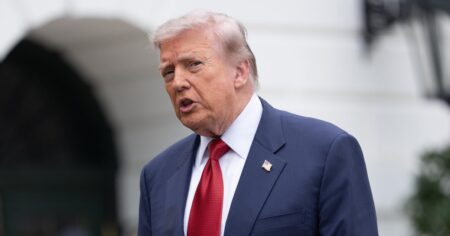
The United States has entered into what many are calling its most significant military engagement since the wars in Iraq and Afghanistan. What began as targeted strikes against Iranian military installations has rapidly evolved into a multi-day aerial campaign that has already claimed American lives. Just hours after President Trump appeared in a sobering video warning that American casualties might occur, that prophecy became reality. Three U.S. service members have been killed and five seriously wounded in what the military has designated “Operation Epic Fury.”
The conflict erupted early Saturday morning when coordinated U.S. and Israeli forces launched a massive bombing campaign against Iran. The strikes targeted Iranian air defenses, missile launchers, stockpiles, and regime infrastructure. Most dramatically, Iran’s Supreme Leader Ayatollah Ali Khamenei was killed at his Tehran compound—a development that has sent shockwaves throughout the Middle East and raised fundamental questions about what comes next for the Islamic Republic. Intelligence sources report that as many as 40 senior Iranian officials died in the first wave of attacks, effectively decapitating much of the country’s leadership structure. The U.S. Embassy in Israel has instructed all American government employees and their families to shelter in place, acknowledging they cannot assist with evacuations as the security situation deteriorates.
The Battle Spreads Across the Region
What began as strikes on Iran has mushroomed into a regional conflagration that threatens to engulf America’s allies throughout the Middle East. Iran’s Revolutionary Guard Corps has launched what they’re calling “the most ferocious offensive operation in the history of the Iranian armed forces,” sending waves of drones and missiles not just toward Israel, but across the Persian Gulf region. Luxury hotels in Dubai have been rattled by explosions. Smoke has billowed across Doha’s skyline in Qatar. Bahrain, Kuwait, Saudi Arabia, and Oman have all reported strikes on their territory. These countries, while hosting major U.S. military bases with tens of thousands of American service members, had reportedly urged the United States not to take this action, fearing exactly this kind of regional spillover.
The human toll is mounting. In Tel Aviv, an Iranian missile penetrated one of the world’s most sophisticated air defense systems, killing a woman in her 40s and injuring more than 40 others, including seven children. Throughout the night, air raid sirens sent Israeli residents scrambling to bomb shelters. The conflict has also sparked violence far beyond the immediate war zone. In Pakistan, pro-regime demonstrators attempted to storm the U.S. consulate in Karachi, with at least nine people killed in confrontations with security forces. In Iraq, hundreds of protesters were pushed back with water cannons near the American Embassy in Baghdad’s Green Zone. Perhaps most concerning for the global economy, two oil tankers have been struck in attacks near the Strait of Hormuz, through which one-fifth of the world’s oil supply passes daily.
The Political Battle at Home
While missiles fly abroad, a fierce political battle has erupted in Washington over the legality and wisdom of the military action. The conflict has exposed deep partisan divisions about presidential war powers, with Democrats demanding Congress be consulted before committing American forces to what they’re calling an illegal war. Senator Chris Murphy of Connecticut has been among the most vocal critics, calling the operation “a disaster” and “an illegal war” that no one in America asked for. He’s demanding Congress return to Washington to vote on a War Powers Resolution that would attempt to halt the military action, though no such resolution has ever successfully overcome a presidential veto.
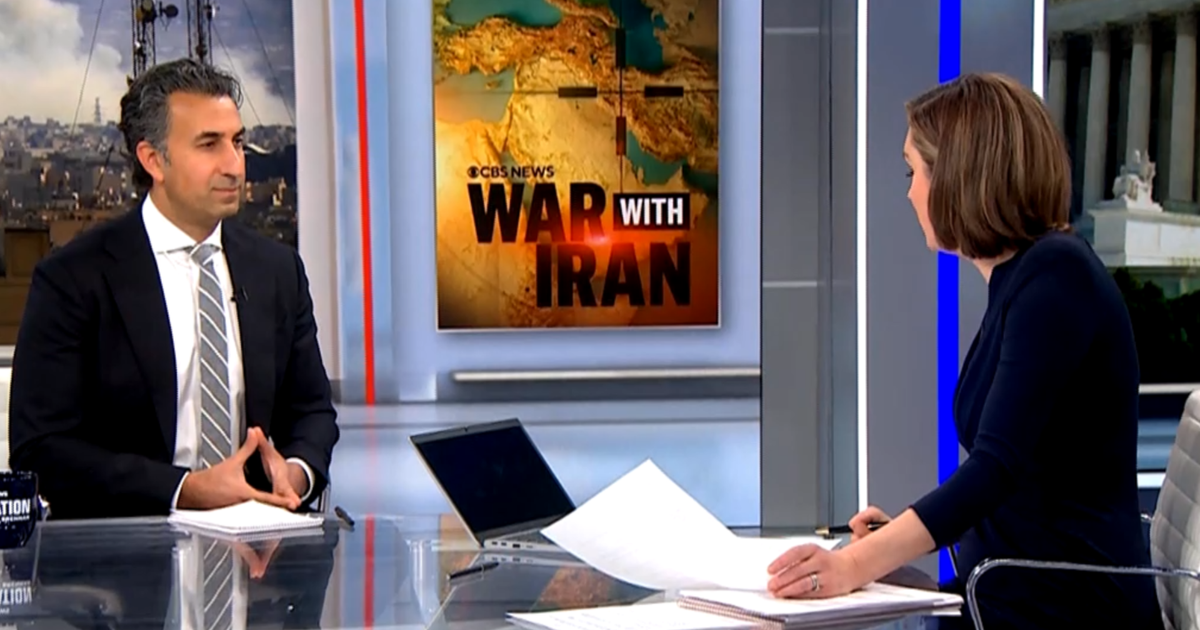
Murphy’s criticism goes beyond procedural concerns. He argues that the administration has no realistic plan for success, noting that intelligence agencies have warned that the most likely outcome is that hardline members of Iran’s Revolutionary Guard will replace the current leadership rather than any democratic transition occurring. “We’re going to have Americans dying, and the end result is going to be hard-line leadership continues in Iran and we don’t get rid of their nuclear program,” Murphy warned. He also questioned the administration’s characterization of an imminent threat, pointing out that the strikes don’t appear to be in response to any specific, immediate danger to Americans. Meanwhile, the standoff over Homeland Security funding continues, with Murphy refusing to back down on Democratic demands that Immigration and Customs Enforcement change its enforcement practices, even as the FBI and Homeland Security warn of potential cyber vulnerabilities and threats to American infrastructure during this volatile time.
The Republican Defense and Nuclear Questions
Republican lawmakers have mounted a vigorous defense of President Trump’s decision, framing it as necessary action against a regime that has been America’s adversary for nearly half a century. Senator Tom Cotton of Arkansas, chairman of the Senate Intelligence Committee, described the operation as primarily an air and naval campaign designed to destroy Iran’s “vast missile arsenal” and set back its nuclear ambitions. He emphasized that Iran has been building approximately 100 missiles per month and possesses far more missiles than the United States and Israel have air defenses combined. Cotton defended the lack of congressional authorization, saying Trump’s eight-minute video address laid out Iran’s 47-year campaign of terrorism and violence, and predicted there would be “overwhelming Republican support” when Democrats force a War Powers vote.
However, significant confusion remains about the actual state of Iran’s nuclear program—supposedly a central justification for the strikes. President Trump claimed last year to have “obliterated” Iran’s nuclear weapons program, yet the current operation is again being justified partly on nuclear grounds. Secretary of State Marco Rubio has said Iran wasn’t actively enriching uranium, while other officials have suggested otherwise. Senator Ted Cruz claimed that a year ago Iran had an “active and ongoing nuclear weapons program” that was largely destroyed with massive bunker-buster bombs at facilities like Fordo, built into the base of a mountain. Yet arms control experts like David Albright are calling for “immediate priority on rapid response operations to secure Iran’s nuclear stockpiles,” raising the question of who exactly is securing whatever nuclear materials remain if no U.S. or Israeli ground forces are operating inside Iran. The lack of clarity on this fundamental issue has left even supportive lawmakers struggling to provide consistent answers.
Who Killed the Supreme Leader?
One of the most sensitive questions surrounding the operation involves who actually killed Ayatollah Khamenei and whether this represents an American-led regime change operation. The New York Times has reported that the CIA provided the intelligence pinpointing the Supreme Leader’s exact location, leading to his death. Senator Cotton smiled when asked about this but declined to confirm it, saying only that U.S. intelligence collection methods are “exquisite” and that the operation clearly demonstrates capabilities “that no other nation on Earth has.” Congressman Mike Turner of Ohio was more direct, stating that Secretary of State Rubio told him explicitly that “we did not target Khamenei” and that the United States is not undertaking regime change.
This raises the obvious question: if the United States didn’t target him, did Israel? And if so, was this done with American knowledge, intelligence, and blessing? Turner sidestepped the question but noted that Khamenei has been “a murderous authoritarian who has killed an unbelievable number of Israelis” and suggested Israel had strong justification for such action. He added pointedly that “it’s better to be a friend of the United States than a murderous authoritarian,” and noted that Russian President Putin had just stated he “lost a friend” in Khamenei’s death. The carefully parsed language from administration officials and congressional allies suggests an operation where the United States may have provided crucial intelligence while maintaining plausible deniability about the actual targeting decision—a distinction that may matter legally but does little to clarify America’s actual intentions regarding Iran’s government.
What Comes Next and Can Iranians Seize Their Future?
The most fundamental question facing the administration—and one they seem unable or unwilling to answer clearly—is what success looks like and how this conflict ends. President Trump has called on the Iranian people to “rise up” and reclaim their government, but the mechanics of how that might happen remain entirely unclear. Secretary Rubio acknowledged a month ago that no one could give “a simple answer as to what happens next in Iran if the supreme leader and the regime were to fall.” That uncertainty hasn’t improved now that events are actually unfolding. Iran analyst Karim Sadjadpour notes that this is “probably the most secular society in the Muslim Middle East, perhaps the most pro-American society in the Middle East,” with the regime having at best 15 percent support. Yet he describes Iranians as “spectators, not yet participants,” watching carefully to see if splits emerge within the regime before risking their lives in open rebellion.
The historical record offers little encouragement that sustained air campaigns alone produce democratic transitions. Senator Murphy pointed out there isn’t “a single example of it in the entirety of American history” where an air campaign without at least the threat of ground invasion resulted in positive regime change in an authoritarian country. Retired General Frank McKenzie, former CENTCOM commander, acknowledged the uncertainty but argued that it’s “hard to see how it could be worse than what we had before.” He suggested possible end states include either a new regime willing to negotiate, or some kind of successor state that might discuss nuclear and ballistic missile programs, even if “unpalatable in some dimensions.” For now, Americans should prepare for “several more days” of rocket exchanges as the military works to destroy Iran’s ability to launch large volleys of missiles at U.S. bases and allied cities. With three Americans already dead, more casualties likely, regional allies under fire, and no clear path from military strikes to political transformation, the United States has entered a conflict whose end remains as uncertain as its ultimate purpose.