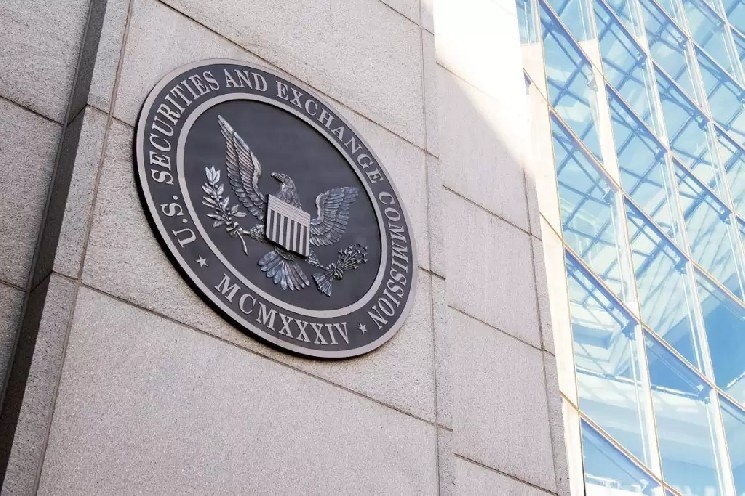

The SEC’s Controversial Settlement with Tron: A Former Insider’s Scathing Critique
A Deal That Raised More Questions Than Answers
When the Securities and Exchange Commission announced its settlement with Tron and its controversial founder Justin Sun, most observers expected it to fade quietly into the regulatory background. Instead, the agreement has sparked a firestorm of criticism from an unlikely source: Amanda Fischer, who served as chief of staff to former SEC Chairman Gary Gensler. Fischer’s intimate knowledge of the agency’s inner workings makes her public criticism particularly striking and reveals deep concerns about how America’s premier financial regulator is handling the rapidly evolving cryptocurrency landscape. Her pointed remarks suggest that what appeared to be a routine enforcement settlement may actually represent a troubling departure from the SEC’s traditional approach to securities fraud, potentially signaling a fundamental shift in how the agency balances enforcement credibility against political and practical realities in the complex world of digital assets.
Fischer’s core argument cuts to the heart of regulatory integrity: despite having what she describes as compelling evidence of serious wrongdoing by Sun and his cryptocurrency enterprises, the SEC opted for a settlement that seemed remarkably lenient given the gravity of the alleged violations. In Fischer’s view, this wasn’t a reasonable compromise or a pragmatic resolution of a complex case—it was a face-saving maneuver designed to allow the agency to claim some form of victory while essentially letting the principals off with minimal consequences. This characterization is particularly damning coming from someone who spent years working at the highest levels of the SEC and presumably understands the internal deliberations and pressure points that shape major enforcement decisions. Her willingness to speak so candidly suggests she believes the settlement crosses a line from reasonable prosecutorial discretion into something more troubling: a regulatory agency potentially compromising its mission in response to external pressures or internal political calculations.
Calling for Accountability and Congressional Oversight
Fischer didn’t stop at criticizing the settlement itself—she escalated her concerns by questioning the judicial approval process and calling for Congressional intervention. Her assertion that the presiding judge should have rejected the settlement is a remarkable statement that challenges not just the SEC’s judgment but the entire approval process for regulatory settlements. Federal judges typically defer to agencies’ expertise in their specialized domains, and rejecting a proposed settlement between a regulator and a defendant is relatively rare. For Fischer to suggest the judge failed in this gatekeeping role implies she believes the settlement was so deficient that it warranted extraordinary judicial intervention. Even more significantly, Fischer explicitly called on the United States Congress to launch an investigation into how the SEC reached its decision in this case. This is not a routine request for oversight—it’s an appeal for lawmakers to examine whether the agency tasked with protecting investors and maintaining fair markets is fulfilling its fundamental obligations.
Congressional investigations of regulatory agencies carry significant weight and can reshape policy, leadership, and enforcement priorities. By advocating for such scrutiny, Fischer is essentially arguing that the Tron settlement isn’t merely a questionable individual decision but potentially symptomatic of broader problems in how the SEC approaches cryptocurrency enforcement. Her insider perspective gives this call for investigation considerable credibility; she’s not an outsider with an axe to grind but someone who dedicated years to supporting the SEC’s mission and who presumably makes such serious allegations only after careful consideration. The fact that a former senior official feels compelled to request Congressional oversight of her former agency speaks volumes about the depth of her concerns and suggests she believes normal internal accountability mechanisms have failed or been bypassed in this case.
The Consistency Problem: When Is a Security Actually a Security?
Perhaps Fischer’s most substantive criticism targets what she sees as the SEC’s inconsistent approach to determining which cryptocurrency tokens qualify as securities. The settlement with Tron concluded that the TRX token constitutes a security offering, which would typically subject it to the full range of federal securities laws and regulations. This determination isn’t merely a technical classification—it has profound legal and practical implications for how the token can be marketed, sold, and traded. However, Fischer points out that this classification stands in stark tension with the SEC’s recent decisions to withdraw or not pursue enforcement actions against other cryptocurrency projects with arguably similar structural characteristics. If Tron’s token is a security, she asks, why aren’t these other tokens receiving the same classification and regulatory treatment?
This question strikes at the foundation of effective securities regulation: consistency and predictability. Market participants—whether traditional investors or cryptocurrency enthusiasts—need to understand the rules that govern their activities. When a regulator applies different standards to seemingly similar situations without clear explanation, it creates confusion, undermines confidence in the regulatory system, and makes it nearly impossible for well-intentioned actors to ensure their compliance. Fischer’s criticism suggests the SEC hasn’t provided adequate justification for why Tron receives one treatment while other projects receive different treatment, leaving observers to wonder whether the distinctions reflect principled legal analysis or other considerations entirely. This uncertainty is particularly problematic in the cryptocurrency space, where the lack of clear regulatory frameworks has been a persistent complaint from industry participants seeking to operate within legal boundaries.
The Howey Test and Regulatory Clarity
Fischer’s critique becomes even more pointed when she addresses the legal framework the SEC theoretically uses to make these determinations. The Howey Test, established by a 1946 Supreme Court decision, has been the primary tool for determining whether a particular arrangement constitutes an investment contract and therefore a security. The test examines whether there is an investment of money in a common enterprise with an expectation of profits derived from the efforts of others. While this framework has proven remarkably durable across changing financial technologies and instruments, its application to cryptocurrencies has proven contentious, with different observers often reaching dramatically different conclusions when applying the same test to the same token.
According to Fischer, the SEC has failed to consistently explain how it applies the Howey Test to different cryptocurrency projects, and this failure suggests the agency’s enforcement decisions may be driven more by factors outside the legal framework than by the framework itself. She implies that rather than following a clear, principled analytical approach that would yield consistent results across similar cases, the SEC may be responding to political pressures, public attention on particular individuals or projects, or other considerations that have little to do with the legal question of whether something qualifies as a security. If true, this would represent a serious departure from the kind of objective, law-based regulation that markets require to function effectively. Investors need to know that regulatory decisions reflect consistent application of established legal principles rather than shifting political winds or the regulator’s assessment of public sentiment toward particular industry figures.
Broader Implications for Crypto Regulation
The controversy surrounding the Tron settlement extends far beyond the specifics of this single case. It touches on fundamental questions about how the United States will regulate the cryptocurrency industry and whether the current regulatory approach is sustainable or effective. The SEC has faced persistent criticism from multiple directions on its cryptocurrency enforcement strategy—industry participants complain about unclear rules and “regulation by enforcement,” while investor advocates worry the agency isn’t doing enough to protect people from fraud and manipulation in crypto markets. The Fischer critique adds another dimension to this debate by suggesting that even when the SEC does take enforcement action, it may be doing so inconsistently and with insufficient rigor.
This regulatory uncertainty has real consequences for innovation, investment, and consumer protection. Companies considering blockchain and cryptocurrency projects in the United States must navigate a landscape where the rules seem to change unpredictably and where similarly situated projects receive different regulatory treatment for reasons that aren’t always transparent. This environment may push innovation offshore to jurisdictions with clearer regulatory frameworks, potentially costing the United States economic opportunities while doing little to actually protect American investors who can still access these projects through international platforms. At the same time, inconsistent enforcement may mean that some bad actors escape meaningful consequences while others face aggressive regulatory action, undermining the SEC’s fundamental mission of protecting investors and maintaining fair, orderly, and efficient markets. Fischer’s criticisms suggest that the current approach satisfies neither the industry’s need for clarity nor investor advocates’ demands for effective protection.
The Path Forward: Transparency, Consistency, and Accountability
The passionate critique from Amanda Fischer should serve as a wake-up call for policymakers, regulators, and market participants alike. Whether or not one agrees with all of her specific assessments, her willingness to publicly challenge her former agency on such a significant matter highlights genuine concerns about regulatory consistency and effectiveness that deserve serious attention. The cryptocurrency industry has matured considerably since Bitcoin’s early days, with digital assets now integrated into mainstream financial services, held in retirement accounts, and traded by major institutional investors. This evolution demands a regulatory approach that moves beyond ad hoc enforcement actions toward comprehensive, clearly articulated standards that apply consistently across similar situations.
Congress, as Fischer suggests, may indeed need to play a role in this evolution—not necessarily through investigation as punishment, but through the development of clearer statutory frameworks that give regulators and market participants alike better guidance on how existing securities laws apply to new technologies. The SEC, for its part, would benefit from greater transparency about its analytical process, explaining in clear terms how it applies legal tests like Howey to different cryptocurrency projects and why seemingly similar projects receive different treatment. Judges reviewing settlement agreements might also take Fischer’s concerns as a reminder of their important gatekeeping role, ensuring that settlements genuinely serve the public interest rather than simply providing convenient exits for regulators facing complex cases. Ultimately, the goal should be a regulatory environment that effectively protects investors from genuine fraud while providing sufficient clarity and consistency to allow legitimate innovation to flourish—a balance that the current approach, if Fischer’s critique is accurate, has not yet achieved.