
Rising Gas Prices Strain American Wallets Amid Middle East Tensions
War in the Middle East Sends Fuel Costs Soaring
Americans are feeling the pinch at the pump once again as gasoline prices have surged dramatically in recent days, driven by escalating military conflict in the Middle East. Following heightened tensions between the United States, Israel, and Iran, oil prices temporarily spiked above the psychologically significant $100-per-barrel mark for the first time since 2022. This jump in crude oil costs has rapidly translated into higher prices for consumers filling up their tanks across the country. According to AAA’s latest data, the national average for a gallon of regular gasoline has climbed to $3.48, representing an increase of nearly 50 cents in just one week and 58 cents compared to prices from a month ago. While these figures remain well below the pandemic-era peak of $5.02 per gallon when supply chain disruptions wreaked havoc on oil distribution networks, the sudden spike is nonetheless causing concern among economists, policymakers, and everyday Americans who depend on their vehicles for work and daily activities.
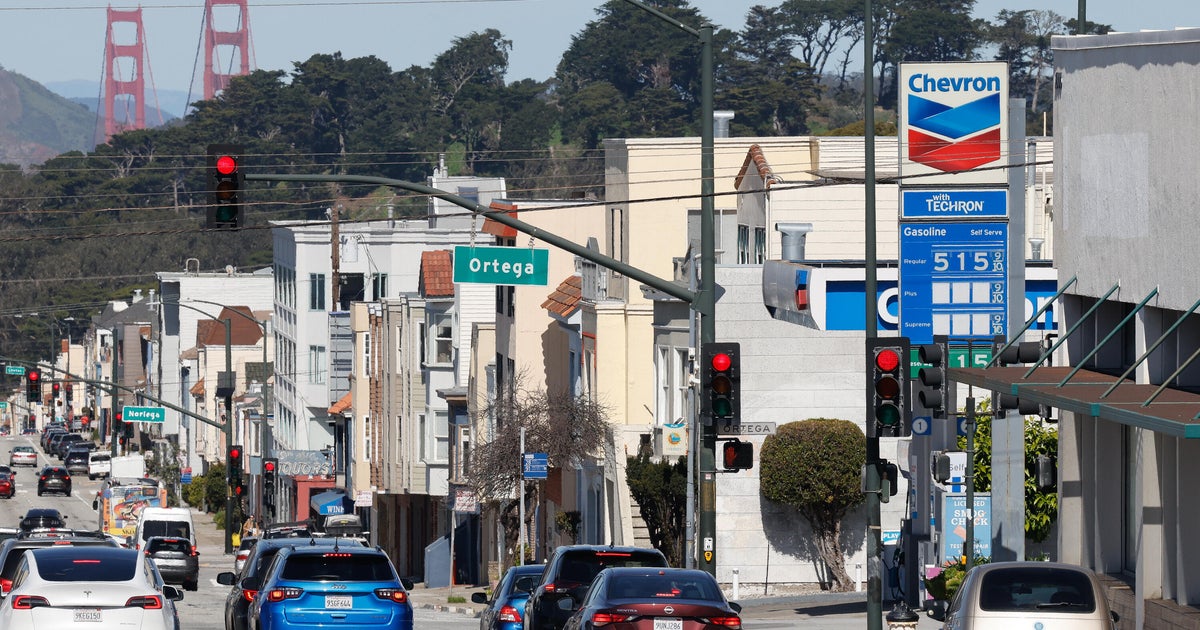
The geographic variation in gas prices reflects the complex nature of fuel distribution and state-level taxation policies across America. California drivers are bearing the heaviest burden, with average prices reaching $5.20 per gallon on Monday morning, while Washington state follows with an average of $4.63 per gallon. On the opposite end of the spectrum, Kansas boasts the nation’s lowest average at $2.92 for a gallon of regular gasoline. The two major oil benchmarks—West Texas Intermediate (WTI), which serves as the U.S. standard, and Brent crude, the international benchmark—both experienced dramatic volatility, jumping to nearly $120 per barrel in early Monday trading before retreating somewhat by midday to $93.39 and $98.72 respectively. Additionally, diesel fuel prices have skyrocketed even more dramatically than regular gasoline, climbing nearly 89 cents over the past week to reach $4.66 per gallon, a surge attributed to tighter inventory levels for this fuel type that powers much of America’s commercial transportation infrastructure.
The Strait of Hormuz: A Critical Chokepoint
The primary catalyst behind these surging fuel prices is the disruption of oil flow through the Strait of Hormuz, a narrow waterway that serves as one of the world’s most strategically important oil transit routes. This critical channel connects the Persian Gulf to the Gulf of Oman and the Arabian Sea, and approximately one-fifth of the world’s petroleum passes through this 21-mile-wide strait daily. The recent military conflict involving Iran has raised serious concerns about the security and accessibility of this vital shipping lane, causing oil markets to rapidly recalibrate their risk assessments and pricing models. Energy market analysts are closely monitoring two key variables that will determine the duration and severity of the supply disruption: first, how long the Strait of Hormuz remains closed or restricted to normal tanker traffic, and second, the extent to which potential damage to energy infrastructure throughout the region might constrain oil exports even after shipping routes theoretically reopen.
In response to these supply concerns, President Trump announced that the U.S. International Development Finance Corporation would extend insurance coverage to ships sailing through the Persian Gulf, protecting losses “up to approximately $20 billion on a rolling basis.” However, the implementation timeline for this maritime reinsurance program remains unclear, and industry observers question whether this measure alone will be sufficient to restore normal shipping operations quickly. President Trump has characterized the oil price increase as a “short-term” phenomenon and “a very small price to pay for U.S.A., and World, Safety and Peace,” though his optimistic assessment stands in contrast to warnings from energy analysts and political risk experts who anticipate more prolonged disruptions.
Expert Predictions Point Toward Sustained High Prices
Financial and energy market experts are forecasting that elevated fuel prices may persist for months rather than weeks, even if military tensions ease and oil production resumes relatively quickly. David Kelly, chief global strategist at J.P. Morgan Asset Management, has cautioned clients that U.S. gas prices could remain elevated until fall due to higher seasonal demand during the summer driving months, when Americans traditionally take vacations and road trips. Ian Bremmer, founder of the Eurasia Group, a prominent global political risk research and consulting firm, told CBS News that he expects average gas prices to reach $4 per gallon in the coming week and to stabilize around that level for the foreseeable future. “Americans feel the impact of higher gas prices every week when they fill their car tank,” Bremmer explained. “It’s something everyone sees and feels that’s meaningful and will play through to other prices as well.”
Patrick De Haan, a petroleum analyst at GasBuddy, echoed these concerns in a Monday report, noting that “with additional attacks across the Middle East over the weekend pushing oil above $100 per barrel for the first time in years, fuel markets are now rapidly recalibrating to the risk of prolonged disruption to global supply flows.” De Haan predicted that many states could see gas prices rise an additional 20 to 50 cents per gallon this week alone as markets continue adjusting to the new risk environment. The Eurasia Group’s forecast suggests that crude oil prices will remain elevated—potentially climbing above $120 per barrel—until security conditions in the Strait of Hormuz improve significantly and normal tanker traffic patterns resume. These predictions are based on the fundamental understanding that the cost of crude oil accounts for roughly 60% of the price consumers pay at the pump, with taxes, local fees, distribution costs, and other factors making up the remainder.
Economic Impact: Lower-Income Families Face Hardest Hit
The surge in gasoline prices is expected to have disproportionate effects across different economic segments of American society, with lower-income households bearing the heaviest burden. Bernard Yaros, lead U.S. economist at Oxford Economics, explained that families at the lower end of the income distribution spend a significantly larger share of their earnings on essential items like gasoline, meaning price increases in these categories create immediate financial stress. “Given how low the elasticity of demand is for gasoline, the lower-end of the income distribution will cut back even more on discretionary goods and services outside of the essentials,” Yaros told CBS News. In practical terms, this means that struggling families cannot simply choose to drive less when prices rise—they still need to get to work, take children to school, and handle other necessary transportation—so they must reduce spending in other areas of their budgets instead.
The economist predicts this dynamic will lead to several concerning trends: reduction in household savings as families dip into emergency funds to cover increased fuel costs, increased reliance on consumer loans and credit cards to bridge budget gaps, and rising delinquency rates among the most vulnerable segments of the population who find themselves unable to meet all their financial obligations. However, Yaros also noted that the overall U.S. economy may avoid a consumer spending recession because higher-income Americans, who account for a disproportionate share of total consumption, are expected to maintain their spending patterns relatively unchanged. “We won’t have a consumer spending recession because the upper-income households are still doing just fine,” he explained. “They account for a disproportionate share of overall consumption, and as long as they hold it together, it would be premature to send any red flares.”
Renewed Inflation Concerns Threaten Economic Stability
Beyond the immediate impact on household budgets, rising gasoline prices carry broader implications for the overall inflation picture in the United States, potentially threatening the progress that has been made in bringing price increases under control over the past year. Yaros expects U.S. inflation to rise above 3% in coming months, citing the “direct pass-through of higher oil prices to energy prices” and the cascading effects throughout the economy. When transportation costs increase, the effects ripple through virtually every sector of the economy—food becomes more expensive to transport from farms to supermarkets, manufactured goods cost more to ship from factories to retailers, and service providers raise their prices to offset higher fuel expenses for their vehicles and equipment.
This potential return to higher inflation rates represents a significant challenge for the Federal Reserve, which has spent considerable effort raising interest rates to bring inflation down from the multi-decade highs experienced in 2022 and early 2023. If fuel-driven inflation becomes persistent, it could force the central bank to maintain higher interest rates for longer than previously anticipated, which in turn affects mortgage rates, business loan costs, and overall economic growth. The situation also creates political challenges for the current administration, as Americans tend to view gasoline prices as a barometer of overall economic health and presidential performance. The visibility and frequency of fuel purchases—most people see gas station price signs regularly and refuel weekly—make this particular expense category especially salient in public consciousness and political discourse. As global tensions continue to evolve and energy markets remain volatile, Americans across all income levels are bracing for what may be an extended period of higher costs at the pump, with far-reaching consequences for household budgets, business operations, and the broader economic landscape.