
Historic Viking Age Coin Hoard Discovered in Norway
An Unprecedented Archaeological Discovery
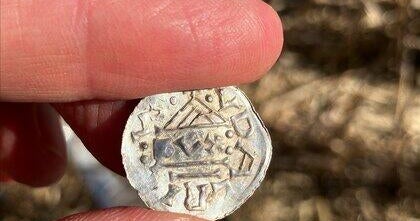
In what historians are calling the most significant find of its kind in Norwegian history, metal detector enthusiasts have uncovered an extraordinary collection of ancient coins dating back to the Viking Age in a rural field near the village of Rena. The discovery has sent waves of excitement through Norway’s archaeological community and beyond, with the country’s climate and environment minister, Andreas Bjelland Eriksen, declaring it “a historic find” that deserves to be experienced by the entire nation. What makes this discovery particularly remarkable isn’t just the sheer number of coins—over 3,150 and counting—but the invaluable insights they provide into a turbulent and fascinating period of Norwegian history. The find represents more than just ancient currency; it’s a tangible connection to the Viking Age, a time of dramatic political change, ambitious expeditions, and unprecedented wealth flowing into Norway from distant lands.
How the Discovery Unfolded
The remarkable journey to this historic find began modestly on April 10th when two private citizens exploring the countryside with metal detectors stumbled upon a smaller cache of just 19 silver coins in a field within Innlandet County. This initial discovery, while significant in itself, proved to be merely the tip of an ancient iceberg. Recognizing the potential importance of their find, local authorities immediately launched a comprehensive archaeological investigation of the surrounding area. What the subsequent excavation revealed exceeded everyone’s wildest expectations. As archaeologists carefully combed through the soil, the number of recovered coins grew from dozens to hundreds, and eventually to thousands. By the time Innlandet County municipal officials released their latest update, more than 3,150 coins had been carefully extracted from the earth, and remarkably, the search continues with the possibility of even more treasure waiting to be discovered beneath the Norwegian soil.
A Window Into Viking Age Economics and Politics
The significance of this hoard extends far beyond its impressive size; it offers researchers an unprecedented glimpse into Norway’s economic landscape during one of the most dynamic periods in the nation’s history. According to officials from Innlandet County, the coins date from an era characterized by intense political upheaval, dramatic shifts in power structures, ambitious Viking expeditions that reached across seas and continents, and a remarkable influx of wealth from foreign lands. This was a time when Norway was deeply connected to the broader European world through trade, conquest, and political alliances. The coins themselves tell a story of these international connections and the complex economic networks that existed during the Viking Age. Experts believe the hoard was likely deposited sometime between the late 10th and early 11th centuries, a period when foreign currencies dominated Norwegian commerce before the country established its own standardized coinage system under King Harald Hardrada, who ascended to the throne in 1046 CE.
International Origins and Royal Connections
When specialists from the University of Oslo’s Museum of Cultural History examined the coins, they made fascinating discoveries about their origins and the historical figures connected to them. The majority of the coins came from England and Germany, though some originated in Denmark and Norway itself. What makes these coins particularly special is that they bear the marks of some of the most powerful rulers of the medieval period. Many were minted during the reign of Cnut the Great, the Danish king who conquered England and built a vast North Sea empire. Others date from the time of Ethelred II, the English king whose troubled reign was marked by repeated Viking invasions. Some coins trace back to Otto III of Rome, while others were produced under the authority of Norway’s own King Harald Hardrada, one of the most famous Viking warriors and rulers. Professor Svein Gullbekk from the University of Oslo explained that this international mix of currency reflects a crucial transition period in Norwegian economic history, when the kingdom relied heavily on foreign coins for commerce before establishing its own minting operations under Hardrada’s rule.
Professional and Personal Impact on Researchers
For the archaeologists and researchers involved in this project, the discovery represents not just a professional triumph but a deeply moving personal experience. May-Tove Smiseth, an archaeologist and adviser to the Innlandet County Council, captured the emotional weight of the moment when she described it as “an extraordinary discovery of a kind one might experience only once in a career.” Her words reflect the reality that even for professionals who dedicate their lives to uncovering the past, finds of this magnitude are exceptionally rare. The excitement rippling through Norway’s archaeological community demonstrates how significant this discovery truly is. For those present at the excavation site, watching as century after century of hidden history emerged from the earth, the experience has been transformative. It’s one thing to study ancient civilizations through books and existing museum collections, but quite another to be present at the moment when lost treasures resurface after nearly a millennium underground, offering fresh insights into how people lived, traded, and organized their societies during the Viking Age.
A National Treasure for All Norwegians
The Norwegian government’s response to this discovery underscores its national importance and the desire to share this piece of history with the entire country. Minister Andreas Bjelland Eriksen’s statement that “the whole of Norway deserves to experience” this find reflects a commitment to making these artifacts accessible to the public rather than keeping them locked away in research facilities. The government’s emphasis on the coins’ “even more spectacular” links to the Vikings acknowledges the deep cultural significance of the Viking Age in Norwegian national identity. These aren’t just old coins; they’re physical evidence of an era that shaped Norway’s place in the world and continues to capture imaginations globally. As the excavation continues and researchers begin the detailed work of cataloging, analyzing, and preserving each coin, plans are likely underway to eventually display this treasure in a way that allows ordinary Norwegians and international visitors alike to connect with this remarkable piece of history. The find serves as a reminder that there are still secrets buried beneath our feet, waiting to tell their stories about the people who came before us and the complex, interconnected world they inhabited during the legendary Viking Age.