



The Dangerous Pursuit of the Perfect Body: How Teen Boys Are Risking Their Lives for Social Media Fame
A Generation Chasing Viral Transformations
Across social media platforms, a concerning trend has taken root among teenage boys who are desperate to achieve the muscular, sculpted physiques they see online. These young men aren’t content with the slow, steady progress that comes from dedication to fitness over time. Instead, they’re turning to dangerous shortcuts that promise dramatic results in mere months rather than years. The problem has grown so severe that experts are sounding the alarm about a generation willing to gamble with their long-term health for short-term aesthetic gains and online validation.
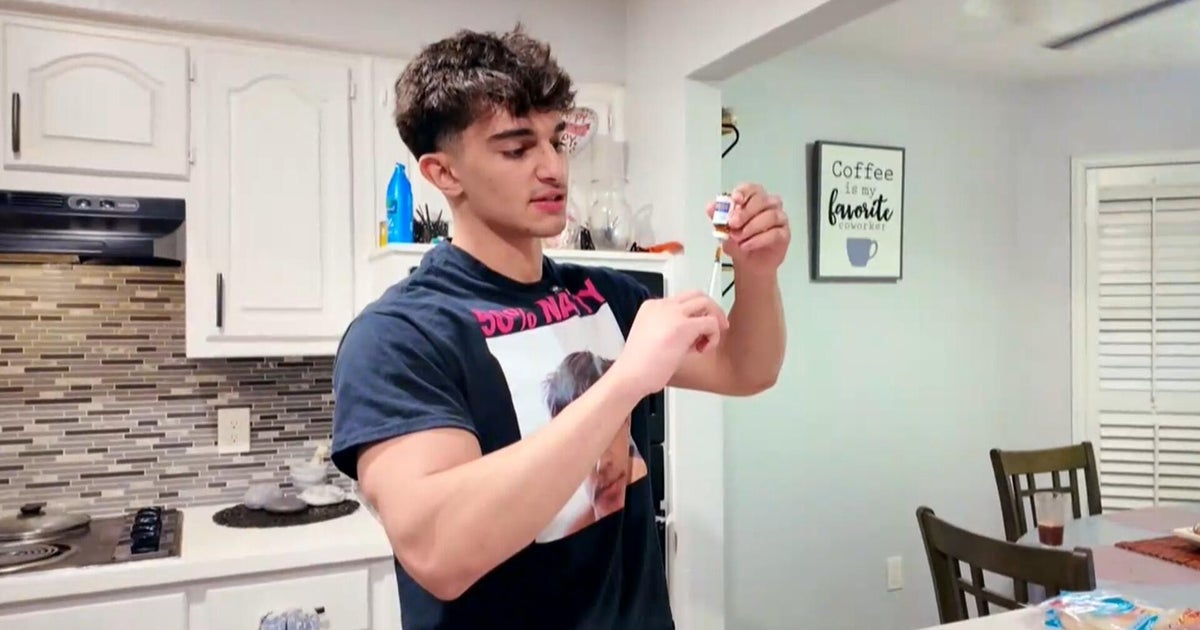
Zaid Laila’s story exemplifies this troubling phenomenon. At just 16 years old, this Dallas-area high school student made a calculated decision that would shock many parents: rather than commit to the patient work of natural bodybuilding, he chose to document a steroid-fueled transformation for his social media followers. His reasoning reveals the mindset driving many young men today: “Why wait 10 years when I could do it in less than a year?” His videos, which show a dramatically leaner and more muscular physique, have attracted significant attention online, where such transformations are celebrated and admired. But Laila doesn’t hide his methods. He openly admits that his results came from “a lot of steroids and a lot of working out,” including the use of trenbolone—a powerful substance that was never intended for human consumption and carries serious health risks.
The Animal Drug Being Used by Children
Trenbolone, commonly called “tren” in fitness circles, represents one of the most alarming aspects of this trend. This isn’t a medication that was designed for humans and later found to have side effects—it was specifically developed to promote muscle growth in livestock, particularly cattle being prepared for market. Despite being classified as a Schedule III controlled substance in the United States, making possession or distribution without a prescription illegal, the drug has found its way into the hands of teenagers seeking rapid muscle development. The substance’s very purpose—forcing unnatural growth in animals—should serve as a red flag for anyone considering using it, yet its reputation for producing dramatic results has made it increasingly popular among young people willing to ignore the warnings.
Dr. Jason Nagata, a pediatrician who specializes in adolescent health at the University of California, San Francisco, doesn’t mince words about the dangers. Anabolic steroids in general can cause serious damage to vital organs including the heart, liver, and kidneys. But trenbolone, due to its exceptional potency, carries even greater risks. “Trenbolone, because it’s so powerful, it has even more significant side effects,” Dr. Nagata explains. He emphasizes a crucial point that should give any potential user pause: “There is no safe [human] indication for this animal drug.” The substance was never tested for human safety, never approved by any medical authority for human use, and its long-term effects on developing teenage bodies remain largely unknown. Yet teenagers like Laila are conducting dangerous experiments on themselves, using their own bodies as test subjects for substances that veterinarians administer to livestock.
From the Locker Room to the Living Room
The landscape of performance-enhancing drug use has undergone a fundamental transformation over the past few decades. Historically, steroid use was primarily confined to competitive athletes—bodybuilders, football players, and others who saw enhanced performance as a path to victory, scholarships, or professional careers. The motivation was clear: gain a competitive edge in sports. But today’s steroid users often have entirely different goals. Dr. Nagata notes this significant shift: “There are many people now who aren’t actually participating in any type of sports who are using these drugs only for the purpose of looking better.” The drugs have moved beyond performance enhancement into the realm of pure aesthetics, driven by images that flood social media feeds daily.
The numbers tell a disturbing story about how social media has normalized and promoted these dangerous substances. A comprehensive 2023 study conducted by the nonprofit organization Countering Digital Hate examined TikTok content and found that videos using hashtags promoting steroid-like drugs had been viewed at least 587 million times in the United States between 2020 and 2023 alone. Even more concerning, 72% of those views came from users between 18 and 24 years old—meaning hundreds of millions of impressions were being made on young minds still developing their understanding of health, risk, and consequences. Anyone who spends time scrolling through fitness-related content on social media can’t miss the pattern: transformation videos showcasing dramatic before-and-after comparisons, gym influencers displaying seemingly superhuman physiques, and countless posts celebrating rapid muscle gains that would be impossible to achieve naturally in such short timeframes.
Dr. Nagata identifies the root cause: “With more social media, there have been really extreme pressures for boys to build muscle.” Where previous generations of young men might have faced pressure to be athletic or strong, today’s teenage boys are bombarded with images of physiques that represent extreme muscularity—often achieved through pharmaceutical enhancement but presented as attainable goals. Laila confirms that these online images directly influenced his decision to use steroids: “Seeing people do it is what makes you want to do it.” Perhaps equally troubling is how accessible these illegal substances have become. When asked about obtaining trenbolone and other steroids, Laila’s response is chilling in its casualness: “It’s not hard at all. Anyone can get their hands on it if they try.” The combination of powerful motivation from social media influence and easy access to dangerous drugs has created a perfect storm threatening the health of young men across the country.
A Family’s Permanent Loss and Ongoing Mission
Don Hooton Jr. understands the deadly serious consequences of teenage steroid use in a way that no one should have to. More than twenty years after his younger brother Taylor’s death, Don continues to fight against the spread of performance-enhancing drugs among young people, driven by a tragedy that forever changed his family. Taylor Hooton was a high school student with athletic aspirations who began using anabolic steroids after receiving encouragement to bulk up and become stronger for sports. Like many young users, Taylor probably didn’t fully comprehend the psychological effects these drugs could have. When he stopped taking the steroids, he experienced severe depression—a known but often overlooked side effect of anabolic steroid withdrawal. In 2003, unable to cope with the psychological aftermath of his drug use, Taylor died by suicide.
Since that devastating loss, Don Hooton has dedicated himself to preventing other families from experiencing similar tragedies. Through the Taylor Hooton Foundation, he works to educate young people about the genuine dangers of performance-enhancing drugs, countering the misinformation and glamorization they encounter online. What particularly alarms Hooton about the current environment is the type of questions he now receives: “We’re seeing kids today asking if trenbolone is safe,” he says. “That’s a major problem.” The fact that teenagers are not only aware of this veterinary drug but are seriously considering using it demonstrates how normalized steroid use has become in certain online communities. Hooton recognizes that the fundamental nature of drug exposure has changed: “[The] drug dealer has gone from a dark alley … to the safe four walls of our home.” Young people no longer need to seek out dangerous individuals in risky situations to obtain these substances—they can learn about them, be persuaded to try them, and even purchase them all from the perceived safety of their bedrooms.
The driving force behind much of this risk-taking behavior, Hooton believes, is the allure of social media fame and validation. “Everybody is filming themselves. They wanna be the next social media star, and they’re doing whatever it takes to change that physique, even if it’s using illegal drugs,” he explains. This observation cuts to the heart of the issue: for many young people, the potential rewards of online attention, followers, and admiration seem to outweigh concerns about health consequences that might not appear for years or decades. This shortsighted thinking is evident in Laila’s own words when discussing potential health consequences: “If I have a heart attack at 30, I have a heart attack.” This cavalier attitude toward potentially fatal health outcomes reveals the distorted risk assessment that characterizes adolescent decision-making, especially when influenced by the immediate gratification of social media success.
What Parents Can Do and Watch For
For parents trying to protect their children from this dangerous trend, the challenge is significant. The warning signs of steroid use aren’t always dramatic or obvious, especially in the early stages. Dr. Nagata advises parents to watch for patterns of behavior that might indicate problematic relationships with body image and fitness. These include obsessive workout routines that interfere with other aspects of life, teenagers who begin avoiding family meals or social gatherings with friends (possibly to maintain strict diets or hide physical changes), and other behavioral shifts that impact normal socializing and development. Physical changes might include rapid muscle growth that seems disproportionate to the amount of time spent exercising, severe acne (particularly on the back and shoulders), mood swings, increased aggression, and other personality changes.
Paradoxically, parents may sometimes inadvertently encourage steroid use without realizing it. When a teenager begins showing physical improvements—whether from natural exercise or pharmaceutical enhancement—well-meaning parents might offer praise and positive reinforcement, not understanding the dangerous methods behind the transformation. This positive feedback can reinforce the teenager’s belief that their steroid use is worthwhile and even admirable, making intervention more difficult later. Parents need to engage in deeper conversations about how physical changes are being achieved, not just celebrate the results.
The Laila family’s situation illustrates the complex dynamics at play in many households dealing with this issue. Zaid’s father, Haitham Laila, has expressed deep concern about his son’s health and feels overwhelmed by the amount of misinformation his son has encountered and internalized to justify his steroid use. These conversations are ongoing in their household, representing the difficult reality that parents cannot always prevent their teenagers from making dangerous choices. Despite understanding the risks involved, Zaid remains committed to his current path. “I’m still going to do [steroids],” he states plainly. “I know what can come with it.” This acknowledgment of risk without behavior change reflects a challenging truth: information alone isn’t always enough to change teenage decision-making, especially when powerful social forces are encouraging dangerous behaviors and the perceived benefits seem immediate and tangible while the consequences remain abstract and distant.