
How Will an Iran War Impact Interest Rates? Understanding the Economic Ripple Effects
The Complex Relationship Between Military Conflict and Financial Markets
When tensions escalate in the Middle East, particularly involving Iran, the global financial system doesn’t just watch from the sidelines—it reacts, often dramatically and unpredictably. The question of how a potential war with Iran would impact interest rates is one that keeps economists, investors, and policymakers awake at night. The answer isn’t straightforward because military conflicts create a cascade of economic consequences that push and pull interest rates in different directions simultaneously. History has shown us that wars don’t affect economies in isolation; they trigger changes in oil prices, government spending, inflation, investor confidence, and international trade, all of which influence the decisions central banks make about interest rates. Understanding this relationship requires looking at multiple factors: the immediate shock to markets, the sustained economic pressures that develop over time, and the policy responses from governments and central banks trying to navigate these turbulent waters.
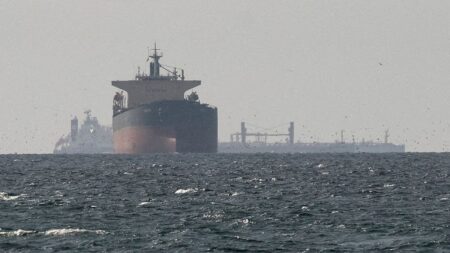
The immediate market reaction to military conflict typically involves what economists call a “flight to safety.” When missiles fly or threats escalate, investors worldwide rush to move their money out of riskier assets like stocks and into safer havens like government bonds, particularly U.S. Treasury securities. This surge in demand for bonds causes their prices to rise, which inversely means their yields (interest rates) fall. So paradoxically, the outbreak of war often initially pushes interest rates down rather than up. However, this is just the first chapter of a much longer story. As the conflict progresses, other economic forces come into play that can reverse this initial trend. The key issue with Iran specifically is its strategic position in global energy markets. Iran controls critical shipping lanes in the Persian Gulf, through which roughly 20% of the world’s oil supply passes. Any military action involving Iran would almost certainly disrupt oil production and transportation, sending energy prices soaring and triggering inflationary pressures throughout the global economy.
Oil Prices, Inflation, and the Central Bank Response
The most direct and powerful channel through which an Iran conflict would affect interest rates is through oil prices and the resulting inflation. Iran produces approximately 3 million barrels of oil per day, and any conflict would likely take this supply offline. More significantly, Iran has repeatedly threatened to close the Strait of Hormuz during times of heightened tension—a narrow waterway that serves as the world’s most important oil chokepoint. If this strait were blocked or became a war zone, oil prices could easily double or triple within days. History gives us reference points: during the 1973 oil embargo, oil prices quadrupled, and during the Iranian Revolution in 1979, they more than doubled. Such dramatic increases in energy costs ripple through every sector of the economy because oil isn’t just fuel for cars—it’s essential for transportation, manufacturing, agriculture, and countless other industries.
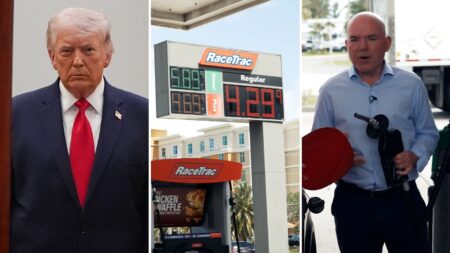
When oil prices spike, inflation follows closely behind. Consumers pay more at the gas pump, shipping costs increase, airlines raise ticket prices, and manufacturing becomes more expensive. This energy-driven inflation then spreads throughout the economy in what’s called a “second-round effect,” where businesses raise prices to cover their higher costs, and workers demand higher wages to maintain their purchasing power. This is precisely the scenario that gives central banks nightmares because it forces them into an extremely difficult position. The Federal Reserve, the European Central Bank, and other monetary authorities have a primary mandate to maintain price stability, which essentially means keeping inflation under control. When inflation rises significantly, central banks typically respond by raising interest rates to cool down the economy, reduce spending, and bring prices back down to acceptable levels.
However, the situation becomes even more complicated because war-induced inflation is different from regular economic overheating. It’s what economists call “stagflation”—a combination of stagnant economic growth and rising inflation. The war creates economic uncertainty that discourages business investment and consumer spending, potentially pushing the economy toward recession, while simultaneously the oil price shock drives inflation upward. Central banks face a terrible dilemma: raising interest rates to fight inflation could push an already weakening economy into a severe recession, but not raising rates could allow inflation to become entrenched and spiral out of control. The decision they make in this scenario will be the primary determinant of where interest rates go. Historical precedent suggests they would likely prioritize fighting inflation, meaning interest rates would rise, possibly substantially, even if it means accepting slower economic growth or even a recession as the price of maintaining long-term price stability.
Government Spending, Deficits, and Long-Term Rate Pressures
Beyond the immediate inflation concerns, a war with Iran would unleash massive government spending that creates additional upward pressure on interest rates through an entirely different mechanism. Modern warfare is extraordinarily expensive—the wars in Iraq and Afghanistan cost the United States over $2 trillion, and a conflict with Iran, a much larger and more capable adversary, would likely be even more costly. The U.S. government would need to fund this military operation largely through borrowing, dramatically increasing the supply of Treasury bonds in the market. When governments issue more debt, they must compete with other borrowers for available funds, and this increased competition generally pushes interest rates upward. It’s simple supply and demand: more bonds for sale means investors can demand higher yields before they’ll buy them.
This deficit spending creates what economists call “crowding out,” where government borrowing absorbs so much available capital that less remains for private sector businesses and consumers, forcing them to pay higher interest rates to access credit. The effect becomes more pronounced if the war is prolonged or expands beyond initial expectations. Additionally, if investors begin to worry about the government’s ability to service its growing debt, they may demand even higher interest rates as compensation for what they perceive as increased risk. This “risk premium” can add significant upward pressure on rates, particularly if the conflict strains government finances to the point where debt sustainability becomes questioned.
Furthermore, war spending tends to stimulate the economy in the short term, even as it creates problems for the future. Military contracts, increased production of equipment and supplies, and expanded armed forces put money into the economy, which can increase demand for goods and services beyond what the economy can supply, especially if it’s already operating near full capacity. This demand-pull inflation adds to the cost-push inflation from higher oil prices, creating a powerful combined inflationary force that practically compels central banks to raise interest rates as their primary tool for preventing the economy from overheating.
Global Capital Flows and the Dollar’s Special Role
The impact on interest rates also depends heavily on international capital flows and the unique position of the U.S. dollar as the world’s reserve currency. During times of geopolitical crisis, global investors often increase their holdings of dollar-denominated assets, particularly U.S. Treasury securities, because they’re considered the safest store of value in uncertain times. This phenomenon, sometimes called the “dollar smile,” means that even as a war creates problems for the American economy, increased foreign demand for U.S. assets could partially offset the upward pressure on interest rates from other sources. Countries might also increase their dollar reserves as a precautionary measure during crisis periods, providing additional demand for U.S. bonds.
However, this benefit shouldn’t be overstated. If the conflict becomes protracted or if U.S. fiscal conditions deteriorate significantly, international investors might begin to question the sustainability of American debt levels and reduce their appetite for U.S. bonds, which would push rates higher. Additionally, if other countries become directly involved in the conflict or if global trade is severely disrupted, the interconnected nature of modern financial markets means that problems quickly spread across borders. Interest rates in Europe, Asia, and emerging markets would likely rise as well, creating a synchronized global tightening of financial conditions that could amplify the economic damage.
The currency markets would also play a role in this complex picture. If the dollar strengthens significantly due to safe-haven flows, it could help moderate inflation in the United States by making imports cheaper, potentially giving the Federal Reserve slightly more room to avoid aggressive rate hikes. Conversely, if confidence in the dollar weakens due to concerns about U.S. debt or political instability, the resulting currency depreciation could add to inflation pressures, requiring even higher interest rates to stabilize prices and restore confidence.
Historical Lessons and What Past Conflicts Tell Us
Looking back at historical conflicts provides valuable, though imperfect, guidance for what we might expect. The 1990-91 Gulf War offers perhaps the most relevant comparison since it also involved Middle Eastern oil supplies and potential disruption to Persian Gulf shipping. In the lead-up to that conflict, oil prices spiked from around $17 per barrel to nearly $40, and the U.S. economy entered a recession. The Federal Reserve, which had been raising rates to combat inflation, actually cut rates during the conflict to support the economy. However, that war was relatively short and decisive, with oil prices quickly returning to normal levels once the outcome became clear.
The post-9/11 period and the subsequent wars in Afghanistan and Iraq show a different pattern. The Federal Reserve aggressively cut interest rates following the terrorist attacks to prevent economic collapse, bringing rates to just 1% by 2003. However, as those conflicts continued and government spending soared while the economy remained strong, inflation pressures built, and the Fed eventually raised rates from 2004 to 2006, contributing to the conditions that led to the housing bubble and subsequent financial crisis. The Vietnam War era shows yet another pattern, where persistent war spending combined with domestic programs created sustained inflation that ultimately required dramatically higher interest rates in the early 1980s to finally bring under control—but only at the cost of a severe recession.
These historical examples illustrate that the impact on interest rates depends heavily on the conflict’s duration, scale, and economic context. A short, contained conflict might see initial rate cuts to stabilize markets, followed by a return to previous policy. A prolonged war with significant economic disruption would almost certainly result in higher rates as central banks prioritize inflation control, even at the cost of economic growth. The current economic context matters enormously—if a conflict occurred when inflation was already elevated, central banks would likely raise rates more aggressively than if it happened during a period of low inflation and economic slack.
The Bottom Line: Preparing for Multiple Scenarios
So where does all this complexity leave us in answering the original question? The most honest answer is that an Iran war would likely push interest rates higher in the medium to long term, though the immediate short-term reaction might actually be lower rates as investors flee to safe assets. The primary mechanism would be oil-driven inflation forcing central banks to raise rates to maintain price stability, combined with increased government borrowing to fund military operations adding to upward rate pressure. The magnitude of the increase would depend on factors largely unknowable in advance: How long would the conflict last? Would it expand to involve other countries? How severely would oil supplies be disrupted? How would governments and central banks respond?
For individuals, businesses, and investors, the key takeaway is to prepare for volatility and uncertainty rather than betting on a single outcome. Those with variable-rate debt should consider the vulnerability of their finances to significantly higher interest rates. Businesses should scenario-plan for both higher borrowing costs and potential recession. Investors should maintain diversified portfolios that can weather multiple possible outcomes. Policymakers should be preparing contingency plans for managing the difficult tradeoffs between controlling inflation and supporting economic growth that a conflict would create. While we can’t predict exactly how events would unfold, understanding the mechanisms through which war affects interest rates allows for better preparation for the turbulent economic waters that would surely follow any major military conflict in the Middle East.