


Federal Immigration Officers Face Potential Charges After Allegedly Lying About Minnesota Shooting Incident
Contradictory Evidence Emerges in Immigration Enforcement Operation
In a stunning development that raises serious questions about law enforcement accountability, Immigration and Customs Enforcement (ICE) is investigating two of its own officers for allegedly providing false testimony under oath regarding a shooting incident in Minnesota. Acting ICE Director Todd Lyons announced that video evidence reviewed jointly by ICE and the Department of Justice contradicts sworn statements made by the officers involved in the January incident. Both officers have been immediately placed on administrative leave while a comprehensive internal investigation unfolds. The situation has escalated to the point where the U.S. Attorney’s Office is actively pursuing charges against the officers for making false statements—a serious federal offense that could result in criminal prosecution. Lyons emphasized that ICE personnel are held to the highest standards of professionalism and integrity, stating unequivocally that violations of their sworn oath will not be tolerated as the agency remains committed to transparency and accountability in enforcing immigration laws.
Federal Prosecutor Moves to Dismiss Charges Against Two Men
The controversy deepened when Daniel Rosen, the U.S. Attorney for the District of Minnesota, filed a motion asking a judge to dismiss all charges against two men involved in the incident, including Julio Cesar Sosa-Selis, who was shot in the leg by an immigration agent during the enforcement operation. Citing “newly discovered evidence,” Rosen indicated that information uncovered during the investigation was materially inconsistent with both the original complaint affidavit and the testimony provided during preliminary hearings. While the specific nature of this new evidence has not been publicly disclosed, its impact was significant enough that Rosen requested dismissal with prejudice—a legal designation meaning the charges cannot be refiled against the defendants in the future. This extraordinary step signals that prosecutors believe the case against Sosa-Selis and co-defendant Alfredo Aljorna was fundamentally flawed from the beginning, representing a complete reversal of the government’s initial position that portrayed the incident as a violent assault on federal law enforcement officers.
Initial Claims of Violent Assault on Federal Agents
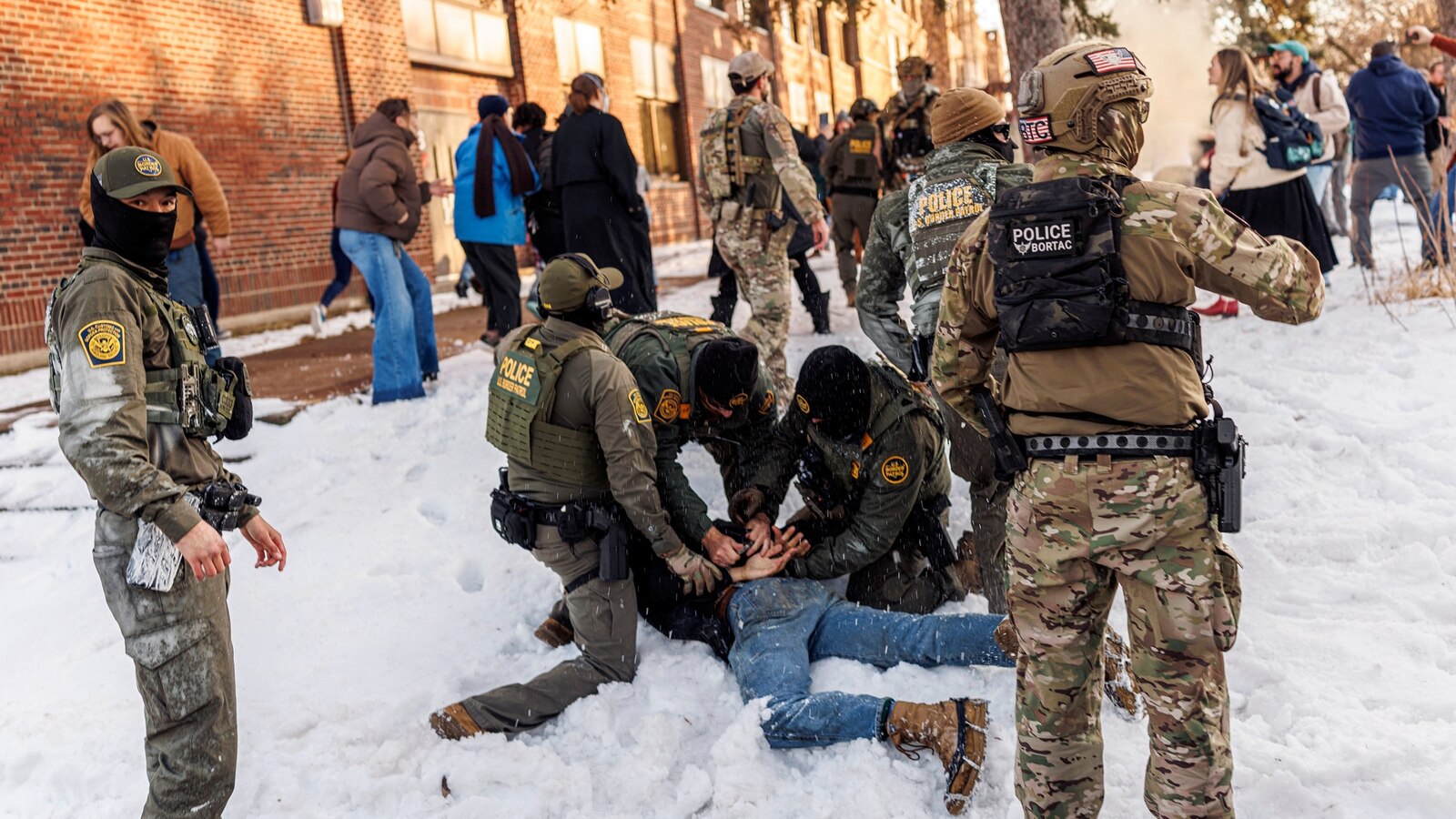
When the shooting first occurred on January 14, just one week after another ICE agent fatally shot a woman named Renee Good in Minneapolis, the Trump administration and Department of Homeland Security painted a dramatic picture of violent resistance to law enforcement. According to initial DHS statements, officers were conducting a targeted traffic stop when Sosa-Selis allegedly fled in his vehicle, crashed into another car, and attempted to evade arrest. The agency claimed that Sosa-Selis “violently” assaulted an officer with either a shovel or broomstick, and that two other individuals emerged from a nearby apartment to join the attack using a snow shovel and broom handle. DHS Secretary Kristi Noem characterized the incident in stark terms, declaring that “what we saw last night in Minneapolis was an attempted murder of federal law enforcement.” The narrative presented to the public suggested that the officer who shot Sosa-Selis did so defensively to protect his own life during this alleged violent confrontation. This version of events was used to justify the shooting and support criminal charges against multiple individuals at the scene.
Surveillance Video Contradicts Official Account
However, attorneys representing the accused men quickly raised red flags about the government’s version of events after reviewing surveillance footage from the scene. Lawyers for Alfredo Aljorna argued that the videos did not support FBI claims that an agent was assaulted, and more significantly, that Sosa-Celis was actually shot while standing at his doorway—some distance away from the officer in question. The defense team also urged the court to prevent the deportation of key witnesses who they said could provide testimony casting serious doubt on claims that an agent was repeatedly struck with a broom or snow shovel. Judge Paul Magnuson granted this request, recognizing the importance of preserving witness testimony. Video reviewed by ABC News’ Visual Verification team included a 911 call from relatives of Sosa-Selis who reported that agents fired at him as he was attempting to close his door—a dramatically different scenario than an officer defending himself during an active physical assault. These discrepancies between the surveillance evidence and official statements became increasingly difficult to reconcile as the case proceeded through the legal system.
Conflicting Details in Official Records
Adding to the confusion, significant inconsistencies emerged between initial DHS public statements and the details contained in court documents prepared by FBI Special Agent Timothy Schanz, who investigated the shooting. While DHS initially told media outlets that officers were conducting a targeted traffic stop for Sosa-Celis specifically, the FBI affidavit revealed that ICE agents were actually attempting to apprehend a completely different individual named Joffre Stalin Paucar Barrera, whom they believed was in the country illegally. According to Schanz’s account, the person agents actually stopped was Aljorna—not Sosa-Celis as DHS had claimed. The affidavit stated that Aljorna struck a light pole while fleeing and ran toward his apartment building, where Sosa-Celis was allegedly standing on the porch yelling at him to run faster. According to the FBI agent’s version, Aljorna slipped and began tussling with an officer before Sosa-Celis grabbed a broom and started striking the agent, at which point a third man allegedly approached with a snow shovel and also began hitting the officer. Sosa-Celis was shot in the leg as he attempted to enter the apartment, according to this account—though even this official version differs substantially from the physical evidence and witness statements that later emerged.
Families Celebrate Justice After Ordeal
Following the announcement that charges would be dismissed and that the ICE officers face potential prosecution for false statements, attorney Brian D. Clark released a statement on behalf of the families of Sosa-Celis and Aljorna expressing their profound relief and joy. The families emphasized that the charges against their loved ones were based on lies told by an ICE agent who “recklessly shot into their home through a closed door”—a detail that fundamentally contradicts the self-defense narrative initially promoted by federal authorities. The statement called for the identity of the ICE agent who fired the shot to be made public and demanded that he face criminal charges for his actions. This case represents a rare instance where federal immigration enforcement officers may face serious legal consequences for alleged misconduct, and it arrives amid heightened scrutiny of immigration enforcement tactics during an administration that has dramatically expanded such operations. The incident also comes in the wake of another controversial shooting death in Minneapolis, creating a pattern of concern about the use of force during immigration enforcement operations. As investigations continue, this case may have broader implications for how immigration enforcement is conducted and how officers are held accountable when their actions and statements come under question.