


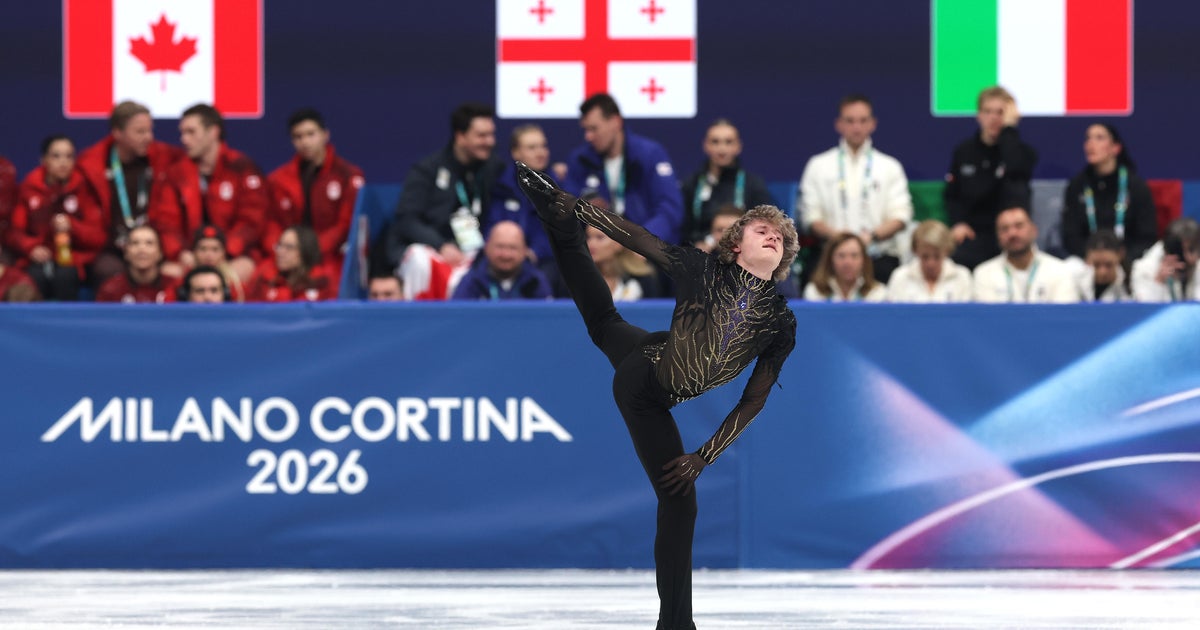

Team USA Triumphs in Olympic Figure Skating: The “Quad God” Delivers Gold
America’s Golden Performance at Milan Cortina 2026
In a thrilling display of athletic excellence and nail-biting competition, Team USA successfully defended its Olympic figure skating team event gold medal at the Milan Cortina 2026 Winter Olympics. The victory came down to a spectacular performance by 21-year-old Ilia Malinin, aptly nicknamed the “Quad God” for his extraordinary jumping ability. With the United States and Japan deadlocked at 59 points heading into the final event—the men’s free skate—Malinin carried the weight of his nation’s hopes on his shoulders. The young champion rose to the occasion magnificently, attempting an astonishing five quadruple jumps during his routine and earning a commanding score of 200.03 points. This performance not only secured the gold medal for Team USA but also demonstrated why Malinin has become one of figure skating’s brightest stars.
The competition was far from a sure thing, as Japan’s Shun Sato delivered what many considered the performance of his lifetime, skating after Malinin and leaving spectators genuinely concerned that Japan might overtake the American team. Sato, who was substituting for Yuma Kagiyama (who had actually outperformed Malinin in Saturday’s short program), earned an impressive 194.86 points with a breathtaking routine. However, Malinin’s technical mastery and the difficulty of his quad-heavy program ultimately proved decisive. The two-time World champion’s ability to execute such challenging elements under immense pressure showcased not just his physical skills but his mental fortitude as well. Japan’s team would ultimately claim the silver medal, while the host nation Italy celebrated taking home the bronze—a remarkable achievement that delighted the home crowd and capped off an exciting team event that featured four separate competitions: free ice dance, free pair skating, women’s single free skate, and men’s single free skate.
Amber Glenn Makes History with Groundbreaking Olympic Debut
While Malinin captured headlines with his gold-medal-clinching performance, another American skater was quietly making history on the Olympic ice. Amber Glenn, a 26-year-old from North Texas, became a trailblazer in multiple ways during her first Olympic appearance. According to U.S. Figure Skating records, Glenn became the oldest U.S. women’s singles skater to compete at an Olympics in an astounding 98 years—a testament to her perseverance and dedication to a sport that typically favors younger competitors. Even more significantly, she made history as the first openly LGBTQ woman to skate at an Olympic Games, representing a meaningful step forward for inclusion and visibility in figure skating and Olympic sports more broadly.
Glenn’s performance in the women’s free skate, which took place before the decisive men’s event, placed her third in that particular segment of the team competition. She was the only woman brave enough to attempt the notoriously difficult triple axel during the singles free skate, though she admitted afterward that the landing was shakier than she would have liked. Speaking candidly with NBC following her routine, Glenn expressed both disappointment and pride: “I just felt really not my best today and I’m just really disappointed in that,” she acknowledged, while also noting she was “very proud of the fight.” Her performance contributed eight crucial points to Team USA’s overall total. Despite her mixed feelings about her team event showing, Glenn’s Olympic journey is far from over—she will compete alongside Japan’s retiring champion Kaori Sakamoto (who delivered a flawless routine during the team event) and teammate Alysa Liu for individual gold medals on February 17. Glenn’s presence at these Olympics represents not just her personal achievement but a broader evolution in figure skating toward greater diversity and longer competitive careers.
The Pair Skating Duo Adding to America’s Medal Chase
Team USA’s pair skating representatives, Ellie Kam and Danny O’Shea, contributed to the gold medal effort with a solid fourth-place finish in the team event’s pair skating competition, finishing behind Japan, Georgia, and Italy. The Colorado Springs-based duo performed to an energetic medley of classic songs including “Sweet Dreams,” “Eleanor Rigby,” and “Everybody Wants to Rule the World”—the same musical program they had successfully executed at the 2026 U.S. Figure Skating Championships in St. Louis just weeks earlier. Their performance earned seven valuable points for the American team, helping to maintain the narrow advantage that would ultimately prove decisive when Malinin took the ice.
The partnership between Kam and O’Shea is relatively young, having formed in 2022, but both skaters bring extensive experience to their collaboration. Each began skating at the tender age of four, and both have had previous partnerships that helped shape their development as competitive athletes. Kam previously competed with Ian Meyh, while O’Shea has a more extensive pair skating resume, having partnered with Chelsea Liu and, notably, Tarah Kayne. His partnership with Kayne proved particularly successful—they claimed the 2016 U.S. championship title and the 2018 Four Continents championship. This accumulated experience has helped the current pairing develop chemistry and technical proficiency quickly, making them competitive on the world stage despite their relatively short time together. Their contribution to the team event, while perhaps not garnering the same attention as the dramatic men’s finale or Glenn’s historic participation, was nonetheless an essential component of America’s overall victory.
Ice Dance Veterans Continue Their Dominance
If Malinin was the hero of the final act, Madison Chock and Evan Bates were the steady, reliable stars who helped set the stage for victory. The ice dance duo absolutely dominated both the rhythm dance on Saturday and the free dance on Sunday, delivering performances that reminded everyone why they’re considered favorites to win individual Olympic gold later in these Winter Games. Remarkably, this marks their fourth consecutive Winter Olympic Games competing together—a testament to their longevity, consistency, and enduring partnership both on and off the ice. Their experience showed in every graceful movement and perfectly synchronized element.
“We definitely skated great and we’re very happy, as you saw when we finished. I think we both felt the excitement of just getting these Olympics underway,” Bates said following their triumphant free dance performance. As three-time world champions, Chock and Bates have proven their excellence repeatedly, but Olympic gold in the individual event has eluded them thus far. Their commanding performances in the team event suggest they’re in peak form and ready to finally claim that coveted prize. Interestingly, Chock and Bates are the only returning members from Team USA’s gold medal squad at the 2022 Beijing Winter Olympics—though that victory came with an asterisk and a two-year wait before the proper medal could be awarded.
A Gold Medal Four Years in the Making
The 2026 team gold holds special significance as a successful defense of a title that Team USA technically had to wait years to officially celebrate. At the 2022 Beijing Winter Olympics, the American team initially received silver medals in the figure skating team event. However, two years later, they were awarded the gold after Russian figure skater Kamila Valieva received a four-year ban for using a banned substance. Valieva’s disqualification invalidated her performances and those of her team, moving the United States from second to first place. That delayed recognition made the 2026 victory in Milan Cortina all the sweeter—this time, there was no controversy, no waiting, and no doubt. Team USA had earned their gold medal fair and square, on the ice, in real-time.
The journey from Beijing to Milan Cortina represents more than just four years of training and competition; it symbolizes the evolution of American figure skating. With veterans like Chock and Bates providing steady leadership and experience, rising stars like Malinin showcasing jaw-dropping technical abilities, pioneers like Glenn breaking barriers and expanding what’s possible in the sport, and solid contributors like Kam and O’Shea doing their part, Team USA demonstrated the depth and breadth of American skating talent. As the individual competitions approach, beginning with the women’s short program and men’s events in the coming days, these athletes will shift from team mode to individual pursuit of glory. But for now, they can savor this collective achievement—a gold medal earned through skill, determination, and the kind of clutch performance under pressure that defines Olympic champions. The “Quad God” delivered when it mattered most, but he didn’t do it alone. This was a true team victory, and one that American figure skating fans will remember for years to come.