
U.S. and Iran Continue Naval Standoff in Strategic Waters
Another Iranian Tanker Seized in Escalating Maritime Conflict
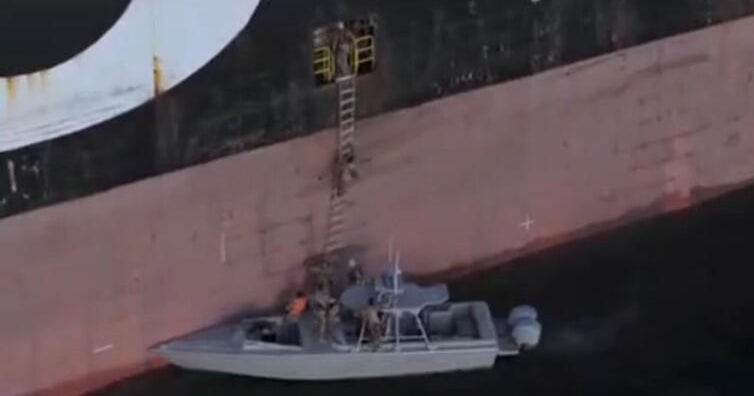
The tense standoff between the United States and Iran has intensified with yet another maritime interdiction in the Indian Ocean, marking a continuation of the tit-for-tat seizures that have characterized relations between the two nations in recent weeks. The U.S. Department of Defense announced Thursday that American military forces had successfully boarded the M/T Majestic X, a vessel described as a “stateless” Iran-linked tanker operating under U.S. sanctions. Unlike previous interdictions that occurred near the strategically vital Strait of Hormuz, this operation took place in the broader Indian Ocean, demonstrating the expanded scope of American enforcement actions. The military released video footage of the nighttime operation and emphasized its commitment to disrupting what it characterizes as illicit networks supporting Iran, regardless of where these vessels operate across the globe. This seizure represents just the latest chapter in an ongoing series of commercial vessel interdictions by both countries, with each side justifying its actions while condemning those of the other.
Just two days earlier, the Pentagon had announced another similar operation involving the M/T Tifani, another Iran-linked crude oil tanker that was interdicted in the Indo-Pacific Command’s vast area of responsibility. These operations underscore the United States’ determination to enforce sanctions against Iran through naval blockades and interdictions, a strategy that has drawn sharp criticism from Tehran. The Iranian government has steadfastly refused to reopen the Strait of Hormuz, despite President Trump’s decision this week to extend indefinitely what had been a temporary ceasefire between the two nations. Iranian officials argue that the U.S. naval blockade of its ports and Iranian-linked vessels constitutes a fundamental violation of any ceasefire agreement, rendering such diplomatic arrangements meaningless in their view. This disagreement over what constitutes acceptable behavior during a ceasefire has created a dangerous situation where both sides continue aggressive actions while claiming to honor peace agreements.
Iran Responds with Its Own Ship Seizures
In response to American actions, Iran’s Islamic Revolutionary Guard Corps has launched its own campaign of ship seizures, targeting commercial vessels transiting through the Strait of Hormuz, one of the world’s most critical maritime chokepoints. The IRGC claimed to have seized two container ships on Wednesday – the Epaminondas and the MSC Francesca – for allegedly breaching Iran’s blockade of the strait. The Philippine government’s Department of Migrant Workers confirmed Thursday that fifteen Filipino seafarers were aboard these two vessels, with ten on the Epaminondas and five on the MSC Francesca. Philippine officials provided reassurance that all crew members were “safe and unharmed,” and that their families had been notified and were receiving government support. This confirmation from a neutral third party lent credibility to Iran’s claims about the seizures, though the situation remains deeply concerning for the safety of civilian mariners caught in the crossfire of this geopolitical conflict.
The IRGC hasn’t merely claimed these seizures; they’ve also released dramatically edited propaganda videos showing masked commandos conducting the operations. The footage depicts Iranian fighters speeding toward the massive MSC-Francesca container ship in armed speedboats, then scaling ladders up the vessel’s hull with rifles slung across their backs. Additional footage shows similar tactics being employed against the Epaminondas, with heavily armed IRGC personnel boarding the ships, moving through corridors with weapons raised in tactical formations. While the authenticity of some portions of the video remains unclear, the overall message is unmistakable: Iran wants to demonstrate its capability and willingness to enforce what it considers its sovereign rights in these waters. The U.K. military’s Maritime Trade Operations Center reported incidents involving three cargo ships in the strait, though the IRGC only claimed responsibility for seizing two of them, leaving questions about the third vessel’s fate.
The Strait of Hormuz: A Critical Flashpoint
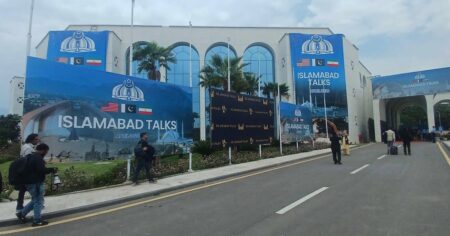
The Strait of Hormuz has emerged as the epicenter of this dangerous brinkmanship between the United States and Iran. This narrow waterway serves as a vital conduit for global energy supplies, with a significant percentage of the world’s oil passing through its waters daily. For more than seven weeks now, the strait has been largely blocked due to Iran’s threats against shipping, which Tehran briefly lifted before reimposing after President Trump ordered a U.S. military blockade of Iranian ports and vessels. The resulting situation has created a nightmare scenario for international shipping companies, maritime insurance providers, and the global economy more broadly. Both nations have been systematically intercepting vessels in what appears to be calculated brinkmanship, with each seizure serving as both retaliation for previous actions and a warning about future consequences. This dangerous cycle of escalation is occurring against the backdrop of possible second-round peace talks in Pakistan, though the prospects for diplomatic breakthrough seem increasingly dim given the ongoing maritime confrontations.
The broader implications of this standoff extend far beyond the immediate region. Global oil markets have responded nervously to each new incident, with prices fluctuating based on fears of supply disruptions. Shipping companies face agonizing decisions about whether to risk transiting these waters or seek alternative, longer, and more expensive routes. The United States has suggested that the Navy could potentially provide escorts to oil tankers in the Strait of Hormuz, though such a mission would require substantial naval resources and could itself become a flashpoint for conflict. Meanwhile, U.S. Central Command reported Wednesday night that American forces had directed a total of thirty-one vessels to turn around or return to port as part of the blockade against Iran, an increase of two from earlier counts. Each of these turned-back vessels represents not just a tactical victory for the blockade but also a disruption to normal commercial operations and international trade.
Wider Regional Implications and Humanitarian Concerns
The maritime conflict is unfolding against a complex regional backdrop that includes multiple overlapping crises and diplomatic efforts. Israeli and Lebanese ambassadors are scheduled to meet in Washington on Thursday for a second round of peace talks, with their fragile ten-day ceasefire currently set to expire over the weekend. The Israeli army and the Iran-backed Hezbollah militia have accused each other of repeatedly violating this truce almost from the moment it began. Lebanese national news agencies reported Wednesday that Israeli strikes had killed two people, adding to a death toll that Lebanese health authorities say has exceeded two thousand since early March when Israel intensified its assault. Israeli officials counter that Hezbollah has killed twenty-three people since the conflict escalated in conjunction with the war with Iran, creating competing narratives about who bears responsibility for the ongoing violence.
The human cost of these conflicts continues to mount in heartbreaking ways. Lebanese journalist Amal Khalil, who worked for the Al-Akhbar newspaper, was killed in an Israeli airstrike on the southern Lebanese village of al-Tiri on Wednesday. Rescue workers recovered her body hours after the attack, and both her newspaper and Lebanese Information Minister Paul Morcos confirmed her death. Khalil had been courageously covering the Israel-Hezbollah war since it began in October 2023, reporting from various locations throughout southern Lebanon on the hostilities. Reporters Without Borders issued an urgent call for the international community to pressure the Israeli army to allow rescue operations, highlighting the dangers journalists face while attempting to document these conflicts. Her death serves as a tragic reminder that beyond the geopolitical maneuvering and military operations, real people are paying the ultimate price for these escalating tensions.
Leadership Changes Amid Crisis
Adding another layer of uncertainty to an already volatile situation, the Trump administration announced Wednesday that Navy Secretary John Phelan would be leaving his position effective immediately, according to chief Pentagon spokesman Sean Parnell. The Navy’s acting civilian leader will now be Undersecretary Hung Cao, a Navy veteran who unsuccessfully ran as the Republican nominee for Senate in Virginia in 2024, losing to Democratic Senator Tim Kaine. This leadership transition comes at a particularly sensitive moment, as the Department of the Navy – which oversees both naval forces and the Marine Corps – plays an absolutely critical role in the ongoing confrontation with Iran. The Navy is currently enforcing the blockade of Iranian ports at President Trump’s direction, maintaining the temporary ceasefire while preparing for potential escort missions for oil tankers in the Strait of Hormuz, and positioning forces throughout the region to respond to any escalation.
Phelan’s departure represents just the latest in a series of high-profile exits from the federal government in recent months, contributing to concerns about continuity and institutional knowledge during a period of international crisis. The timing raises questions about whether policy disagreements, personal considerations, or other factors motivated the change, though officials have not provided detailed explanations. For the sailors, Marines, and civilian personnel of the Department of the Navy, the leadership transition adds an element of uncertainty at precisely the moment when clear direction and steady leadership are most needed. As both the United States and Iran continue their dangerous dance of provocation and response in the world’s most strategic waterways, the stakes couldn’t be higher – not just for the two adversarial nations, but for global commerce, energy security, and the innocent mariners and civilians caught in the crossfire of great power competition.